I'm wondering why I wasn't that impressed with Hoover's Ooover when I saw them live a few years ago. Writing about them in one of my early posts I said the band didn't connect well with the audience. Was that really the case? Or was there something in me that got in my way of enjoying them?
The reason I'm thinking about this is I saw the quartet on Sunday at the Basement Bar, and they were brilliant, a delight to watch, and they got the crowd going (well...relatively so. Except for a pogo-ing threesome in the center of the floor, the audience was a fairly subdued one. When one of the hoppers bumped into a guy next to him, the guy clearly looked annoyed).
They're one girl and three guys, the men in gangster black dress shirts and ties. The girl, vocalist Masami Iwasawa, was also in a black jacket but with a white blouse, and wore three red glass stones, one in a hairpin, another in her jacket pocket, and the last a ring. Her hair was medium-short and light brown, and I was surprised to see later several girls with the same look, it being unclear to me whether that was in homage to her or was the fashion of this scene.
Masami was a lefty who played a white left-handed guitar. Though the three guys were very skilled, she was obviously the center of the band, the one who writes all the songs. At the end of song phrases, she'd whip her neck and torso back to move away from the mike and swing with her guitar. She has a small face with little features, but her singing voice is a little deeper than you'd expect to come out of a face like that. It's a distinct voice that sounds earthy, maybe even muddy, if mud shined and could make you drunk. She can, at times, run through lyrics rapid fire, but it seems that that's just an extra vocal flourish that she does sometimes rather than the main attraction.
Between their hard-driving 50's-sounding rock and pop numbers, when the band talked they were almost incongruously laid-back and a bit silly. At one point, the bass Abe-san said how he bought a new digital TV because his old analog one broke down, but he didn't discover the malfunction until he saw a movie that was supposed to feature a yellow car, but the one on the screen was red. When he figured out his TV no longer displayed yellow, he says he went out to buy a sheet of yellow plastic to paste on to the screen. That didn't do the trick; it just made everything look dark yellow. So he bought the new TV. And so on.
Then, mellow talk done, they'd jump into their great songs, whose words sound like what a girl thinks, deep down, but rendered poetically. The only thing more I could have wished for was that they play one of my favorite songs of 2008, “An Overlap Between Literature and Real Life”, which I wrote about in a previous post.
This is a great band. Why didn't I think that back in 2004? One thing is that Hoover's Ooover was a different group back then—except for Masami, all the members have changed over the years. Maybe was that the way the band used to be? Maybe they became more confident? Maybe it was just a bad night for them? Or for me? Mysteries.
Lady Spade put on 'dramatic and cinematic entertainment shows'.
Lady Spade look like girls imitating 60's Japanese idols who were imitating Motown stars.
They go-go severely in see-through skirts.
They are serious, flirtatious, funny, retro, and out of this world.
They are jet-set superstars-in-the-making.
They stop mid-dance-pose to let worshipping fans photograph.
The Lady Spade are planning world conquest at their secret underwater HQ.
***
This was a dancing, outgoing crowd at the O-Nest. Twenty-something fans of techno and pico pico pop, they were a different breed from the usual introverted live house music nerds. Which is what I am, but it was still good to see young guys who are different, who don't see anything strange about expressing their excitement, and who smile at strangers, even foreigners.
DJ-ing between band sets was Yuppa of Hazel Nuts Chocolate. What a high it must be being Yuppa. An illustrator, who's also released two wonderful albums, Bewitched and Cute. A fashionable girl who, on the side, spins funky records as a DJ. Apparently living fully the life of the Tokyo young (though of course it must have its share of boredoms and burdens). Guys gathered around to dance and see her DJ selections. On the mike she asked everyone to buy the DJ drinks, and the guys brought her beer, cocktails on ice, tequila shots, lining them up in front of the turntables, and she went through them all.
One thing I like about this scene is the people seem into exploring older music. The Lady Spade and their old spy movie-sounding tunes and kayoukyoku. Also at the event was Motocompo, a duo in day-glo stripe fashion who play sing, guitar and keyboard 80's new wave-sounding tunes. And I found a flier of a unit called Salome Lips who describe themselves as a 'Heisei kayou band' influenced by 60's and 70's kayoukyoku, mood kayou and movie music (Heisei being the era of the current Emperor's reign, started 1989). Maybe from a somewhat different scene, but Asakusa Jinta also makes brilliant music that borrows from streetcorner brass bands and other 19th and early 20th century sounds. There's a wealth of beautiful, surprising music out there. Musicians and music fans ought to pay them a visit.
***
Salome Lips' flier, by the way, contained an interesting reference. It was an advertisement for a record of theirs to be released in March, called Theme of the Atami Hihoukan. The flier somewhat artlessly translates 'hihoukan' as 'sex museum', though it literally means 'museum of hidden treasures'. And what are these concealed precious things? The treasured parts of men's and women's anatomy that don't normally see the day of light. The flier says these 'treasure museums' were built in the late-70's and early-80's in various onsen spa towns. The Atami museum mentioned still exists, and this being 2009, has its own website, which contains a layout of the displays, including: whale reproductive organs, 'figures' showing the '48 positions', ukiyo-e prints, among other things. Piped in the background in the museum is mysterious mood music that the flier says is hard to get out of your head once you listen to it. Salome Lips, in their record, are doing an “unprecedented, shocking” cover of this music, according to the flier. OK, they've piqued my interest!
At the Que on Sunday night, after a show by a mellifluous male singer Takamori Yuuki and the joke-loving power pop quartet Stainless, advantage Lucy came on, the third and final act of the evening, and, at the risk of sounding a bit mad, I was totally swept into the performance from the first few acoustic guitar chords by Ishizaka-san. The song was 'Chikyu', earth, the first song I ever heard by this guitar pop group many years ago, in a compilation album called Killermont Street 2001. I remember being drawn into the song because of the bittersweet chords, played on an acoustic guitar with a sparkling sound, the interesting background noise of children at a playground, but mostly, the singing—a clear female voice, not that of an exceptionally skilled vocalist, but it had a free feel, seeming to be guided solely by the overflowing emotions of the singer, Aiko. A few more CD purchases, and I was smitten—the birth of a Lucy maniac. So, because it was my first, but also just because it's a classic, I've always gotten a thrill listening to 'Chikyu' played live.
Tonight's rendition, though, was something else. The five-person ensemble—vocalist Aiko, guitarist Ishizaka, plus another guitar, bass and drums—has seemed to have really come together after many months of making music together. Someone wrote on Mixi that when the musicians' eyes met while they played, causing them to smile, the person became tearful—I know how the guy feels. A band can be such a beautiful thing. A fog machine pumped throughout their show, and during 'Chikyu' the overhead lights turned dark blue while the spotlights faded, transforming them into what I imagined as dark sculptures in some marine kingdom.
The band are nice, charming, good-looking guys in person, but at times the stage beautifies them, so they are radiant. I think it reflects that they're living fully, ecstatically, for a short moment in that little space. After they played the rest of the evening's set—Hello Again, Weekend Wonder, Shiroi Asa, Memai, Shumatsu, and a new song written for that night, called February—I could've stopped by to chat, but this time I didn't, wanting to keep in my head for just a little while longer the image of them, a few yards away but in some different place, on the stage.
***
I didn't take any pictures, but here are good photos from another night.
***
*A Lucymin is a true advantage Lucy fan (it's a play on words—Lucy plus 'shimin', citizen). If you own all of their regularly available music, or have been to more of their shows than you can remember right away, or if you just really, really like their music, I think you can call yourself a Lucymin.
That's the conclusion I reach when listening to this lovely album by Murmur, the unit of a girl named Mai Tsuyutani. Mai grew up listening to bands like advantage Lucy, and her sound owes a lot to those great predecessors—the jangly, 60's influenced guitar sounds, the energetic rhythms—but she creates something different, helped by her feathery-light, spring-clear vocals.
Continuing to create rousing new music inspired by old, jazzy Japanese music is the awesome Asakusa Jinta. The sextet didn't release an album last year, but instead put together a series of limited release single CDs that highlighted their overflowing energy and restless variety. The best of the lot is the intense “Tokyo-Sabaku De Jidanda”, a four-and-a-half minute rock explosion of hyperactive drums, demon-possessed horns and guitars, and a heavy, martial bass line. This is one of Japan's best bands now.
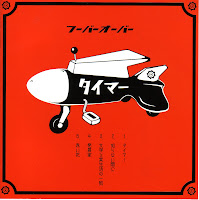
I never really got Hoover's Ooover, until I listened to this mini-album, and even more specifically, the third track, “An Overlap Between Literature and Real Life” (as one might translate the Japanese title). I was converted. I proceeded to abuse my iPod listening to the quartet. It's a straightforward rockabilly tune with dexterous guitars and drums, but what really knocked me out were the words, sung lightly and conquettishly by vocalist Masami Iwasawa. It's about the escapades of a girl mixed up about love who wakes up “in a room like I've never seen before”, and feels she's degenerating, thinking of herself as useless like “stockings that don't match”. She's a flirt too: one part of the song goes, “Every year, the same lover—is it ok if it's not?/Loving only one person at a time—not necessarily so”—the qualifications purred. Forget all those boring songs about love and hope—this tune sounds much more real!
Who is this innovator, who writes beautiful tunes that sample existing genres but sound new? Lantern Parade's previous album, which was also released by Keiichi Sokabe's indie label Rose Records, was like hip hop with a Japanese art school flavor. In Togisumasou (which means 'sharpen your senses'), Tamihiro Shimizu, who is Lantern Parade, abandons rap for the most part, and instead chants repeated lines over samples of R&B and techno. That this sounds great reveals the peculiar talent of this unit.
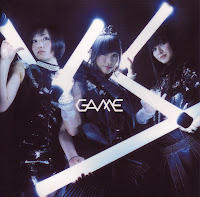
This Hiroshima-dialect-speaking, lip-sync-dancing trio took over Japan last year, becoming a household name and filling up the airwaves. It wasn't all hype, as Game proves. Yasutaka Nakata of Capsule certainly helped them a lot, producing them and writing all their music and lyrics. But Perfume breathed life into Nakata's first-rate material. These three are talented, maybe not necessarily foremost as musicians, but certainly as performers, with skills, charm and magnetism.
Is it a coincidence the way that Capsule has been changing as Yasutaka Nakata spends ever more time working with Perfume, who become ever more popular? Capsule seems to have become the project where he makes the music he wants, without worrying (as much) about commercial success. And the music style of his choice is Daft Punk-like techno, so different from the Shibuya-kei pop the duo started out playing.
Capsule's previous album, Flash Back, was where the two first immersed themselves into techno, and I didn't get it—it seemed dry and artificial—but this follow-up works. Overall it's more melodic than Flash Back, and the luscious tune “Pleasure ground” compares with some of their best past material. (I think Nakata would make 99.9% of Capsule fans happier if he uses vocalist Toshiko Koshijima more in songs...) But maybe this just shows I'm finally getting accustomed to Capsule's techno transformation, and another stab at Flash Back would be rewarding.
Let me add that I always appreciate Capsule's high sense of style: this CD is beautifully designed, with bright, day-glow colors on black, and Nakata and Koshijima in their space alien sunglasses.
My neo-acoustic fan friends tell me that while this album is good, Risette's past works were even better. Maybe that is so, but I have little way to find out—their previous albums are out of print, and the used market prices are exorbitant: one of their CDs was on offer for $250!
In any case, I'm happy with this in-print, ordinarily-priced album, my first exposure to the Risette sound: over ringing double guitars, the female vocals of Yu Tokiwa, who has one of the most distinct high voices I've heard—she sings like she's reacting with pleasant surprise to the voice that just came out of her throat. It's an unusual, but effective combination of sounds.
To mark their tenth anniversary as a band, Spangle call Lilli line released not one, but two albums, and they're very different in character. The one I like more is the first, Isolation, which marks a departure from their former meandering post-rock: the sound now is almost classical, with a grand piano as a constant accompaniment to Kana Otsubo's soft vocals. The feeling of musical adventure is exhilarating.
I haven't listened as much to Purple, which sounded on the first few listens as more like old SCLL, though commenter Kozu said he likes this one better and that it ranks as one of their best. I ought to revisit it.
#2. advantage Lucy Shiroi Asa EP and Sept papillons ont pris leur envol (Japanese title: Tobitatta Nanatou no Choutachi English translation: Seven Butterflies Ascended)
Every time advantage Lucy releases something new, all my time gets spent listening to the duo, in a happy mania. In 2008 I had a couple of such opportunities—a three-song EP and a collection of rare tracks came out.
Sept papillons, the rarities album, gives a home to the guitar pop group's scattered gems—songs in compilations, TV commercials, and out-of-print singles, like “Winny Sunny Friday”, “Weekend Wonder” and “Photograph”. Some Lucy fanatics may quibble that they already own most of the songs, but as their peer I'd counter that it's a good thing to have all these songs together in one place, where new people may discover them, and besides some of the re-mixes are masterly, especially that for “Photograph”.
Shiroi Asa shows us that Lucy are still superior artisans of singles (and the disk has a great white lyrics sheet whose letters were punched out, so if you hold it up to a light the letters shine—unfortunately, it was a limited edition CD and is already sold out). The mellowly-sung but emotional title track, in particular has been growing on me—one of those sublime Lucy lyrics that talks about the future while looking back with feeling at the past.
I love the concept of Field Recordings: a group of friends go up to the hills in Nagano, to record an album in the great outdoors and create something different from a regular studio-crafted record. But lovely idea or not, this wouldn't be my favorite album of the year if it didn't work. It does.
Field Recordings is simple and spare, yet at the same time, so inventive—the way the group combines acoustic guitar, piano, electric organ, fiddle, banjo, a toy box full of little percussion pieces, and the sounds of nature, birds, insects, a flowing river. A pop album, the group also tries out styles like country and folk. The melodies are gorgeous, and sung in relaxed happiness by Michiko Aoki, who is Quinka. “Rosemary”, in which she sings accompanied by an organ and unplugged guitar is one of the prettiest songs I listened to last year.
At the start of 2008 when Field Recordings came out I was entranced, but then it slipped mostly out of my mind for months, until it became time to think about my favorites of the year, and then when I listened to it again, suddenly I was enamored.
For the past few years Japan has been going through a comedy boom that has given birth to a slew of comedians as TV personalities, some of them deservedly becoming famous, others not so much so. What the Japanese call 'owarai'—comic entertainment—is pretty different, though, from its Western counterpart. You don't see a lot of one-person standup comedy, and politics usually isn't a major theme. Instead, the dominant owarai style is two-person acts called manzai. These duos deal with myriad subjects in their acts, but the most common seems to be funny or twisted takes on everyday things. One guy acts as the fool, the boke, saying outrageous things, while the partner, the tsukkomi, tries to bring the discussion back down to earth, by correcting what the boke says, expressing disbelief, etc. (a lot of head-slapping is typically involved).
For example, in this video below, there's only one comedian—Jinnai Tomonori, whose biggest claim to fame is he married the ex-Miss Japan celebrity Fujiwara Norika—but it could be said that the zombies play the role of boke, while Jinnai is the tsukkomi:
Sometimes, Japanese comedy can be truly off the wall. Razzy Queen, would certainly be one example.
I saw the transvestite comic trio Razzy Queen, pictured at the top, at the Shinjuku Loft as part of an event called Hardcore Chocolate that mixed rock shows and comedy routines. It's not easy to describe Razzy Queen's act, but here's an attempt: the big, black-faced Razzy Queen, apparently called 'Cherry', takes the stage. Queen's 'Bohemian Rhapsody' comes on. At the moment that Freddie Mercury sings 'mama~', Cherry whips out a package of cheap Mama spaghetti. He takes out the dry noodles, and takes off his frilly green skirt. He sticks the spaghetti between his butt and bikini. Then, at key song moments, Cherry jumps up, and with the force of his butt muscles, breaks the bunch of noodles into two.
In another part of Razzy Queen's act, Cherry strings a long rubber band through his nose holes, and gets a volunteer in the audience to pull and then, after a dramatic count-down, release the cord.
***
I was expecting Hardcore Chocolate to be a punk event, so was surprised to find that the audience was for the most part conservatively dressed, and there were lots of girls too. Owarai seems to be popular with Japanese women.
Probably the most 'normal' act of the night was a hard rock group amusingly named Who the Bitch, comprising two girls on guitar and bass, and a guy drummer. They were a fun, tight band.
The final act was my beloved Asakusa Jinta, whose retro Japanese/punk/horns&explosive ska bass performance was all-out as always. The crowd wasn't as big as usual, though, maybe because Shinjuku isn't their home turf, and the advanced tickets at Y3,000 was a little pricier than usual. (Vocalist/bassist Osho semi-joked that Asakusa, on the east end of Tokyo, is pretty different from Shinjuku, on the west side, that average incomes are lower in his part of town.) Although I don't dive into mosh pits much these days, I found myself missing all the action, like it wasn't a true Asakusa Jinta gig unless the youth all get overexcited at the end and hop and bump into each other. But then, lo and behold, during the final songs a few kids started slam-dancing, restoring normalcy. It's a strange thing that can be annoying when it happens, but you sorta miss it when it doesn't...
FYI, here's a nice, brief New York Times profile piece on the Koenji music scene. All those tiny yakitori joints and pubs do indeed look worth exploring...
Many years ago I considered living in Koenji but ended up in Sangenjyaya instead, and have stayed close to Shibuya ever since. I sometimes wonder how different my Tokyo experience would have been if I lived in Koenji or some different area. And would it have affected my musical tastes?
Koenji, for example, seems to be a good place for progressive, alternative and experimental music. Punk reigns supreme in Shinjuku. As the label 'Shibuya-kei' indicates, pop and electronica are the thing in Shibuya, as well as guitar pop and neo-acoustic. How much does your environment determine what sort of music you like? But I do think the sound of guitar pop bands like advantage Lucy and Swinging Popsicle would have been irresistible to me no matter where I lived in this city.
As I was pondering this I ran into a passage in the Natsume Soseki novel The Gate where the main character is thinking about the walks he takes in the city on his Sundays off, but he still never feels he's figured out Tokyo: “When he comes to the conclusion that, even though he lives in Tokyo, he's never really seen 'Tokyo', he always feels a strange sadness.” I know the feeling. I've made my way through many neighborhoods of this city (a lot of them as part of my gig-going trips...), but because Tokyo's so big, and ever-changing, it's hard to feel like you ever really know the place.
***
Thanks for reading, and for your support in 2008. I hope you have a happy 2009.
Sometimes a song is so good you don't even need to know what the words mean. I love Elis Regina, though I only know a handful of Portugese words. And I'm a fan of Cantonese and Korean pop, with little clue what the tunes are about. But I still sometimes wonder whether others are as carefree about their lack of linguistic knowledge when it comes to Japanese songs—could a person who doesn't know Japanese enjoy J-pop? Happily, a recent comment someone left on Japan Live confirmed that, yes, a person indeed could.
Commenter rifat1984 wrote: "can you please translate [advantage Lucy's] song called SPLASH...i really love that song but i don`t know the meaning of it".
This also delighted me because I'd been thinking about writing about the song in question, advantage Lucy's "splash". The eighth song in Echo Park, the guitar pop duo's most recent album, 'splash' is a beautiful musical work. But what makes it one of my favorites are the words, and I've been wanting to let people know about them.
"Splash" takes place by an ocean, where the waves and the hot sand remind the singer of a lost friend. She wants to share with him a new song she just created ('I want to send to you a melody that was just born'), but he's 'so far'. It's a touching song in itself. But there's more to it. Like other songs in Echo Park, there's the spirit of a person hovering in the background, that infuses the music and lyrics with emotion.
That person is Takayuki Fukumura, the former advantage Lucy guitarist, who passed away while Echo Park was being made (and for whom musical friends each year throw a show that celebrates his life, as I wrote about recently). I've never directly asked them this, but I think that the person the singer looks for, somewhere in the waves, is Fukumura. The spareness of the repeated guitar passages helps highlight Aiko's soft but feeling-filled vocals.
At the same time I've shared the band's sadness about Fukumura, I've also been deeply moved by all the art that they created in memory of this friend of theirs. I feel lucky I was able to witness the band at work, in that emotional but fruitful year and a half between Fukumura's death and the release of Echo Park. "Splash" is one of their gems during the period.
***
I can't find "splash" on the net, but here's a YouTube video of another classic from Echo Park, "To-i Hi (A Distant Day)":
***
And here are the lyrics, with my approximate translation:
Kazashita te wo afurete, taiyou ga koboreochita (Overflowing from my hands, the sunlight spills)
splash! Kimi to kuchizusanda melody ga mimi wo kusugutta (splash, I hear a melody we used to sing together to ourselves)
Yosetewakaesu nami no dokokani, kimi no sugata wo sagashite, utau (I sing, looking for you somewhere in the waves that advance and retreat)
Oshiyoseru hibi, natsukashii iro ni, nagisa wa nijimuyo (The past comes back to me and colors the sea)
Hadashide yaketa suna wo kette hashiru dokomademo (I run on and on barefooted, over the burning sand)
splash! Kimi ni umaretateno melody wo todoketai, so far... (splash, I want to send you a melody that was just born, [but you're] so far..)
Yosetewakaesu nami no dokokani, kimi no sugata wo sagashite, utau (I sing, looking for you somewhere in the waves that advance and retreat)
Oshiyoseru hibi, natsukashii iro wa Kaze ni nami ni toke, subete wo tsutsumuyo (The past and its colors melt into the wind and waves, and envelop all)
Kazashita te wo afurete, taiyou ga koboreochita (Overflowing from my hands, the sunlight spills)
Hadashide yaketa suna wo kette hashiru dokomademo (I run on and on barefooted, over the burning sand)
splash! Todoke tooku toki wo koete nami no mukou e, sorano kanate e hikarini sakie, kimi no moto e to, so far... (splash, arrive, where you are, on the other side of the waves, at the end of the sky, where light heads, so far...)
Amagasaki isn't the first destination you'd think of when planning a trip to Japan. Right next to Osaka to the west, it's an industrial town lined with factories and not much else to see. But last weekend, I knew I had to be there. A legend was coming to Amagasaki.
The legend's name is Seijin Noborikawa. Widely regarded as one of the greatest living Okinawan musicians, he is a master of the three-stringed sanshin. On a whim, I bought one of his CDs, and was blown away by his sound: the exotic five-note scales, strummed with fiery precision by Noborikawa, gave me visions of a mystical island of Okinawa of ocean, jungle and dark nights.
But Noborikawa, for various reasons having to do with the history of Okinawa and Japan, doesn't like mainland Japan and so hardly ever comes over here to perform. He's 78-years old too—I wanted to witness his art while I still could. So I boarded the shinkansen to Osaka, got on another train that would take me to Amagasaki, and headed to the municipal culture center.
Outside of the 'Archaic Hall Oct', so named because it's octagonally shaped, a long line of people of all ages had formed, from babies to the elderly, and many had the shorter, wide physique of Okinawans. It was standing room-only by the time I entered the auditorium, but I didn't mind because I'm used to listening to music standing up. I was surprised, though, about how much interest there was in Okinawan music.
The four-hour event mainly featured performances by students of 'Noborikawa-style' sanshin playing. In the first set, for example, about fifty sitting sanshin players, with Noborikawa at the center, plucked Okinawan songs in unison.
Always pleasing the crowd were several tiny kids that played the sanshin, sang, and danced, including two brothers aged one and two who performed the eisaa drum dance.
Tetsu Irei, the Amagasaki-based organizer of the event, also did a sanshin duet with his little grandson, who was a prodigy on the three-stringed instrument. When the two dashed through a lightning-speed, electrifying passage, in any place but Japan the crowd would have been up on its feet in ovation, but here everyone waited politely until the end to applaud. The crowd also laughed when Irei scolded his grandchild for yawning on stage between parts.
***
Noborikawa, the legend, was a tiny man, who cracked jokes (he explained he played sitting down because 'as you get older, little by little you get so you can't get it up') and talked at length in incomprehensible Okinawan dialect. But in spite of his small physical stature, he dominated the stage with the gravity of an old master. Watching Noborikawa play the sanshin without strain, as if it was a natural thing for his body to do, I felt the weight of a long life devoted to the instrument. At one point his disciple Irei said Noborikawa had stopped drinking because he got cancer (he'd been smoking and drinking since he was a little kid in Okinawa), and his doctor told him he'd die if he didn't quit. Hearing that made me glad once again I made it to Amagasaki.
At the end of the event Noborikawa presented awards to students, but warned that he might not be able to read all of the citations because he didn't go to school. And, indeed, he stumbled over some of the kanji. I went out and bought a biography of his, and found out that it's not that there was no school for him to attend, but that there was a school but he skipped classes most of the time so he could practice the sanshin to impress his older friends. Sometimes he went inside Okinawan tombs to practice without being bothered (and no doubt giving a fright to any passersby who heard the sanshin strains from inside the tomb...). He was still a kid during the Battle of Okinawa in WWII, and climbing on top of a tree he was impressed by the sight of the gleaming B-29 bombers flying in for their muderous missions.
When the war ended, the people of the devastated island tried to recreate older, better days, and also express their sorrow, by singing and playing the sanshin. They had to make the instruments themselves out of tin cans and sticks. Later, the islanders found out that cut-up parachutes stolen from the GI's made for sanshin coverings that were almost as good as the traditional snake skin. This is the world in which Noborikawa developed his art. It's like the blues of Okinawa.
***
One final thing: at the event, some of the young performers did a skit recreating the mo-ashibi, the late-night youth get-togethers, up in the hills, that used to be a common thing on the island. They acted the parts of guys and girls sitting together, singing and strumming the sanshin over food and liquor.
The Noborikawa biography I read, however, suggested that these parties weren't quite as innocent as portrayed in this skit. One of the things about these gatherings was that when a guy and a girl took a liking to each other, the two would slip away from the party into the darkness, for a more intimate encounter. Marriages were arranged by parents in those days; at times, as a result of what happened at these parties, when the new wife met her husband she was already carrying a child. That sort of thing scandalized the upright islanders, and good kids weren't supposed to attend mo-ashibi. But Noborikawa couldn't resist the sound of laughter, youthful conversation, song and sanshin notes wafting down from the hills, and so he snuck out of his home to watch. And a sanshin player was born.
***
Here's a YouTube clip of Noborikawa playing a six-stringed sanshin (rokushin?):
***
I found this guy in front of a sushi restaurant in Amagasaki: a Hanshin Tigers-loving sushi chef!
Every year, on November 26, advantage Lucy, Vasallo Crab 75 and other bands gather together for a musical event called Munekyun Arpeggio, which celebrates the life of Takayuki Fukumura, guitarist and founding member of Lucy and VC75, who passed away on that date in 2003. 'Munekyun' was a favorite word of Fukumura's—it's that feeling you get when a cute or lovely thing bulls-eyes your heart. And the pop arpeggios that he wrote still make people feel munekyun. This year at the Que for the event were Karenin, Swinging Popsicle, and, of course, advantage Lucy and VC75.
All throughout the event there were subtle reminders of Fukumura's life. Advantage Lucy guitarist Yoshiharu Ishizaka played a cheap purple guitar and red amp that Fukumura once used. He played all of Fukumura's arpeggio parts. You could see vocalist Aiko become a little tearful while singing their newest song, “Shiroi Asa”, which she dedicated to him that night, and which contains the line: “Itsumo omotteta yorimo, kimi wa zutto soba ni itanda (much more than I always thought, you were always close by)”. Vasallo Crab 75 performed one of their best songs with a signature arpeggio part of his, “Vicious Circle”, from the album “Breathe”, the last VC75 album that Fukumura took part in. At the end of the show all the musicians got together to play a couple of his songs that they dug up as demo tapes left behind in his house. They joked that, by performing his unreleased songs like this they are making him into some sort of legendary figure, like John Lennon, even though he was a normal, funny guy, who, whenever he ordered ramen would transform the noodle soup into what looked like a failed chemistry experiment, dumping in vinegar, pepper, red ginger and so on until the soup's color was unrecognizable, and that's the way he liked it.
It was one of those rare, miraculous events where every act was excellent: the mellow pop/folk of Karenin (its singer Mike Matuszak also is a member of Tokyo indie pop group Lost in Found); the super-smooth R&B and rock of Swinging Popsicle; the sublime guitar pop of advantage Lucy; and the crowd-moving funk/pop of Vasallo Crab 75. A few times the musicians said they thought Fukumura was there listening to the performance, and I got the feeling that wasn't just a figure of speech but that they meant it.
After seeing Japanese-German indie pop band Miniskirt for the first time in years last night, I was exploring the Web and unearthed this brilliant video of theirs. I love the part from 0:29 to 0:34 where band leader Edgar is singing at a sloping street of old homes somewhere, and a considerate Japanese lady in the background, seeing that a foreigner is being filmed, immediately moves out of the way to give the camera an undisturbed view. The cut at 0:24 to a cheering audience following footage of one of their shows is also inspired.
Miniskirt's Edgar, universally and affectionately described as a henna gaijin—a weird foreigner—is a film buff. He bought a projector so he could watch his one-movie-a-night on a big screen at home. He also bought a $5,000 Sony video camera to help make videos like 'Read Each Other's Minds', above. When I saw him at the show in Ikebukuro, he was setting up that camera on a tripod to film his show. Seeing me, an old acquaintance, he assigned me to be his band's video cinematographer, a few minutes before the gig was to start. I hadn't touched a video camera for decades, but I think I did OK—the only problem being that I didn't know that you could move the camera up and down in addition to sideways on the tripod, severely curtailing my ability to zoom in on the performers, and also limiting the camera moves to a monotonous left-to-right, and then right-to-left again. The Last Waltz, it was not. But maybe it was fine as a minimalist, indie effort...?
The venue of the event was a new cafe called Ringoya in Ikebukuro, the name sounding like Japanese for 'apple house', but rendered in the kanji as 'the hut of bells'. It was a comfortable cafe, all the guests asked to take off their shoes at the entrance like at a regular Japanese home, and good curry was apparently served, though I didn't try it myself. Its only problem, which it shares with similar venues, is it becomes cramped right away when people start coming in because of all the tables and chairs, and it was packed last night.
Miniskirt's Edgar had come up from Kyoto, where he's now a serious member of the Japanese academia, the other part of his life when he's not busy composing great indie music. Also performing were the duo Loyal We, Lost In Found, 4 Bonjour's Parties, and, from Australia, the Motifs (the wind and vibraphone section of 4BJ pictured below).
I was supposed to see Mix Market and a promising young band from Aichi prefecture called SpecialThanks tonight in Yokohama, but I got completely lost on the way to the club near Chinatown and ended up missing it. My Tokyo live house knowledge doesn't extend to Yokohama, and I also have a pathetically underdeveloped sense of direction (for example, after having been there several times, I still managed to get lost on the way to the Basement Bar in Shimokitazawa, with a friend in tow...). The venue, F.A.D., I'd been to a few times before, but my mistake was to take the Tokyu line rather than the more familiar JR; I became disoriented emerging from a strange train station, and the vague, scribbled map I brought along didn't help matters. Soon, I was wandering deep in the belly of the Yokohama Chinatown, realizing for the first how big it was. Making things worse, on this first day of a three-day weekend, a significant chunk of eastern Japanese households appeared to have decided to get Chinese food in Yokohama, and the crowds slowed the search. After doing a few laps of the town and taking in the sights, I concluded that the live house probably won't be found anytime soon, and called it an evening.
It was sad because on the way over to Yokohama I listened to Mix Market's 'Shiawase No Elephant', was reminded what a great song that was, and was hoping it would be performed. SpecialThanks also seemed interesting and I didn't know how often they made it up to Tokyo.
Let this be a lesson for visitors planning to catch a gig in Tokyo (or Yokohama)...The clubs are often in obscure buildings in alleys in the middle of nowhere, and the city is laid out in a chaotic fashion as it is—apparently it was designed to get invading armies lost, something that I have no doubt is historically accurate. You need a good map for the smaller live houses. Study up on Tokyo Gig Guide.
Anyway, does anyone know how to get from the Motomachi/Chinatown station to F.A.D.? Should I have even been walking through Chinatown in the first place??
Very sadly, I missed advantage Lucy's 'one man' album-release show at the Que on the 24th, but the next night's gig at the O-Nest with the the BMX Bandits' Duglas Stewart, who was visiting from Glasgow, almost made up for it (though, if the world were perfect, I would have preferred to go to both...).
Great bands like advantage Lucy talk to you on stage, through their music. It's not all notes and beats. And we go to shows because we want to have a musical conversation.
In advantage Lucy's case the talk was a relaxed, quiet one, like you have after a big night. It was a short set starting with the somewhat sad song “Shumatsu (weekend)”, about spending weekdays alone and waiting for a weekend meeting (and now that Saturday had arrived, indeed, we got to meet advantage Lucy).
Apple-chomping, professorial-jacket-wearing Duglas' musical conversation might have been about making music into something to be shared rather than exclusive, with an international group of friends. So he brought with him from Seoul Yeongene, the singer and keyboardist of an indie band called Linus' Blanket, and joining him from Tokyo was Taisuke Takata, vocalist and guitarist of Plectrum, two long-distance friends and brilliant musicians.
I was touched by their rendition of 'Sing', the tune made famous by the Carpenters and written by Joe Raposo (who is no longer with us but whose music will live on for a long time, Duglas said), and which I believe I was forced to sing in a chorus in elementary school, but looking at the lyrics now I have to marvel at how simple and beautiful and inclusive the words are. Especially the line, “Don't worry that it's not good enough for anyone else to hear/ just sing, sing a song” should be a rallying call for independent bands everywhere. (Though, having said that, I do think that it usually takes lots of experience and dedication before a band becomes able to 'talk' to the audience, as discussed above.)
The O-Nest was packed and the crowd cheered when popular BMX Bandits were played, sung with plenty of gesticulation by Duglas. It made me giggle a bit, though, that one of the lines in a much-applauded song was something like,'I don't care about fashion, all I want is passion', sung of all places in Shibuya, the nerve center of the Shibuya-Harajuku-Daikanyama Intensive Youth Fashion Production Zone.
At least part of the crowd probably had come specifically to see Yeongene, who's become an even more charming stage performer since I first met her in 2004 in Seoul, this musical prodigy who apparently can play back songs on her piano after just one listen. Duglas obviously adores her—he said he and his bandmate both wanted to write a song for her to sing, after she visited them in Scotland, and so they ended up writing a song together, which Yeongene sang at the O-Nest, a lovely tune. Tall, nonstop-gesturing Duglas and petite, shyly stage acting Yeongene made a fun-to-watch duo.
Spangle call Lilli line told me in an interview a few years ago that their next album will be something that challenges the listener and explores new territory. They lived up to what they said.
Heard within the first couple of bars of Isolation, the Japanese post-rock trio's latest album, is a new sound for SCLL—the grand piano. Until now they created their long, flowing songs mostly with the standard rock instruments: electric guitar and bass, synthesizers and drums. In Isolation, SCLL has gone acoustic. And the piano, played by a woman named Keiko Miyazawa, is a constant presence in this album, weaving melodies and accompanying Kana Otsubo's vocals. Another Ms. Miyazawa (sisters?), Hiromi Miyazawa, plays the violin and cello.
Spangle call Lilli line and acoustic mix well. The first song, “Inc.”, which is just the piano and Otsubo's singing, evokes jazz at a hotel lounge somewhere; mixed in is the noise of a bar crowd. Except this is hotel lounge in some parallel universe, where, playing unnoticed at the keyboards is a Blue Note jazz great. “Quiet Song” a few tracks later, is a longish song that slowly builds to a beautiful climax, like all those old tunes in albums like Or and Nanae, but a companion to the crescendo is, again, the piano. Strings are a flourish to the melody of the tune “Short Films”. And so goes the 37 minutes of Isolation, a short album that points to new doors of possibilities for pop.
This isn't actually the first acoustic SCLL. Their only live album, 68scll, featured a string section, which infused their classics like “Nano” and “Super Star” with even more sonic color. The trio's compositions already covered a wide expanse musically; it made sense to add to their depth with more instruments. But even with these new sounds, it's still obvious that what you are listening to is Spangle call Lilli line. At the interview, the band said their sound's true essence is the singing voice of Otsubo, and that indeed identifies the music as SCLL. It's that soft, clear voice that's a constant in SCLL albums, flowing through the jungle of their sound colors.
An unexpected album that adds a new dimension to SCLL, Isolation is my favorite album so far in 2008.
***
To add to the surprises, I've just found out that Spangle call Lilli line isn't done! They're releasing a second album in November, called Purple, and it and Isolation will mark their decade as a band. They said in their website that one of the two albums is supposed to evoke the feel of an old black-and-white movie. I assume that's Isolation. They also say that one album will come as a big surprise to old SCLL fans. I'm assuming again that this also refers to Isolation, but I'm very much looking forward to listening to Purple to find out.
Commenter san told me about this Halcali video for their song "Girigiri Surf-Rider" and I thought it was the greatest thing and watched it about 50 times in a row, but then when I told a friend about it, she didn't really get it.
So, maybe a few words of explanation are in order. First off, obviously it's a parody of "Beat It". But the gangs are girls rather than guys, and the first ones, seen in the cafe, look like suke-ban, with their long hair and exaggerated school girl uniforms. 'Sukeban' is a combination of 'suke', a derogatory term meaning 'woman', and 'bancho', school toughs.
The group that clashes with the sukeban I thought at first was supposed to represent Ladies, but now I'm not so sure. Ladies are the girl counterparts of the bosozoku, motorcycle gangs, and the ones in the video looked like they were in a biker-like get-up, but when I google imaged 'Ladies', the fashion was different--long, loose, primary-colored coats and pants--so maybe that's not what they are, and they either represent a delinquent subculture I'm not aware of, or the video creator just dressed them up that way to create a vivid contrast to the sukeban that would suggest the two groups aren't the best of friends.
The climactic show-down happens in a container port. First to attack is the biker jacket girl, flinging a couple of darts. The sukeban chief blocks those with her school bag, and you'll note that on the bag is a sticker saying "Namennayo"--don't treat me lightly. This alludes to the Name-neko, kittens in bad kid school uniforms that took the islands of Japan by storm in the early-80's (as seen below).
After a group dance battle, just as the duel between the two gangs' leaders is about to turn serious, Halcali stumble over to save the day. All they need to do is show them the moves to the Girigiri Surf-rider dance, and then peace will reign in this teenage town, with former rivals getting down together. As one YouTube commenter put it: "halicali can stop all conflicts with the power of dance". Go Halcali!
Do the Japanese have a unique ability to enjoy the singing of autumn insects? It's something people say around this time of the year. I have no idea whether it's true—I'm a connoisseur of these evening insect sounds, but then again I've been in Japan for so many years that I'm definitely 'turning Japanese', and have no idea whether that's normal...But really, I do think there's something haunting and musical about the repeated calls of bell crickets and other insects in autumn nights. As Madame Sei Shonagon said, the evenings are the best part of autumn.
***
I got to thinking about bug noises during a trip to Nikko, where I stayed at an inn that had an outdoor hot spring bath which, in the silence of the night, became something like a concert hall for crickets.
Despite my more than a dozen years in Japan it was my first time in Nikko, in one of those, 'I live in Paris but have never been to the Eiffel Tower', or 'LA's my home but I've never been near the Hollywood Walk of Fame' deals, where a place is such an obvious destination to visit that you assume you will make it there eventually but don't.
In any case, Nikko is famous for the Toshogu, the shrine for Tokugawa Ieyasu, the founder of the Tokugawa shogunate. It's a gaudily-decorated, gold-filled building complex, quite unlike the 'wabi sabi' understatement of other major Japanese shrines and temples. At the local bookstore I picked up a book called “The Mystery Of Toshogu” which I read in my free time, and it had some fascinating explanations and theories about the shrine.
One of those was the issue of why Tokugawa Ieyasu, a warlord, was able to be made a 'god' by his descendants and to be enshrined in Nikko. The book said that in Japanese history, it wasn't unusual for someone with exceptional ability to be venerated as a divine being after his death; even the Shinto gods were thought to have started out as humans. One problem is that the word 'god' may be a somewhat misleading way to translate the Japanese term 'kami'—the Japanese word has more the sense of an extraordinary natural phenomenon, rather than an all-powerful creator of the world (and, in fact, big natural things, like mountains, have been worshiped in Japan as 'gods').
Tokugawa, as someone who was able to bring to an end the warring states period (even if on the coattails of his predecessors Oda Nobunaga and Toyotomi Hideyoshi) and launch an enduring era of peace, was worthy of becoming a god. In fact, he actually put it in his will that he wanted to receive that divine status, choosing to stay in this world, in Nikko, to make sure everything's going fine, rather than taking it easy in the Pure Land Paradise. Which, to the modern reader, seems like quite picky and ambitious directions on how to spend the afterlife...
At Toshogu, there are many sculptures that symbolize the peace that Ieyasu brought about. There are sculptures of the kirin, pictured on the label of the beer of that name, a hooved mythical creature that only appears when a sage is ruling and hides away when a tyrant is on the throne. There's also the baku, a creature with an elephant-like trunk; it eats nightmares, so samurai lords had it illustrated on pillows. It also eats iron, and when there's war and the metal is taken away to make weapons, it goes hungry. It too is, therefore, a symbol of peace. The Youmei gate in Toshogu has sculptures, in addition, showing scenes of children playing—something they could only do in peaceful times.
The book also talks about why Nikko was chosen as the site of Ieyasu's main shrine. To simplify the argument, one significance of Nikko is that it's directly north of Tokyo, the home of the Tokugawa shogun. A northern position was where the protector of people traditionally resided—ancient Chinese and Japanese palaces were on the northern end of towns. A ruler in the north has his back to the northern pole star, which hardly moves in the sky, and lends to him its unmoving stability. In any case, by being enshrined north of Tokyo in Nikko, Ieyasu would be able to look over his descendants as a divide protector.
Ieyasu was actually buried at first in Kunouzan in present-day Shizuoka prefecture, before his remains were moved to Nikko, in line with his will. The book says this is noteworthy because on the diagonal line between Kunouzan and Nikko is Mount Fuji, and 'Fuji' is similar in sound to the Japanese word for 'undying', 'fushi'—the path between Kunouzan and Nikko may have symbolized the passage of Ieyasu from living to divine status. Kunouzan, for its part, might have been chosen because directly west of it (following the path of the sun, an important object of worship in Shinto) is Ieyasu's birthplace, and going further, Kyoto.
Who knows whether this stuff is on the mark, but it's interesting to think about it while seeing the sights of Nikko.
The Daikanyama Unit was bad-mouthed in my Tokyo live house post, but having been there on Sunday I have to say it wasn't actually that bad. The staff was even polite (shock!). Still, in the end, I prefer grungy little clubs with character like the Que and Loft.
***
I was there to see an event called Spoon Market, organized by the group Tokyo Pinsalocks and featuring a number of girl bands, including the ones I was especially interested in, Nirgilis and HALCALI.
Nirgilis is a synth-pop trio consisting of a girl vocalist and drummer, and a guy bassist, with all three in charge of synthesizers and programming. Japanese sources sometimes describe them as a 'mashup band', but I'm not sure how accurate that is—their hit tune “Sakura” did overlay a version of “Amazing Grace” to the main melody, but other than that, most of their songs seem pretty straightforwardly pop.
What's special about them is the vocalist Acchu Iwata's singing style, which, to borrow from one of their song titles, is 'coquettish'-sounding, and also intuitive, emotional and sensual. Some of their song lyrics are rather steamy, so maybe their aim is to be sexy, in the true sense of the word. I was curious to see what they were like on stage.
Acchu, wearing a head-patch shaped like a hand, was petite, like some sort of Hobbit pop idol. She did laps across the stage and threw her arms up in a V, like a medal winner. The band was a lot more noisy and intense than I expected having listened to their albums, and often plunged into digital jam sessions.
One of my favorite Nirgilis songs is called “Thank you for the special day!!”, which is about seeing a perfect show by a favorite band. At the end of their gig, my enthusiasm level wasn't quite that high, but it was still good and I was happy to have seen them.
***
HALCALI came on a little later. They're a girl hip hop duo comprising Halca and Yucali (Halca + Yucali = HALCALI), and they made a splash a few years ago as a 'Japanese high school girl hip hop unit'; according to their website, the two met each other in a dance class when they were elementary school kids, and they were discovered at a 'female rapper audition'.
They're an adorable combo—Halca, tall, long-haired and pretty, while Yucali being little, short-haired and cute. They had on striped shirts, Yucali's in pink and Halca's in yellow, with illustrations of bananas on the front.
HALCALI's show was worlds apart from the typical Shimokita or Shibuya rock/pop gigs I see. Of course, it was hip hop, but going beyond that, the emphasis on dancing, acting and moving on stage, one girl coming forward when rapping while the other moving back, and so on, was fresh and fun to watch.
It also made me think that, at a certain point, a 'show' became for kids not just an occasion to sing and play musical instruments, but also do coordinated dance steps, in HALCALI's manner. It mustn't be a coincidence that you see so many groups street dancing to their reflections in building windows these days. Dancing became a natural part of musical entertainment, and people enjoyed showing off their moves on stage. Whereas, for many people of my generation (thirtysomething or so), the common understanding was that bands don't really dance, at least not the good ones, except as a joke. Dancing was an extra variable you had to put into the performance; why not just do your best singing and playing music? But maybe now that would be considered by my succeeding generation as plain and sorta boring.
In any case, HALCALI was skilled at all they did, rapping, singing, dancing, and getting the crowd moving—Yucali repeatedly told everyone to come closer to the stage, “even all you people standing in the back like strangers”—and I thought these two should play in the U.S. in an anime festival or something, where the fans would lap them up. But then, woops, I checked later, and it turns out that they already did that earlier this year, though the fans would no doubt want to see them again. (One final thing about HALCALI: some of their rhymes blow my mind, for example I would have never thought of rhyming 'aka jutan (red carpet)' with 'Azabu Juban (a shopping district next to Roppongi)' as they do in one song!)
***
Filled with regret I left the event before Tokyo Pinsalocks hit the stage, due to other business to attend do. They are a great group and nice people... Next time...
Facing pounding rain as I headed out to see advantage Lucy and others, I remembered a line from the Lucy song “Smile Again”: “I realized there's no rain that never stops (yamanai ame nante nai to kizuita)”. And, indeed, by the end of the Basement Bar show, the downpour had run its course.
***
There were many friends at the Basement Bar. Watching the show next to the stage was Three Berry Icecream's Mayumi, whose music advantage Lucy grew up listening to. Mayumi's daughter was also there—she's known these bands since she was a baby. But where once she danced and called out the names of favorite singers, now, in elementary school, she ducked behind the stage and plugged her ears during the loud parts.
The evening's headliner, Murmur's Mai Tsuyutani, was an advantage Lucy fan from when she was a teen-ager. She was too shy back then to say hi to the band and tell them she's learning to play the guitar; hearing that, Lucy guitarist Ishizaka gave Mai's mom (who had taken her to the show) a guitar pick to pass on to her daughter as a souvenir. Mai says she still has it, in her little treasure box at home.
Lost In Found, the first act, toured Seoul together with advantage Lucy in 2004. They were always good, in a cute amateurish way, but in a few years' time they've developed into great, fun live band, at once relaxed and energetic, and featuring one of the prettiest-sounding guy-girl vocal duos around. They've become a band I want to see every time they play.
Act two was Caraway (the top photo), Swinging Popsicle guitarist Osamu Shimada's other band. Swinging Popsicle and advantage Lucy both hit it big in the late-90's, and they considered each other as rivals of sorts back then, in a good way, but now, a decade later, they are good friends. Swinging Popsicle's vocalist's husband runs the Nakano pasta joint where advantage Lucy filmed their “Sunday Pasta” video. (By the way, my friend David Cirone has published a photo collection of Swinging Popsicle. It's full of gorgeous pictures of the bands, plus two interviews, one by me. If you're a Popsicle fan, check it out! Info here.)
***
Outside the club before the show, a mikoshi, a portable Shinto shrine, was being carried around, bounced up and down, when a fight broke out. One of the fighters was a guy in dreadlocks; his challenger grabbed his dreads, and he latched on to the challenger's hair too, so the mediators found it impossible to pull them apart, and all the revelers stood and watched the the spat in silent disgust. It must have been all the drinking that prompted the fight—fights happen from time to time at festivals, where adults often drink continuously from the early afternoon. The crowd was unhappy the festivities were sullied by a fight. But, I couldn't help thinking that maybe one thing being celebrated at a matsuri like this was the elemental nature of humans, not only love and fertility, but also fighting and destruction, so the spat wasn't completely out of place...
September is shaping up to be a bountiful harvest month for Japanese music.
First off, there's a not-to-be-missed CD release party at the Basement Bar on Sunday (the 7th) featuring advantage Lucy, Caraway (Swinging Popsicle guitarist Osamu Shimada's band), laid-back indie pop stars Lost in Found, and the headliner, Murmur. Murmur is the sparkling solo guitar pop unit of a girl named Mai Tsuyutani, who just released her first full-length album, the outstanding The Afternoon of the Marble Design. If you like advantage Lucy you should check out Murmur—she is an admirer of that great band, and is influenced by them, but still manages to create a sound that is original and fresh. I'm a fan and friend of all four of these groups, and expect to party with them that night until dawn.
Meanwhile, Call and Response Record's Ian is throwing a two-night gig on September 12-13 at the Koenji High to mark the release of the wild concept CD I mentioned in a previous post, a complete cover of Wire's Pink Flag album by indie Japanese bands. 14 bands are to play over the two night—sounds like it will be a blast.
On the album front, advantage Lucy is releasing a new album! But rather than a completely new work, this CD will be a rarities-type album: various tracks that appeared on compilation albums, out-of-print singles, and, in one case, a nice song called “Windy Sunny Friday” that was only sold as mini-disc downloads at convenience stores, or something like that. Some advantage Lucy snobs (they exist) sniff that they already own most of these songs anyway, and indeed, I have almost all of them too (except “Windy Sunny Friday”—only long-time hardcore fans have a copy of that; I've only been listening to Lucy since around 2001—wait...'only'...? What year is it now??) , but it's worth buying this one because all the tracks are re-mixed, apparently, and it's a nice thing to have all these rare gems like “Photograph” and “Weekend Wonder” on one disc. The album is called Sept papillons ont pris leur envol, and will go on sale on Sept. 17.
Another great piece of news is that a week later, on the 24th, beautifully melodic post-rock trio Spangle call Lilli line will be unveiling a new album, Isolation. Their website calls it “a monochrome tale that is dedicated to the end of the world and all lovers.” Hmmm... Maybe that will make more sense when I actually hear the album... I interviewed SCLL a few years back, here.
 I'm wondering why I wasn't that impressed with Hoover's Ooover when I saw them live a few years ago. Writing about them in one of my early posts I said the band didn't connect well with the audience. Was that really the case? Or was there something in me that got in my way of enjoying them?








 For the past few years Japan has been going through a comedy boom that has given birth to a slew of comedians as TV personalities, some of them deservedly becoming famous, others not so much so. What the Japanese call '


 Very sadly, I missed

 After a group dance battle, just as the duel between the two gangs' leaders is about to turn serious, Halcali stumble over to save the day. All they need to do is show them the moves to the Girigiri Surf-rider dance, and then peace will reign in this teenage town, with former rivals getting down together. As one YouTube commenter put it: "halicali can stop all conflicts with the power of dance". Go Halcali!


 Facing pounding rain as I headed out to see advantage Lucy and others, I remembered a line from the Lucy song “Smile Again”: “I realized there's no rain that never stops (yamanai ame nante nai to kizuita)”. And, indeed, by the end of the Basement Bar show, the downpour had run its course.
 The evening's headliner,
 Act two was

