Sunday, May 21, 2006

Compilation Albums (LOVE Them)

When Japanese indie record labels like K.O.G.A. and Blue Badge release compilation albums, I grab them right away. I LOVE compilation albums; they are a big part of my music diet.

The albums themselves are often a mixed bag—some songs are good, but others aren’t and are destined to be fast-forwarded over every time after the first listen. Still, I listen to these albums because they are where I most often find the brilliant band I knew nothing about and seemingly came out of nowhere, but plays that one dazzling, rocking song that makes me want to know everything about them and go to all their shows.

It is after all by listening to a compilation called Killermont Street 2001 a few years ago that I made my happiest Japanese musical discovery to date—the discovery of a group called advantage Lucy, who contributed a song named “Chikyu (faraway version)” to the album (a side-note: any true Lucy fan should try to get a hold of this album because it contains a beautiful, mellow version of “Chikyu” that must be listened to, with a recording in the background of European kids playing in a park somewhere, giving the song a dreamy feel).

Listening to compilation albums is also a way to see a snapshot portrait of a musical era and some of the bands that were active at the time, and recently, by buying a couple of albums that include early songs by advantage Lucy, I’ve been able to better understand the mid-90’s Japanese guitar pop/neo-acoustic scene.

The two albums I bought through Yahoo’s auction site were Splash Dive Cream Cone Compilation Vol. 0 and Pop Jingu Vol. 1. I’d been looking for the two CDs for a while, because both contain songs by advantage Lucy (called Lucy Van Pelt at the time), but both were out of stock. As someone who wants to listen to every single recorded version of all Lucy songs (and advantage Lucy is one of those cool, creative groups that make a new version of a song each time they contribute it to a compilation), I was excited to see those two albums offered on auction (though I later found out that I can also buy both on Amazon Japan’s used CD market—how easy things are in the Internet Age!).

An added joy to listening to these albums came from the fact that I was able to discover some great old bands. Both Splash Dive and Pop Jingu, for example, included songs by two bands I didn’t know about but I truly dug, Peatmos and Kactus. I looked up Kactus on the Net, and found out that the group disbanded a number of years ago, and an American member of the band went home. I’m not sure what became of Peatmos, a band featuring a female vocalist with an unforced, ethereal voice, and a crunchy acoustic guitar sound.


Splash Dive, which shows a somewhat homoerotic photo of a pool scene on its front cover (and a, um, COLORFUL photo on its back cover, shown above), includes other interesting stuff. One is a song by “Guitar Bader” which I assume is a misspelled rendering of Guitar Vader. It also has a song by “Cymbals” called “Happy Time”, but I’m not sure as to whether this is a song by THE Cymbals, since it is more hard rock than the pop of early Cymbals, features a male singer rather than Toki Asako, and the album itself came out in 1997, which means it preceded THE Cymbals’ debut album, released in 1998.

Meanwhile, Pop Jingu, with an out-of-focus picture of a forlorn-looking retriever on its cover, includes one very remarkable song: “Color Is Navy”, by Maples. Why remarkable? Because “Maples” was the name of the one-person unit of advantage Lucy singer Aiko, in which Aiko sang and played the guitar alone. As far as I know this is the only recording of Maples. It’s good—simpler and sleepier-sounding than Lucy songs. The album also contains songs by bands like 800 Cherries and Color Filter.

The two albums were both released nearly a decade ago, in 1997, but they still sound fresh. The type of music recorded in them may have fallen out of fashion to some extent in Japan, though there are still die-hard fans and bands that play for them. I like this music because it isn’t pretentious, can be played by just about any group of people with guitars, but the end product is often surprisingly gorgeous and memorable. I’m waiting for more Splash Dive’s and Pop Jingu’s.

Saturday, May 13, 2006

Supersnazz, 5.6.7.8's, Mad3

Friday night in Kabuki-cho, Shinjuku—Dodging the African sex-club touts and weaving through the weekend crowd-thronged alleys, I made my way to the Loft, to see the 5.6.7.8’s, Supersnazz, and Mad3. It had been a while since I was last at the Shinjuku Loft, the king of Japanese live houses, not the biggest, but still the country’s preeminent venue, where even Southern All-Stars, the Toyota Motor Corp. of Japanese pop bands, once played.

I went to the show because I wanted to see the 5.6.7.8’s, a female trio whose biggest claim to fame is that one of their songs was used in Kill Bill. ‘Supersnazz’ also sounded familiar, and I wanted to see what they were like.

At the loft, there were more foreigners than just about any Tokyo gig I’ve been to—I guessed that was because of the 5.6.7.8’s Kill Bill fame as well as the fact that all three groups were fairly well known abroad. There were also dozens of Japanese rebel Brit-punkers, all wearing the same clothes—Ivy caps were the headgear of choice, and many had big chains hanging out from their pockets, connected to their wallets so they don’t get lost in the mosh pit.

The 5.6.7.8’s went first. They affected some in the audience like a pleasurable electric shock: a tiny Japanese girl in front of me screeched every time the band named the next song or played an intro to a song she liked, and she proceeded to hop around maniacally to the music. My reaction to their music wasn’t quite as intense, but I did enjoy it; their tunes were heavily influenced by 50’s rock, rockabilly and surf music (I think I read somewhere the numbers in their name stand for the 50’s, 60’s, 70’s and 80’s, their favorite musical decades).

Supersnazz was next, and this quartet completely knocked me out. A Supersnazz fan was born Friday night: me.

It wasn’t that Supersnazz was playing the sort of music I’d never heard of before; in fact, their 80’s-sounding garage pop-punk was eminently familiar. They played music that’s formulaic, but it’s a formula that I never get bored of no matter how many bands I listen to going over similar territory. It’s the hamburger of music: the ingredients may be more or less the same but there’s still the good and the bad, and when it’s really good, you get a craving for it from time to time, for all time. Two recent favorite bands of mine, the Kitchen Gorilla and myuuRy, also are these kinds of bands.

The group consists of two orange-haired girls, the singer and the bassist, and two black-haired guys, the guitarist and drummer. The singer, ‘Spike’, looks like a Japanese Chrissie Hynde with a Steven Tyler-like mouth. She bops around on stage, belting out garage punk, while between the song parts the guitar guy RIPS out solos. I found out later this band has been around since 1990. True veterans—I went out and bought a CD of theirs right away, Invisible Party, the first of many of theirs I think I will buy, and this show is also likely to be the first of many that I’m likely to see.

When the final band, Mad3, started playing, the front section of the crowd turned into a wild mosh disaster zone, and the spectacle was entertaining enough, and the band was good enough, that I considered staying for the whole set, but I decided to take off after a few songs, back through the grime and bright lights of Shinjuku on a weekend night. (Check out an insane photo of theirs here. And here's a good photo of Supersnazz.)

Tuesday, May 09, 2006

Japan Live Radio Updated; Thoughts

I’ve been adding about a dozen songs at a time to Japan Live Radio’s playlist, and taking out a dozen tunes at the same time, and now the playlist contains completely different music from when I started.

Although I’m an utter amateur at this, I’ve had fun. A couple of people have even rated my radio their favorite, which is flattering (and quite undeserved, honestly, considering all the radio stations out there where people put in real work, but more on that later…).

Live 365 is an American system, and being American it’s obsessed with ratings. So, you can rate each radio station you listen to, and you can also give a thumb’s up or down to each song you across.

Seeing how people rate the songs I play on Japan Live Radio has been fascinating, and in some ways mystifying, and even, disconcerting. It made me see why Top 40 radio ends up broadcasting songs like they do: people like flashy, short, easy-to-understand songs with some sort of twist. With some songs I could see why people wouldn’t like them, because they are long, eccentric, raw, etc. etc. But with others, I just couldn’t understand where people are coming from. For example, Judy and Mary’s “Lollipop” was rated pretty low. How could anyone not like “Lollipop”??

I personally like every single song I play on the radio. When a great tune I’d forgotten about comes on my iPod on shuffle mode, I make a note to include it in the radio later on.

Right now, the playlist usually contains about four hours worth of music. I was looking through Live 365’s bulletin board, and I read that hardcore broadcasters often have several playlists of dozen hours or more, and they spend hours each day putting these lists together. Not me…I just wouldn’t have the time. I’m not sure if sometimes people end up listening to the same sequence of music listening to my radio at different times, and if they do, whether that gets them bored. If they do and it does, I’m not sure what to say, except, maybe you ought to also listen to some of the other stations? I’ve found some great stations that play music I would usually never listen to, like salsa, exotica (Tiki lounge music), Bollywood soundtracks, and so on.

The playlist now on the air includes several cool post-Shibuya-kei electro pop acts such as Cubismo Grafico Five, Yukari Fresh and PineAM. I’m not allowed to publish the current playlist, but below is the historic first Japan Live Radio playlist, which was pretty girl pop heavy. If you missed any songs that you wanted to listen to, or you want to listen to a song again, let me know, and I’ll stick it back on the playlist:

FIRST JAPAN LIVE RADIO PLAYLIST

1. advantage Lucy – Splash
2. Spangle call Lilli line – U-Lite
3. MissWonda – Ageha
4. Supercar – Storywriter
5. Qypthone – Something Valuable In me
6. Clammbon – Pan To Mitsu Meshiagare
7. Swinging Popsicle – Something New
8. Plectrum – Don’t Tell Me A Lie
9. The Automatics – Secrets
10. The Kitchen Gorilla – Sensation
11. Jimmy Pops – Ballroom Riot
12. Mix Market – Going My Way
13. Teeny Frahoop – She Is Baby Panda
14. Lucy Van Pelt – Christina
15. Lost In Found – Radio 24
16. Cymbals – Do You Believe In Magic
17. Tornado Tatsumaki – Atom
18. 4 Bonjour’s Parties – Il Cortile Grigio
19. Gomes The Hitman – Tokyo Gozen Sanji
20. Hartfield – Strangers When We Meet
21. Plectrum – Cherry Boy 1994
22. Orange Plankton – Mizuumi
23. Swinging Popsicle – Satetsu No Tou
24. The Automatics – Yesterday’s Children
25. The Clicks – Magic Of White
26. Teeny Frahoop – Inside Of Theatre
27. The Kitchen Gorilla – O.K.
28. Orange Plankton – Atama No Uchu
29. Hartfield – 16 Lovers’ Rain
30. Misswonda – Arabesque
31. Spangle call Lilli line – sss-urp
32. Tornado Tatsumaki – Best Tight Tricolor
33. Comeback My Daughters – Seasons And Silence
34. Contrary Parade – Happy End
35. Gomes The Hitman – Te To Te, Kage To Kage
36. Orange Plankton - Yofukesugi

Sunday, May 07, 2006

Plectrum+Las Vegas+Round Table

It’s not often that I enjoy, from beginning to end, a Tokyo rock show featuring more than one band. Oftentimes, only one group is good, and the rest are passable or worse. If a band I don’t know about turns out to be brilliant, it feels like a minor miracle, but that doesn’t happen very much. And neither is it a frequent occurrence for every band on a bill to be great. But that was the happy situation at the Shimokitazawa Club Que on Friday night, in a show featuring the groups Plectrum, Round Table and Las Vegas.

The thing these three bands share is plentiful experience. Plectrum is celebrating its tenth year as a band. Las Vegas is a unit created by a member of Great3, which has been around even longer than Plectrum. I’m not sure how many years Round Table has been in existence, but I guess it’s about a decade too.

All those years make a difference. First off, if they weren’t good they probably would have fallen away from the scene long ago. And as the years pile up, so does their experience. A performance by a veteran band simply feels different, from the opening few seconds of the gig: it’s tighter, and it draws the audience in more, and immediately.

Rock fans (and the music press and record labels) tend to spend a lot of time looking for the Next Big Thing, which is fine, as long as one keeps in mind that the Previous Big Thing and Big Thing Before That are not only good, but may actually be better because of their experience.

Having written all that, I have to say that Round Table’s show surprised me—I knew they were good, but either I’d forgotten, or didn’t fully realize before, just HOW good they are. A duo consisting of Katsutoshi Kitagawa, the guitar guy, and Rieko Ito, the keyboard girl, they brought along a rhythm section and a guy on the congos, and did a show that was about as funky as I’ve ever seen in a Tokyo pop show. It was obvious they were having a blast—Ito wrinkled her brows in the way that musicians do when they are focused completely on keeping a perfect jam going.

Next up was Las Vegas, who was a regular rock band the last time I saw them couple of years ago but appeared to have become a DJ/trance/club music act, and they set up their equipment to the side of the audience rather than on the stage. I don’t know much about DJ music, but it seemed like they were trying interesting new things and I enjoyed it, even if their 40 minute set only consisted of two ‘songs’.

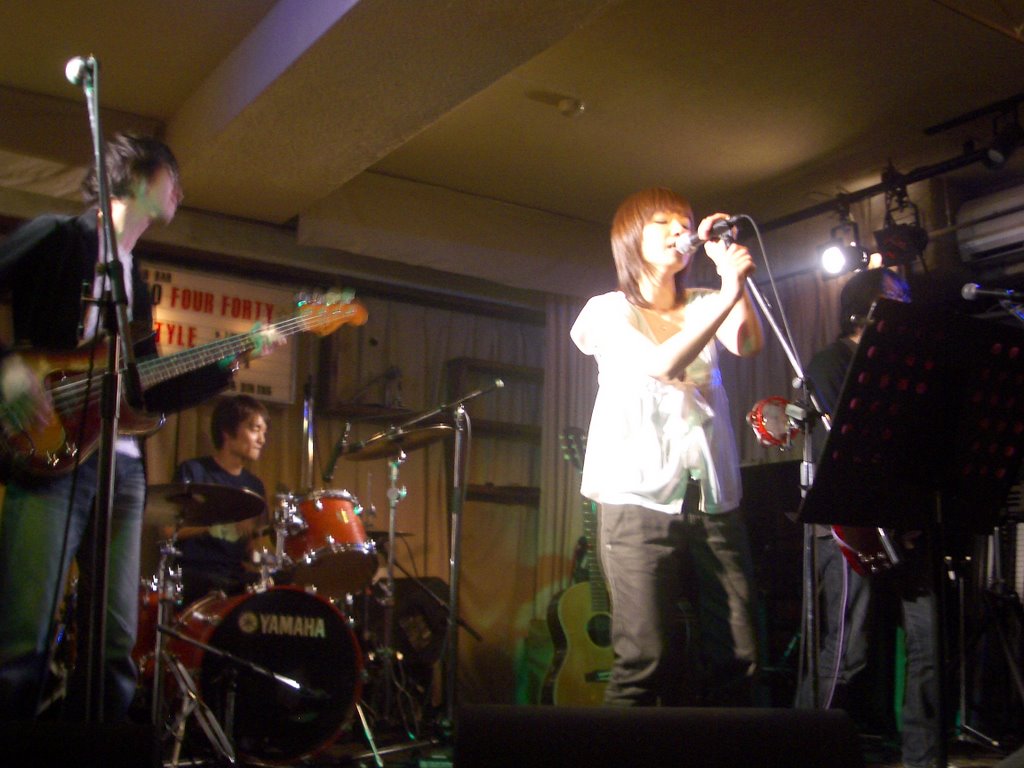
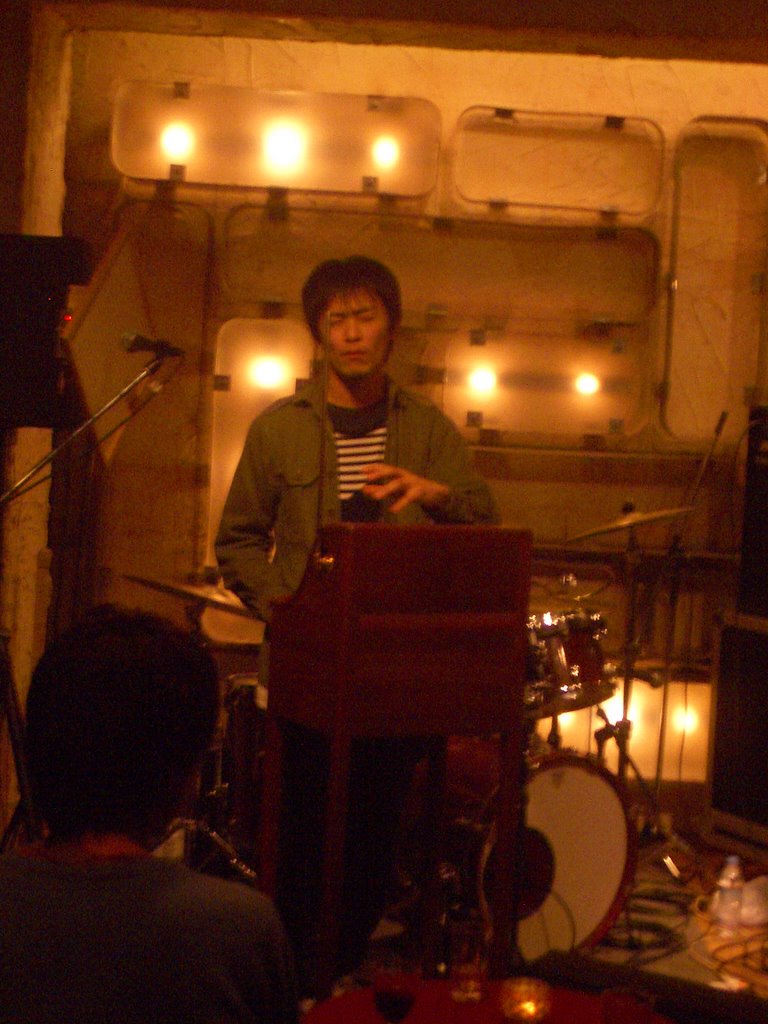
And then there was Plectrum. These guys are a perfect illustration of what I mean when I say a veteran group’s gig feels different right from the start. There’s intensity, even if they don’t begin loudly or fast. They are also all fabulous musicians: lead guitarist Akira Fujita and bassist Manabu Chigasaki both play as supporting musicians for major acts; Mikiya Tatsui, the drummer, has an explosive style, and likes to show off his moves on stage. But Plectrum wouldn’t be Plectrum without its lead vocalist Taisuke Takata, who is pictured above. A natural entertainer, he has an unerring ability to get the crowd giggling with little jokes between songs, but then turn around and deliver musical performances of true passion. After the show, Takata told me that he writes one song a day, humming the melody into his mobile phone—songs are like diary entries for him.

These three bands are all worth seeing if they ever come your way.

Wednesday, May 03, 2006

Advantage Lucy In Niigata


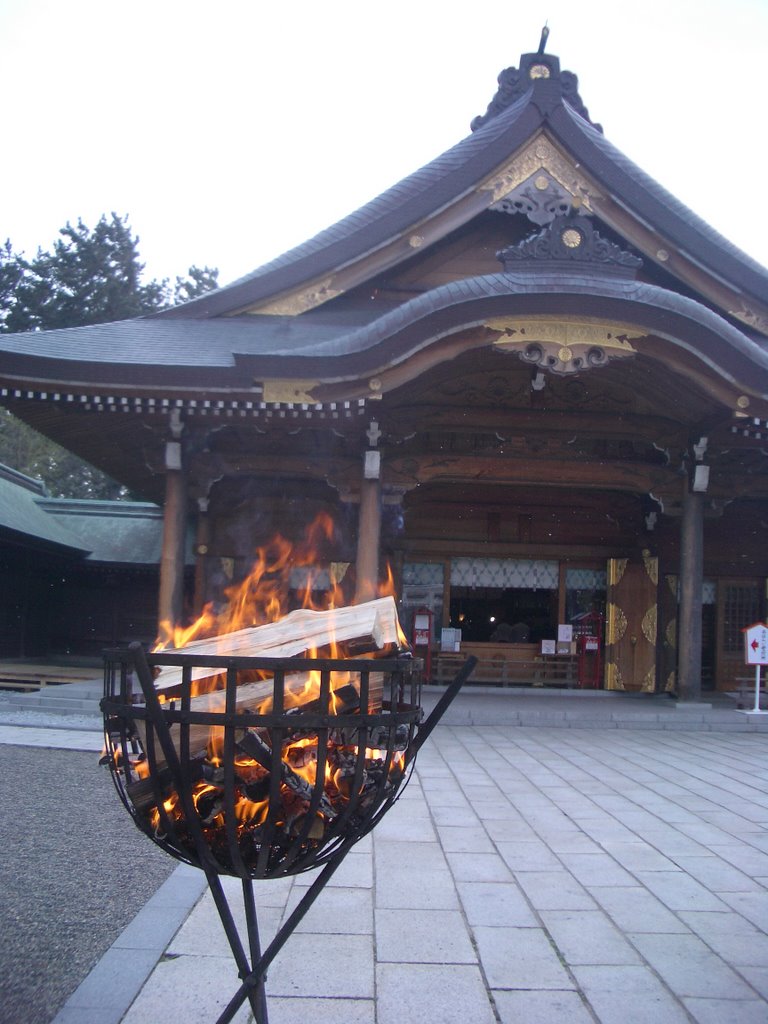
I went to Niigata over the weekend to see advantage Lucy.

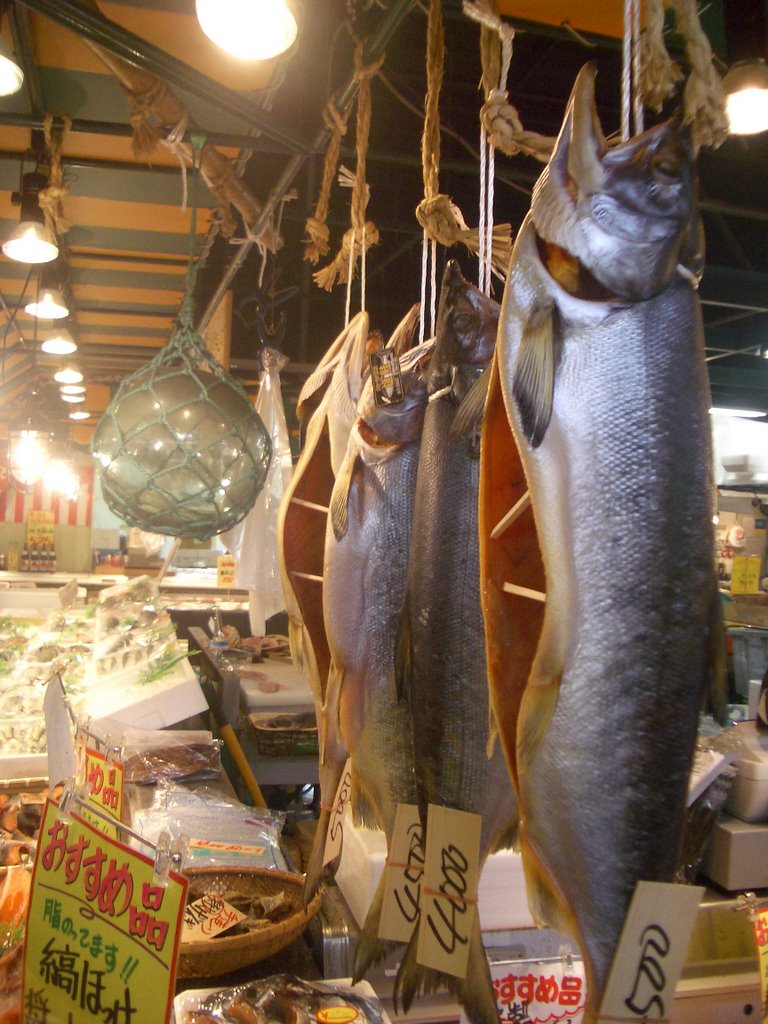
A bullet train took me to the city on the coast of the Sea of Japan, about two hours from Tokyo. It’s famous for three things—rice, sake and fish, and during my stay I had a lot of those three, the holy trinity of Japanese cuisine.

In recent months Niigata has also been in the news as the place where several Japanese people were kidnapped and taken to North Korea a few decades ago (Pyongyang only recently admitted to the abductions). Friends jestingly warned me that if I went to the beach I should watch out for kidnappers from the sea—but walking on the sand next to the dark blue-green sea, my thoughts were more on what fish would come out of the ocean and end up on my dinner plate that night.

Food was on my mind a lot in Niigata. What I ate there felt like the archetype of Japanese food. For example, one night I had flatfish that had been dried for a day to bring out umami, the fifth taste of savoriness, then salted and broiled. Another day I had a Niigata specialty called noppe, a cold stew of diced vegetables and meat that is served at weddings and other celebrations. The food was all made with ingredients that were in season, following a monthly calendar of what fish or vegetable is good when, and prepared in a way that makes flavors like saltiness and umami come out, but not to excess.

I ate happily, but I also ate because there wasn’t much else to do. Niigata is a flat city without any obvious major tourist attractions. A millennium ago, this whole area was either under seawater or swamps—it was filled later to make rice paddies. One interesting district, the ‘old town’, looked like something out of a 1960’s-era Japanese movie, with narrow alleys between square, dark wooden homes.


Extension58


***

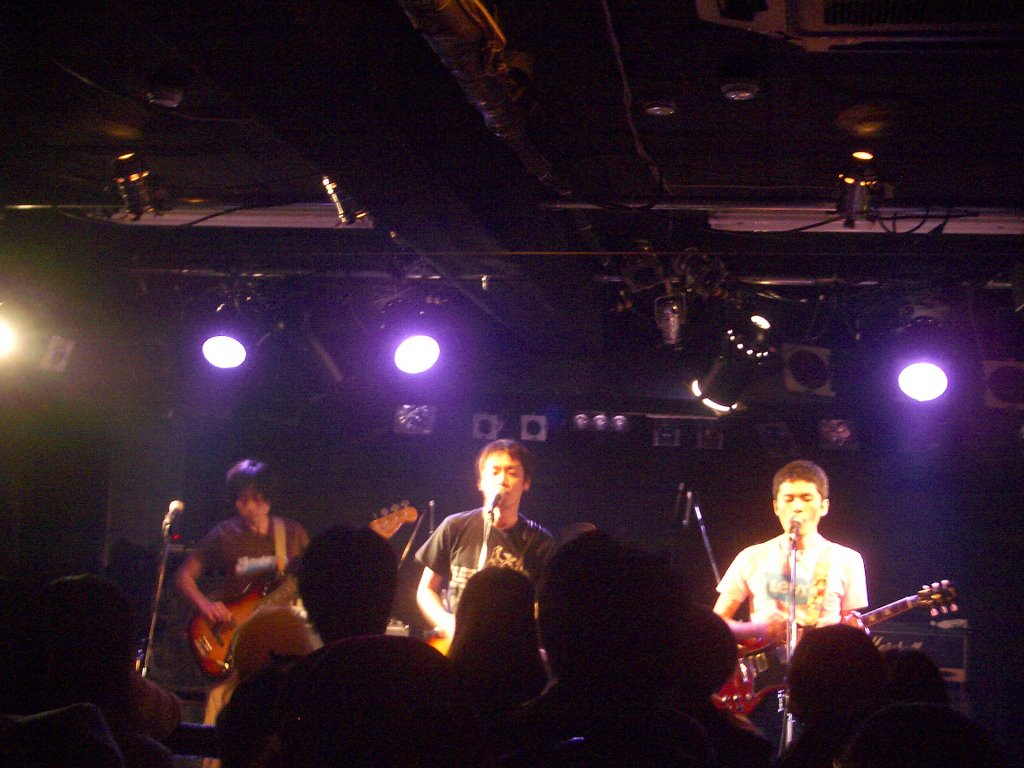
The club where advantage Lucy played, called Junk Box Mini, was in the old town. The Tokyo pop band was the last group in a four-band set, and performing before them was a good Niigata-based band called Extension58, who are old friends of advantage Lucy.

For advantage Lucy it was the first time to play Niigata in eight years, which meant that the last time they were there they were still called Lucy Van Pelt, hadn’t signed yet with Toshiba EMI, and included as members Takayuki Fukumura and Kaname Banba. They played a lot of old songs, maybe in memory of the show eight years ago, and support guitarist Taisuke Takata used one of Fukumura’s old guitars. They also did one brand-new song that didn’t even have a name yet, but was beautiful and super-catchy—making simple and catchy tunes like that must be one of the most difficult things a songwriter can do, but this band does it consistently.

Standing in the back of a crowd of about 100 enthusiastic fans, what struck me most about advantage Lucy’s show was vocalist Aiko’s voice. It’s light and delicate, yet the voice isn’t quiet, and it projects. There’s a distinct joy in listening to that voice singing at shows, and it makes me think, I'm in the right place.

***

I spent a bit of time with the band after the show and on the road back to Tokyo, and ate more food. With them, everything was magnified: if, say, raw crab sashimi was tasty, it wasn’t just good, it was always THE BEST THING THEY’VE EVER TASTED. They are also very ordinary Japanese kids in some ways, staying up until dawn playing card games, and then excitedly buying sweets and toys in gift shops the next day. At times like those it’s sometimes hard to see the emotional depth that lead to their creating their brilliant songs, but it’s doubtless submerged somewhere inside, to come out when needed.

Sunday, April 23, 2006

U.S.-Bound Swinging Popsicle At 440

I wasn’t well-versed in the complex ritual of claiming a reserved ticket and getting into the club at Shimokitazawa’s 440, so even though I got there right at the opening time at 7PM last night to see Swinging Popsicle, I was very much at the end of the line.

Apparently, if you’ve reserved a ticket, you’re supposed to go to the club at 6 in the evening, to be issued a numbered ticket. Then, at 7PM, the staff lets people in according to the alphabetical letters and the numbers on those tickets: “All A’s and all B’s up to 20 can now enter”, etc. It was very meticulously done in a distinctly Japanese way. If you hadn’t gotten a number at 6 though, your place was at the tail end of the queue. And, in the looking glass world that Japan sometimes is, if you were on the guest list, you were allowed into the club at the very end, even after all the clueless ticket reservers like me who hadn’t showed up at 6 to take a number (the reason being that paid customers should get in before people on the guest list, who are seeing the show for free—whereas, in the U.S. and elsewhere, wouldn’t people on the guest list go in first?). So, my friends Steve Laity and Yaeri, who were both on the list, had to wait until the last minute to enter the club.

This all matters because the 440 is a café club, which means you watch events seated at a table and the earlier you get in, the better your seat is. If you get in too late, on the other hand, you may end up watching the show standing uncomfortably between various café furniture, feeling on your back the unhappy stare of a sitting customer whose view you are blocking… Fortunately, Steve and I found open space on steps right next to the stage, and we ended up with an up-close view of the Swinging Popsicle performance.

I’ve written several times before about Swinging Popsicle gigs, so I’ll keep this simple: the trio is always a joy to watch, three veteran musicians who pump out sweet and spirited pop songs with expertise, and last night’s show was no exception. I’ve described singer Mineko Fujishima as a soul diva in a petite Japanese woman’s body, and that was true. She said later she was nervous during the gig because it was the band’s first in a few months, but it didn’t show at all. You can listen to song samples of theirs here.

Swinging Popsicle is headed to San Jose, California in late-May to play at an anime convention called Fanime, along with the Japanese bands Guitar Vader, Miami, Goofy Style, Poplar and Up Hold. If you are in the Bay Area and are interested in the music (or if you are somewhere else and wouldn’t mind traveling to listen to some Japanese music), I highly recommend going. I, for one, am traveling from Tokyo to attend the event—maybe if you are there, I’ll see you.

The band also said they will be performing with advantage Lucy on July 16, once again at the 440.

Yes!

Yes!!

Advantage Lucy and Swinging Popsicle are two of my favorite Japanese groups.

Next time, though, I’ll know to get my number at 6PM.

Thursday, April 20, 2006

The Caraway & Ex-Bridges At The Shelter

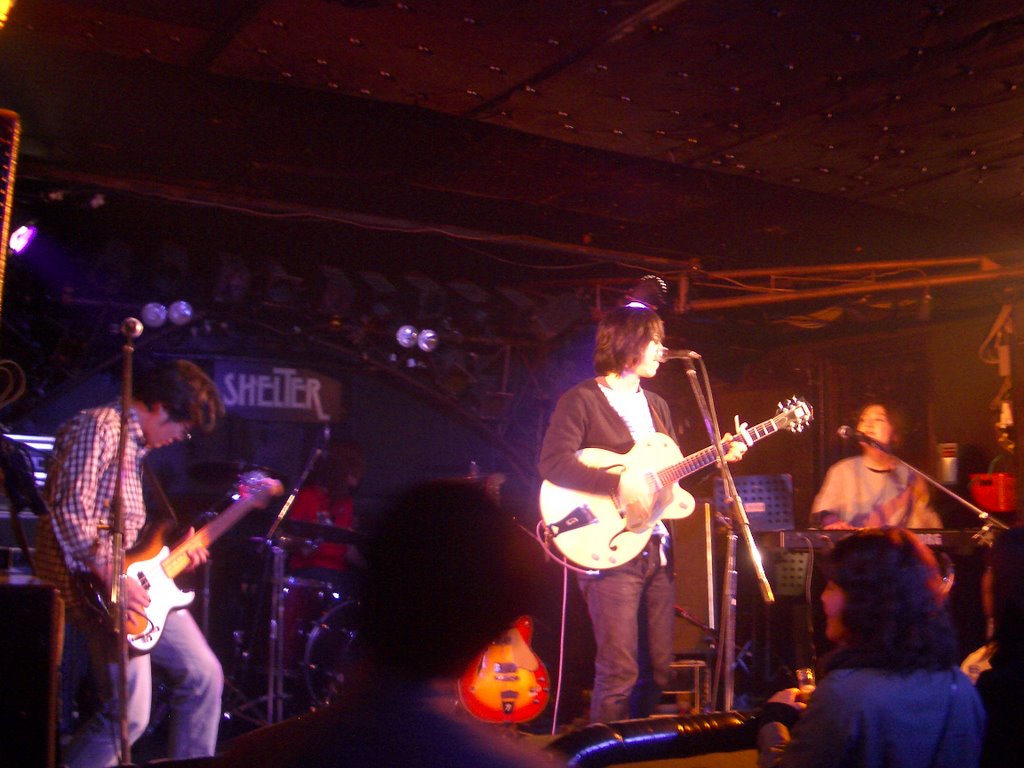
Guitarist Osamu Shimada had a fever of 38.2 degrees Celsius (101 degrees Fahrenheit) when he hit the stage of the Shimokitazawa Shelter with his band the Caraway, but you wouldn’t have known it if you were at his show. It was a performance that made me suddenly remember the things that drew me into Tokyo’s indie pop scene a few years ago: guitar sounds as bright as a sunny Southern California day, melodies as catchy as those of the first album you ever bought, and as much energy as your first all-night party with friends.

Shimada is also the lead guitarist of pop trio Swinging Popsicle, and listening to the way he crunched out precise and color-filled Caraway guitar solos in spite of his fever, I saw one big reason why the great Swinging Popscle has remained popular a decade after exploding on to the scene—its super guitarist. Shimada's other band, the Caraway, is due to release its first album in June. Can’t wait!


The Caraway

***

Long before either Swinging Popsicle or the Caraway was formed, in the early-1990’s, there was a neo-acoustic group called Bridge, whose music still influences Japanese bands, and whose members have continued with music, most notably the singer Hideki Kaji. At the Shelter show two bands featuring former-Bridge members played: Three Berry Icecream, of whom I wrote about recently, and Chicago Bass, which includes Mami Otomo, Bridge’s former singer. Both were good.

The evening, in fact, became a Bridge reunion of sorts, because, standing at the back of the tiny club watching the shows was the man himself, Hideki Kaji. I did a double-take when I saw his familiar face in the audience, and many fans went up to chat with him and take photos with him after the show. You have to understand that for many in Japan’s indie pop scene, Kaji is about as big as they get—I imagine there are a good number of people out there who would rather meet him than any number of major label Japanese ‘stars’. I didn't chat him up, though, because I'm not that familiar with his work, not owning any of his solo albums. Maybe next time though...


Chicago Bass

Saturday, April 15, 2006

4 Bonjour's Parties, Kitsune No Kai, Juke Joint


Kitsune No Kai

Hanging out at the Shibuya O-Nest on Thursday night watching 4 Bonjour’s Parties and other bands play, the thought came to me that these guys are turning the club into something like a juke joint.

The way folks in the American South go to juke joints to play the blues, the music lovers at the O-Nest were there to unwind and have a good time through music, after a long day. When each band’s set was over, the members streamed back into the audience to see the other groups and to chat with friends. None of them locked themselves up in the dressing room, refusing to mix with the fans.

Though the evening proceeded according to a schedule, and all the bands must have rehearsed beforehand, I didn’t get the sense that everything was scripted, like I sometimes do watching bands who take each show seriously as another small step in their musical careers. Nothing wrong really with the serious bands, except that they lack spontaneity, which, come to think of it, isn’t right at all.

Between songs, the clarinet-playing front man of 4 Bonjour’s Parties talked in squeaky imitation-woman voice for reasons only known to him, causing the other members to giggle. It didn't matter to them that they were on a stage facing several dozen people--they were going to have fun regardless. Their manner might have been annoying if not for the fact that their silliness was followed by their gorgeous, slowly flowing pop music, which sounds classical at times in part because of the wind instruments the members take turns playing (clarinet, flute, trumpet, trombone and sax). You can hear sample songs of theirs here.

I also liked a band called Kitsune No Kai, which means something like ‘party of the foxes’ or ‘meeting of foxes’. They played songs with names like “The Lamb of Finland”. The event program described them as "Japan's Belle and Sebastian", but they also reminded me of Cowboy Junkies and Mazzy Star. These foxes have recently released a series of three CD singles, which I’ll have to listen to.

Also playing was Shugo Tokumaru and a band called toy. Unusually for a show at the O-Nest, many in the audience listened to the shows sitting on the floor. Also unusually, the DJ put on some Bach between two sets.

***

The other day I stumbled upon the website of Yu Hirano, the founder of the rock club Loft, arguably Japan’s most important live house, and in one of his columns he wrote something I agreed with completely. Hirano was talking about the beginnings of the Loft, and how at first he wanted the club to be something more than a place where people pay to watch bands play. Instead, the Loft would be a hang-out where people meet and talk, with tables and food, and live music would just be one ingredient and bands wouldn’t necessarily play every night but only when the Loft felt the bands were good enough.

That wasn’t how the Loft turned out, Hirano admits: to compete with other live houses, the club eventually cleared out the tables to pack more people in, and they started booking bands every night. But his ideal club is still a small place for people to meet and to create something through those meetings, and to accomplish this he says he recently opened a new, smaller live house called the Naked Loft. Again, what I think he is aiming for is a juke joint—a place where people aren’t divided clearly between musicians and listeners, but where the two mix, and make something new, or, at the very least, have fun together.

Friday, April 07, 2006

Yunn & Yuyake Lamp, At Yoyogi Gauss

Yunn and Yuyake Lamp is the piano pop band formerly known as Orange Plankton, minus pianist Yuki. I was a devoted fan of Orange Plankton, but had missed the first couple of shows of Yunn, and finally got an opportunity to see them at a tiny new club called the Yoyogi Gauss.

One of the cool things about Orange Plankton was it had not one, but two girls who took center stage at shows: Yumi, the singer, and Yuki on piano. Watching the two interact musically was always an electric experience. But with Yuki gone, the spotlight was squarely on Yumi, and it revealed what a powerful presence she is, by herself, on stage: I’ve seen hundreds of bands in Tokyo, but in very few are there vocalists whose presence is magnetic like this soft-voiced and petite woman. She seems to breathe in the music around her and exhale it in the form of song.

They played all new songs, which sounded a little more rock compared with Orange Plankton's pop, and in most Yumi played the piano, though I got the sense that she wouldn't mind leaving the confining space of the keyboard and piano stool to dance the expanse of the stage.

The two skilled musicians in the rhythm section, bassist Tsuji and Tamarou on drums, had let their hair grow long enough to tie in ponytails, a new look that reminded me of old Japanese artisans. My non-drug-induced vision was of Tsuji and Tamarou as sculptors of Buddhist statues and Yumi their artistic inspiration, a glowing, golden Idol.

This is band I’ll be following—you can listen to some of Yunn’s song samples here (Yunn is Yumi’s nickname) and a couple of Orange Plankton’s songs are now on the playlist of Japan Live Radio.


***

I went to Yunn’s after-show celebration at a nearby izakaya(a Japanese bistro), and there found out that, by coincidence, four friends of the band, who didn't know each other before meeting each other through Orange Plankton, are from the big northern island of Hokkaido. Like most Hokkaido people, they all have beautifully white skin (you might think the Japanese are homogenous, but they aren’t really—people in Hokkaido look quite different from darker complexioned folks in the southern island of Okinawa, for example). They were also free spirits in that way people from lands with lots of open space are, and they insisted that fish tasted better in Hokkaido than in Tokyo. I like that sort of mild, good-humored regional chauvinism you encounter often in Japan.

Wednesday, April 05, 2006

Japan Live Radio!

One thing that has long frustrated me in keeping this journal is that I'm writing about all these excellent indie bands that aren't well known outside of Japan (and, sometimes, even here), but I know that many readers abroad don't have a way to listen to their music. Most Japanese indie CDs are either hard to buy outside of Japan, or, simply, unavailable. But, for various reasons, I've been against posting MP3s on the site.

Then, recently, an idea-bulb lit up in my head: why don't I set up an internet radio station and play songs of bands I like? Which is what I've done: http://www.live365.com/stations/japanlive

The first program has a bit more than three hours of music by the pop bands I write a lot about. I won't be a daily radio DJ: my plan is to change the programming every few weeks, and vary the themes a bit every time, and I'll let you know when new programs are up. I'm new at this and am not sure whether the radio will work properly, and know, for one thing, that for technical reasons the sound quality isn't the greatest at the moment. In any case, any feedback you can give me on the radio would be highly appreciated. (And, of course, if you discover some awesome band you didn't know about as a result of Japan Live Radio, defnitely let me know!)

Thursday, March 30, 2006

INTERVIEW: advantage Lucy


Advantage Lucy, one of Japan’s greatest rock bands, released an album called Echo Park in September 2005, their first full album in four years.

I talked to the band’s two members, vocalist Aiko and guitarist Yoshiharu Ishizaka, about Echo Park, the four years that it took them to finish the album, and their plans for the future, including new albums and possible overseas tours.

***

Japan Live: It’s been six months since you released Echo Park, and in that time you’ve gone on a national tour. What have those six months been like?

Ishizaka: Has that much time passed? I guess you are right. The tour was loads of fun. But I guess we better start by talking about what happened before that, from the night before the album was released.

Aiko: What happened the night before the release?

Ishizaka: I’m trying to remember…

Aiko: I think, rather than thinking, wow, the album is about to come out, we had a mountain of shipment orders for the album and we had to ship them on the day of the release, so things were crazy.

Ishizaka: We were busy in our capacity as Solaris Records [the independent label run by the two].

Aiko: Yes. But then, the album came out, and there was great positive feedback in our BBS and other places, and that made us happy.

Japan Live: So then you went on tour…

Ishizaka: Yes, we went on tour, and it was a really great tour.

Aiko: We had fun, it might have been the most fun we’ve had during a tour.

Ishizaka: The solo show in Nagoya especially stands out in my memory. The first song of that show, Aiko—

Aiko: Yeah, I suddenly choked up.

Ishizaka: She started crying during the first song.

Aiko: Yes. I cried. There was just something very different in the air there. I could really feel that the audience had been waiting for us, and so, I felt happiness.

Ishizaka: But the other members, we were like musicians at music award ceremonies who continue playing even if the singer starts crying, we were like, we’re not going to stop no matter what.

Aiko: But you didn’t look me in the eyes, because you thought you might start crying too! And Tai-chan [Taisuke Takata, who plays guitar for advantage Lucy], I looked over at him, and he was already crying [laughs]!

Japan Live: [To Ishizaka] Did you feel that nice atmosphere in Nagoya too?

Ishizaka: Yes, it was great. While I was playing I thought to myself, the way the stage was small there, and the way the club looked old, in a good way, those things reminded me of a live house in Shinjuku called the Jam, where we used to play in the early days.

Aiko: It had a similar feel.

Ishizaka: The stage is so small, the neck of my guitar hits the wall. That was like [the club Jam] too.

Aiko: Wait, I remember! I choked up during the first song, and then started crying during the second song, “Glider”.

Ishizaka: It was during the second song?

Aiko: Yes, yes. The second song, during that part [sings the instrumental intro to “Glider”, the first song in the album Echo Park].

Ishizaka: You’re right, it was the second song. That reminds me, during the first night of the tour, at the Shimokitazawa Que, when I did the intro to the first song of the night, “Hair Cut”, my guitar was out of tune…

Aiko: From the start?

Ishizaka: Yeah. I didn’t realize it was out of tune until I started playing. That was quite a disaster. It was like, on the first night of our solo tour, the first person to play was me, out of tune…

Aiko: That’s terrible…

Ishizaka: Yeah, it was, and it was an intro that couldn’t be started over. It made me a little depressed, but the other band members looked at me, like, ‘don’t worry about it’, and they made me want to have fun.

Aiko: Osaka was great too. All in all, we had a lot of special energy, because we’d just released an album for the first time in a while, and we were taking that album along with us on a tour where we were the only band playing.

Japan Live: So the Nagoya show was the best in the tour?

Ishizaka: Nagoya was especially good, though the other places were of course fun too. The thing is, Nagoya used to be thought of as a city where the audience never got that excited. That’s what other musicians say too.

Aiko: They say that Nagoya is a hard city to play.

Ishizaka: So it betrayed our expectations, in a good way.

Japan Live: I wonder what the difference was.

Ishizaka: Maybe it’s just that times have changed. Anyway, the tour ended [in early November] and then I had, what would you call it, burnout syndrome until about the end of the year [laughs].

Aiko: But we were busy at the year-end [because they did many shows].

Ishizaka: Yeah, the year-end was pretty hectic.

Aiko: I thought I would die…

Ishizaka: But once the New Year began, I started thinking, ‘I better start writing some songs again’. And little by little, we’ve been recording demos. And, that brings us to now.

Japan Live: How many demos are you working on?

Ishizaka: We have plans to record about ten songs.

Japan Live: And you are working on those little by little?

Ishizaka: Little by little, yes. We’re still at an early stage, and only have fragments of songs, and we need to flesh those out. What we’re doing now is making demo tapes at the same time we’re writing music.
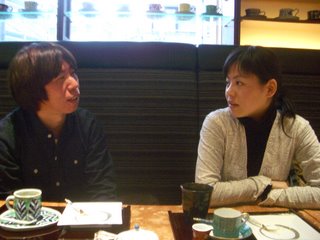


Aiko: I think that the part that is the main pillar for our songs is the melody. I really like songs where you can hum the whole thing, and I think that [making a melody] with one guitar and voice at this stage is extremely important. It’s like, if our songs have a strong foundation [in the form of a good melody], you can pile anything else on top and it would still be okay.

Japan Live: It’s Ishizaka-san who writes the music for advantage Lucy, right? How do you come up with the music? Does it come to you when you are walking around, for example?

Ishizaka: That happens too, and also when I’m casually playing the guitar. Recently, Aiko has been writing a fair amount of music too. And, when I have an image but the melody doesn’t come to me, when I tell Aiko about it, she’s often able to come up with specific melodies.

Aiko: But I don’t like my melodies that much, including their rhythm, and I like it better for some reason when I give the melody to Ishizaka-san and have him sing it in his own way.

Japan Live: So it’s a joint effort.

Aiko: Yes, a joint effort.

Ishizaka: Yes. It’s like Paul and John. And Mick and Keith.

Aiko: We need to make sure we don’t fight [laughs].

Ishizaka: Or maybe we’re more like Morrissey and Marr.

Aiko: That’s not good! We would fight once and then never get back together again.

Japan Live: When the melodies are done to a certain extent, Aiko then writes the lyrics?

Aiko: Yes. Although, recently, I try to write the big theme of the lyrics the moment the melody is created. And then, when the music is all done, I try to put together [the lyrics].

Japan Live: Why do you do it like that?

Aiko: It’s because if I wait too long, the music develops a personality of its own, and I have trouble infusing it with my own emotion. I really consider the first moment when I hear a song important. When I didn’t [come up with a theme for the song right away], I had some songs in Echo Park where I couldn’t write any lyrics for around two years, or others where I re-wrote the lyrics many times because they just didn’t feel right.

Ishizaka: There were some songs where the working title changed many times.

Aiko: Or others that started out as a song in English, but ended up being one in Japanese. When I listen to songs [that Ishizaka writes] for the first time, it’s always a pleasant shock. But when too much time passes after that initial shock, I start thinking, ‘what was that thing I felt?’

Japan Live: So the initial shock is an important thing for you.

Aiko: Yes. I think the initial feeling is a true thing. So, rather than trying to write lyrics about things I usually think about, what ends up becoming my lyrics are things that were sleeping inside me until I listened to Ishizaka-san’s music.

Japan Live: So you don’t really have specific topics that you want to make into lyrics?

Aiko: Not really. Though I’m not sure it’s a good thing that I don’t.


Dream Diary


Ishizaka: Couldn’t you at least keep a notebook of ideas [for lyrics]?

Aiko: Well, I do have some ideas, but I don’t always write them down.

Ishizaka: You don’t have a notebook of ideas, but you do keep a dream diary.

Aiko: Oh, yes, this year I started keeping a dream diary. It’s interesting.

Ishizaka: And didn’t you used to keep a diary that you wouldn’t show anyone?

Aiko: Yeah, I did. That was around 2000, when I was really down, and troubled about things. Rather than a diary where I talk about what happens from day to day, it’s one where I pour out my troubled emotions. So, I myself don’t want to read it again now.

Ishizaka: I see. By writing it down you were sorting things out inside.

Aiko: Right, that’s how it worked. But I was only writing in it at one point in time. It was sometime during the four years before Echo Park came out.

Japan Live: Does your dream diary help you come up with song lyrics?

Aiko: I want it to. But I keep on having weird dreams…

Ishizaka: She has a lot of strange dreams that would never work as lyrics. We were talking today about her latest dream, and it had to do with her being asked to act in a battle scene in a Hollywood movie. And she was given about three lines to memorize, and her partner was the chimpanzee Pan-kun [a chimp that often appears on Japanese television].

Aiko: Yes, it was a movie, but one in which the filming was done non-stop. I was asked to act in it, and I was given two or three lines, and they said here’s your partner, which was a chimpanzee. I was a doctor, and lots of patients were being carried in and I had to examine them. So, I would examine one patient and say something like, ‘this person’s left arm is broken’, and then Pan-kun would write down in his notepad, ‘the patient’s left arm is broken’ [laughs].

Ishizaka: There’s no way that could be turned into lyrics!

Japan Live: It’s very surreal.

Aiko: Yes, lots of weird dreams.

Ishizaka: I mean, a chimpanzee as a doctor’s assistant?!


Lyrics


Japan Live: When and where do you write lyrics? Do you write them at night?

Aiko: When I’m putting the final touches on lyrics I usually go to a family restaurant near my place late at night and work on them until morning. Also, in the bath. I love to take baths, and I’m in the bath for about two hours, and I go in with a pencil and a piece of paper and write lyrics in a relaxed mood. And there’s also a traffic intersection where lyrics often come to me.

Ishizaka: Really?

Aiko: Yes, I told you that before. The intersection of Kan-7 and Koshu Kaido. When I cross the sidewalk there, something comes down to me. It’s on my way home from Ishizaka-san’s house. I got into an accident there too.

Ishizaka: That’s right. You’ve been in a car accident there, and you’ve also witnessed an accident there.

Aiko: It’s a place where things happen for me.

Japan Live: So I guess it’s a dangerous intersection?

Aiko: Very dangerous. There are lots of trucks, and everyone is speeding.

Japan Live: And you get ideas for lyrics there.

Aiko: Yes, I do.

Japan Live: Has it always been the case that you think up lyrics while you are doing something, for example, back in the days when you worked on the albums Fanfare and Station?

Aiko: Yes, oftentimes I’m doing something, like riding my bicycle or taking a bath, rather than sitting at a desk trying specifically to think up lyrics.

Ishizaka: She’s basically not the type of person who can just sit down somewhere and be told to write lyrics and be able to write them.

Japan Live: How about yourself, when you write music? Are you usually doing something else when ideas come to you?

Ishizaka: I used to find it easier to come up with ideas for music when I was doing something else, but I’m the opposite of Aiko, in that I don’t do things unless there’s a deadline. I write music more easily when I have to just sit down and do it.


Echo Park


Japan Live: “Echo Park” is a name of a guitar effect pedal, right? Why did you choose that as an album title?

Aiko: We were looking for a title for the album, which is something that we have trouble with every time, and in particular, this time, it had been four years, so we weren’t looking for a specific noun [for the album title] but some expression that would have broad meaning. The songs too, there were older songs and also songs we’d finished recently, the album covered many years’ worth of work. And the lyrics were about both the future and the past, and covered a lot of territory. So I was thinking, ‘is there anything that would work’, and I went to practice and looked down and next to Ishizaka-san I saw an effect pedal called Echo Park. I thought, ‘that’s great!’ That fits the image I have exactly, and the image of a park goes well with our music too.

Ishizaka: Personally, the image I have is of eleven songs sitting together at a park. They are sitting in a circle, facing each other, and each is expressing its feelings. And those are echoing in this park.

Aiko: Hey, that’s nice!

Ishizaka: That’s the image I’ve had all along. Lots of different feelings, four years’ worth of them, are echoing together. What a profound title, isn’t it?! But you know, in the future I think we should come up with an album title first, and work on the album based on that.

Aiko: I think that would be good too.

Ishizaka: But [the album] we are working on now isn’t like that. As usual, we’re giving it our all on each of the songs, one at a time.

Japan Live: How do you think Echo Park is different from advantage Lucy albums that came out before it, for example in terms of the music, the lyrics, the image and so on?

Aiko: Music-wise I think it’s close to what we did in the early period.

Ishizaka: The album wasn’t produced [by a major record label] so it has a similar feel to when we started as an indie band. We’re recording and releasing music exactly the way we like. When we were at Toshiba [EMI], things weren’t like that, whereas in the beginning we released our own music. I think that’s the difference.

Japan Live: Because four years had passed since the last album, I assume there was a lot of stuff that you wanted to put into Echo Park.

Ishizaka: Yes, and there were lots of songs that didn’t make the final cut. Although maybe we should have put those into the album. You know, the albums I’ve listened to since I was a child can all fit into 40-minute tapes, and so that’s the image I have of an album. When I listen to others’ work, if it’s close to 70 minutes, I feel myself losing my concentration. I feel that 45 minutes are about the limit for keeping the same sort of atmosphere in one album. Though, having said that, Echo Park is a little longer than that. Anyway, I personally want to change things from the next album. Maybe, for example, I can make the album 70 minutes rather than 45 minutes, and make it my challenge to not bore the listeners. Though, actually, that might be a pointless challenge…

Japan Live: Maybe you can make a double album?

Ishizaka: Yes, that might work. I want to do something unusual.


“Mune-Kyun”

During the interview the two used a Japanese expression, ‘mune-kyun’, which I had trouble translating because I couldn’t think of an equivalent English expression. But it was an important concept so I decided to keep it in Japanese. It means something like the way it feels when you see someone you have a crush on, across the street.


Aiko: Our standard for whether to put a song in the album is whether it’s mune-kyun or not mune-kyun. We have many songs that aren’t mune-kyun, but are extremely good.

Ishizaka: OK, so let’s put in songs that aren’t mune-kyun. Like, really cool songs.

Aiko: Or very dark songs. There are many songs where I think, ‘if a super-cool jazz vocalist sang this, it would be an incredibly good song.’

Japan Live: How would you define ‘mune-kyun’?

Ishizaka: ‘Mune-kyun’ is, probably, like a teenage movie. An American one.

Aiko: When the members of the band got together for the very first time, what brought us together was an ad in a magazine seeking a guitarist and a vocalist who like the Cardigans, and what else was it?

Ishizaka: U.K. and U.S. indies.

Aiko: Yes, and at the end, the ad said ‘I love mune-kyun’. And that part puzzled me, because not many people say ‘mune-kyun’ anymore, but when I met everyone and listened to their music, I knew where they were coming from.

Japan Live: It was Fukumura-kun who placed the notice in the magazine, right?

Aiko: Yes. Fukumura-kun. [Takayuki Fukumara, the guitarist who founded advantage Lucy.]

Japan Live: And ‘mune-kyun’ has remained a condition for whether to include a song in albums?

Aiko: Yes, it’s a condition.

Japan Live: How about a song like “Shiosai” [in Echo Park]? Is that ‘mune-kyun’?

Aiko: Yes, that’s ‘mune-kyun’.

Ishizaka: Is it ‘mune-kyun’?

Aiko: Don’t you think? Though it’s a more painful one. There’s a variety of ‘mune-kyun’, and that song might belong more in a category of sadness and pain.

Japan Live: Echo Park starts out in an upbeat way, while the middle part is mellower, and it closes with songs that work well as a finale. Did you intentionally structure the album in that way?

Aiko: I definitely wanted to have “Glider” as the first song and “Spur Line” as the second song, and then Ishizaka-san said why don’t we make “Anderson” the third song and keep it super-lively.

Ishizaka: Right, and that made it three lively songs in a row. And when “Anderson” ended, we thought, ‘ok, that’s enough’, and put in “Akai Natsu” [a quiet ballad]. I wonder what we’re trying to express with the order of the songs. Maybe an atmosphere.

Aiko: But, you know, we have trouble every time with the order of songs in albums, because we have many different kinds of songs. If it were two years ago, we might have made “Shiosai” the first song.

Ishizaka: Yeah, you were saying you wanted to make that the first song.

Japan Live: That would have given the album a very different feel.

Aiko: Yes, very different!


Four Years

The four years that led up to the release of Echo Park were a turbulent period for advantage Lucy. They had left the major label Toshiba EMI to form their own independent label, Solaris Records. But during that period drummer Kaname Banba went on a long break from the band for medical reasons, and in the end, quit. Then in November 2003, Takayuki Fukumura, the band’s founding member and former guitarist, passed away of heart disease, only 28 years old.


Japan Live: What were those four years that it took you to finish the album like?

Aiko: I was constantly troubled about things.

Ishizaka: About what?

Aiko: What was I troubled about…? The biggest thing was, the question of what I would be able to express [through music]. People around me all said you need to just continue producing things, and I agreed with what they said, but I wasn’t deciding myself which direction I wanted to go, and I couldn’t come up with answers. And in that kind of environment, I was able to make music, but I felt a lot of resistance toward releasing it. And I had trouble coming up with lyrics. What were you doing during that time?

Ishizaka: Uh, I’ve forgotten. What was I doing? But in any case, it was good that Echo Park came out.

Aiko: Yes. But if there wasn’t that four-year blank period, we probably wouldn’t have been able to make that album. During that period, there were the matters of Banba-san and Fukumura-kun, and in the end those two things pushed us to walk down our own path.

Ishizaka: You’re right. It was hard to sort things out emotionally after those two incidents.

Aiko: Yes.

Ishizaka: We needed time.

Japan Live: During those four years, did you ever think about taking some time off from advantage Lucy?

Ishizaka: I never did, no.

Aiko: No, I didn’t want to take a break. I wanted to continue with it. But I was very stressed out, so, for example, I kept a secret diary [laughs].

Japan Live: But you continued to do shows during those four years.

Aiko: Yes. And we met Sotomura-san. [Kimitoshi Sotomura, drummer of the band Sherbets, who also now plays drums for advantage Lucy.]

Japan Live: Echo Park contains many songs about the passage of time, and about loss and discoveries.

Ishizaka: You are right.

Aiko: That’s something that couldn’t be avoided. We needed to have those things in our lyrics. But because we were able to make those lyrics and songs, the next road opened up for us.


Next Album


Japan Live: Will your next album go in a different direction than previous albums?

Ishizaka: Yes, we’ve been thinking about that. We talk about this as we make songs. If a song flows in a certain way, we can continue with that flow until the end, or we can suddenly change directions. Until now we’ve been making relatively straightforward songs, but we sometimes think maybe we can make songs in a slightly different way, or we can try things that advantage Lucy would have never done before.

Japan Live: So, for example, you might make a song whose mood changes in the middle?

Ishizaka: Yes. We haven’t really done songs like that before.

Aiko: Even though we like songs like that.

Ishizaka: But we’re not trying to be too brainy either.

Aiko: I think it’s just that we’re able to cover more ground. We’re doing things on our own and we feel freedom.

Japan Live: I assume you’ve just started on your new album, but in what ways do you think it will be different from Echo Park? Do you have any goals?

Ishizaka: I think it will be an album that is very free, emotionally.

Aiko: Yes, because now there isn’t anything that is getting in our way.

Ishizaka: With Echo Park, we looked back, at a time when we needed to look back. We really needed to review things. But because we’ve finished that, we’re free emotionally. And that makes us want to try things that we haven’t done before.

Japan Live: Have you found new musical influences recently?

Ishizaka: One thing that opened up my mind is Cat Powers’ new album. What was it called? Oh yes, The Greatest. That’s a free-sounding album.

Aiko: It’s good.

Ishizaka: But Cat Powers still hasn’t strayed from her roots. The way she is relaxed, the way she expresses her emotions so freely. She’s influenced me, though our music is different from hers. But it’s good stuff.

Japan Live: Advantage Lucy started out as a band of people who liked New Wave and Swedish pop. Have your influences changed since then? Were there any particular artists you listened to a lot when making Echo Park?

Ishizaka: Well, this is something I heard from someone, but when you start out, you study under a teacher, as an apprentice. And, eventually, you gain independence, but at that point you are still influenced by your teacher’s skills, and you haven’t established your own. But when you break through that, you finally become someone. In the case of advantage Lucy, bands like the Cardigans and the Smiths were our teachers, but now we want to take the next step. Advantage Lucy started out influenced by them, but now we are trying to break through that shell. And, then, I think there will really be a genuine band called advantage Lucy. So, in that sense, while of course listening to others’ music influences us, an even bigger thing for us now are things like musicians’ attitude. That influences us more. Cat Powers is like that, and so is a percussionist named Tomo Yamaguchi. He’s someone with real personality, he makes his own percussion instruments. He’s a session musician, and appeared on TV with UA, on a kid’s program. And because he’s so straight and modest when it comes to music, he’s able to express what he feels very powerfully. People like him have been influencing me. I mean, there’s a Lucy in the minds of others, and there’s our own Lucy, right?

Aiko: Yes.

Ishizaka: Well, I want Lucy to satisfy people’s expectations. But as artists, we might be trying to take our own Lucy in a direction that is contrary to people’s expectations. But, I really like our fans, and so I wonder if we’re doing the right thing, but then when I meet artists who are exceptional, they give me power. In Aiko’s case, she likes art, and goes to museums a lot.

Aiko: Yes, we went together to this exhibition of art by Olafur Elisson that looked at light as a theme, and it was great. When I see things like that, I get the desire to create music that would go well with such art.

Ishizaka: At the exhibition of light there was this interesting room that was all orange light, and when you go inside the room everyone appears black and white.

Aiko: It’s just an orange-colored, square room, but when you go in, you turn black and white.

Ishizaka: Right, it’s very interesting. And, the Aiko I’m looking at now turns black and white, and looks like someone from the past. This is art about how I respond when I see Aiko like that: it makes me think things like, here is this person that I’m in a band with, and I’m always making her worry, but I better treat her with more care…

Aiko: [Laughs] What?

Ishizaka: I’m saying that’s an example of how that sort of art makes you feel. It’s a simple thing, but by making you look at things in a different way, it creates something interesting. It gives me hints on how, when making our own music, maybe if we try this or that it might be interesting.

Japan Live: Do you think people won’t accept it if you started making music that is contrary to their expectations of what Lucy’s music should be like?

Ishizaka: I actually think, no, people won’t be turned off. I mean, we’ve always given it our all and have always been completely satisfied about our work, and have lots of confidence, but if we become less focused on entertainment and really showed who we are, I think people who truly like our stuff would be impressed. We’ll be able to betray people’s expectations in a good way.

Aiko: But you know, we’re making some good songs.

Ishizaka: Yeah, they’re pretty good. I’ve been saying a lot of stuff, and earlier I was saying that we would be moving away from our teachers. One thing I’ve wanted to do is to focus on making three-minute pop songs. But…that’s what the Smiths were about [laughs]! So, I guess in some ways we are moving away from them, and in other ways we aren’t, but in any case our songs were getting a little long recently.

Aiko: So we’re aiming for three minutes. Though one song is already longer than that…

Ishizaka: Well, I think that song is fine like that. But if we think, ‘this song should be three minutes’, we’ll cut as many of the parts as needed, and will really tighten it.

Japan Live: You said before that this year you are aiming to release two albums.

Ishizaka: Yes, two.

Aiko: We will work on two. But can we release two?

Ishizaka: Of course we can! If we don’t work with that mindset, we can’t release two. There’s no more ‘four year blank period’ for me.

Aiko: No, of course not. Of course we will release one album this year, but there’s one other theme we are thinking about for an album, and do you think we will be able to release it this year too? Will we make it?

Ishizaka: Well, probably not.

Aiko: But we will start making it this year, probably.

Japan Live: Why are you thinking about making two albums? Will the two be very different?

Ishizaka: Well, I like light bulbs, and I told Aiko I want to make a mini-album with light as a theme.

Aiko: And I really like things like that, so I thought we should make that one theme in our shows, and choose the right venues, and make it into something where art and music unite. But if we do that as part of our usual solo show, we will want to do our usual upbeat songs too, and the audience will also be expecting those songs, and then the atmosphere wouldn’t be right. So we thought it would be best to divide the shows into two types, and if we were going to do that, we felt it would be clearer if we made two albums too.

Japan Live: So one of the albums will have that as a theme?

Aiko: Yes, it might become a little experimental.

Japan: You’ve been doing shows at a lot of different, interesting places recently.

Aiko: Yes. We haven’t done many shows at normal live houses recently, proportionately speaking.

Ishizaka: Yes, but we’ve been doing mostly acoustic sets these past two or three months.

Aiko: Acoustic sets are good because they require a lot of focus. You know, there are old buildings across the country, I’d like to visit them and do (acoustic) shows in them.

Japan Live: A national old building tour?

Aiko: That’s right. I’d like to. (The show we did) at a temple was good too. It was in a big space with a floor of tatami mats, and behind us was a shiny altar, and everyone was sitting on the floor watching the show.

Japan Live: Where was that show?

Ishizaka: In Hiroshima. The sake was delicious there. The sweet sake too, it was very delicious.

Aiko: It’s because they make it there.

Japan Live: By doing shows in new types of locations where you’ve never played before, are you trying to show the audience new things too?

Ishizaka: That’s what we want to do with the other album, while with the album that will be the sequel to Echo Park—well, not really a sequel—its extension—well, not an extension either...

Aiko: Standard Lucy?

Ishizaka: Standard? I don’t know if that’s the right word either. Maybe, the main one.

Japan Live: Will that main album come out first?

Ishizaka: Yeah, we will need to release that one first. We’re going to be busy from now on.


Playing Abroad


Japan Live: You’ve already been to Seoul twice, will you be playing abroad more?

Ishizaka: Yes, we will continue to go abroad. We want to do a lot abroad.

Japan Live: You might be going to Taiwan around May?

Aiko: Maybe. But it’s still undecided. We will be going to Korea in April though.

Ishizaka: We will go to Niigata then too. And we want to go to the U.S. and Europe.

Japan Live: I get e-mails from Lucy fans reading my website who are from China, Hong Kong, Taiwan, Korea, Indonesia…

Ishizaka: Indonesia! Wow.

Japan: And the U.S., Canada, Brazil, Spain.

Aiko: That makes us happy.

Ishizaka: The Internet has made me think, since I was born on earth I want to go to all sorts of places while I’m alive. I don’t want to die without having seen the Pyramids. You know?

Aiko: That’s right.

Ishizaka: Or, is it really okay to die without having seen the Himalayas? Though, I can go on endlessly like that.

Japan Live: Do you have any specific plans yet to play abroad?

Aiko: No, nothing yet.

Japan Live: Where do you want to go most?

Aiko: On tour, right?

Ishizaka: The Maldives [laughs]? That wouldn’t be a tour, it would be just travel.

Aiko: If on tour, England, for one.

Ishizaka: Yeah, Europe. And the U.S. too. Because we’ve been influenced by music from the U.S., England, and Spain and France too. I want to go to Manchester and Glasgow. And San Francisco and LA. I’ve only been to the East Coast of the U.S., Washington and New York.

Japan Live: The West Coast is nice and warm.

Ishizaka: Yes, and Aiko looks every day at the Panda Cam of the San Diego Zoo.

Aiko: Every day.

Ishizaka: It broadcasts Internet images of pandas, pandas sleeping, pandas eating bamboo…

Aiko: And being fed milk. It’s incredible.

Japan Live: Well, you should definitely go to the West Coast.

Ishizaka: If any promoters are reading this, please invite us [laughs]! We won’t ask for much.

Japan Live: Do you have anything you want to say to your overseas fans?

Ishizaka: Thanks so much for supporting a band like us, from an island nation like ours. We want go to your town some day. Please call for us with a big voice.

Aiko: It makes me so happy that people like you from a distant land say you like us. I want to meet you and shake your hand.

Tuesday, March 28, 2006

Mothercoat Video

Take a look at this video of a show by funky Japanese punk band Mothercoat, whose singer I described in an earlier post as "somewhere between an electric-shocked Butoh dancer and a swinging Iggy Pop mannequin". The video is on JapanFiles.com, the super-cool online Japanese music MP3 shop.

Friday, March 24, 2006

Two New Bands At The Grapefruit Moon


You’ve never heard about these bands I’m about to describe.

They are groups that are just getting started, and few know about them even in Tokyo. But they are neat bands that are worth checking out if you run across MP3’s of theirs or see them listed in a gig schedule somewhere.

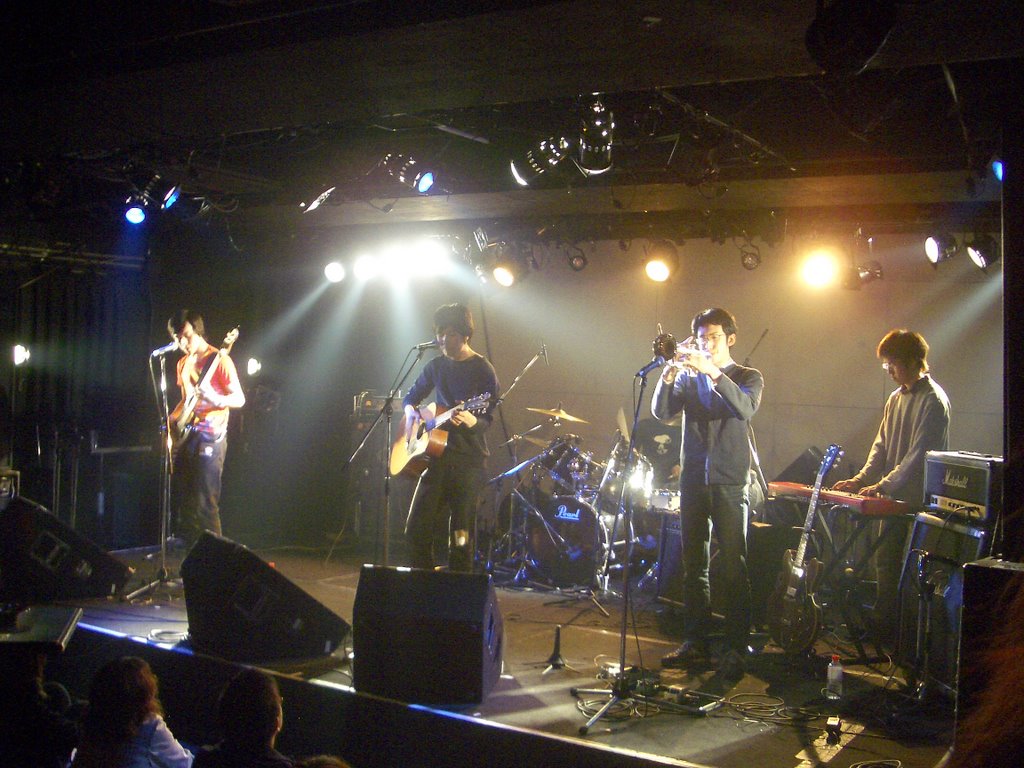
One of these is the Yellow House Document, a successor band to Lost In Found, which disbanded earlier this year. Lost In Found’s vocalist Mike Matuszak, drummer Tetsu Saito and their lead guitar Dai stayed together and added a bassist to form Yellow House Document. They played their first show on Friday night at the bar Grapefruit Moon in Sangenjaya. Unlike Lost In Found, the new band doesn’t have keyboards or a horn person, and instead are in a conventional guitar-bass-drums rock band arrangement, and that made them sound more rock than Lost In Found’s indie pop sound. But it was clear Mike Matuszak’s ability to create catch pop melodies was intact, and I knew this group is one I’d be seeing more of in the future. They also guest-featured a guy playing the theremin, the instrument that uses two antennas and sound waves to produce whirring musical notes, and that added a 50’s sci-fi movie feel to the set.


The Yellow House Document

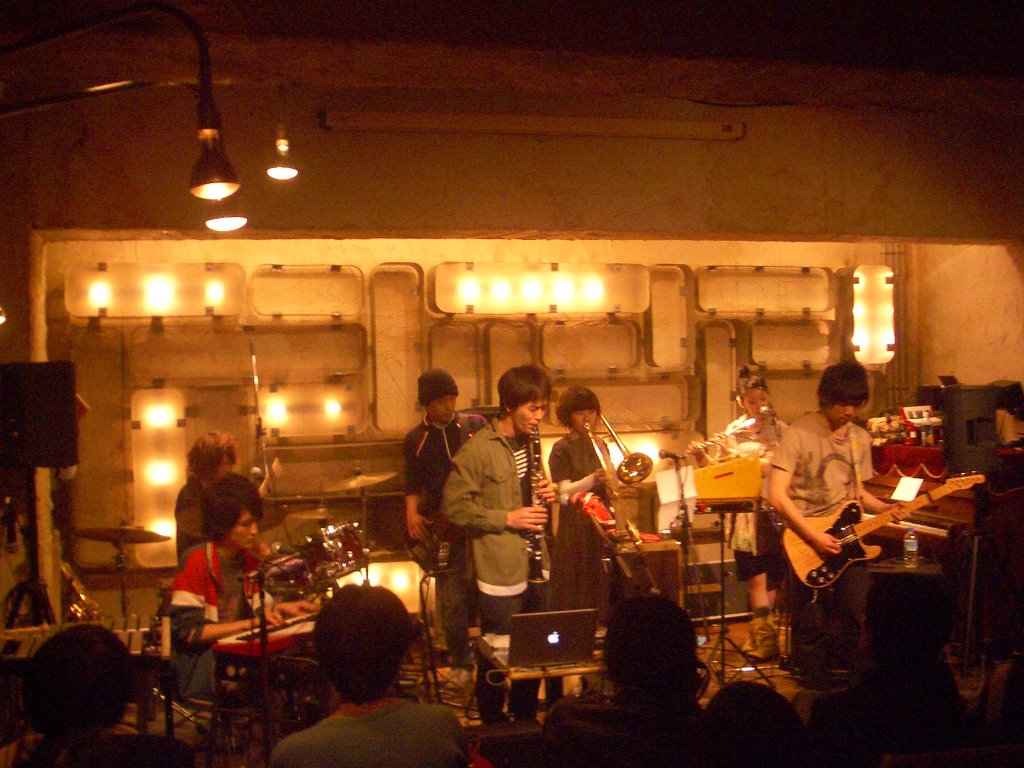
The other group is 4 Bonjour’s Parties, a group of multiple instrumentalists (the female vocalist played the flute, piano and a mini-accordion) who perform vivid but laid-back chamber music-like pop songs. Some of their tunes reminded me of Arcade Fire, while others were a bit like Galaxy 500. It’s gorgeous stuff (tunes can be sampled here and here), like streams of different colored instrumental sounds flowing together into a slow-moving river of music. And it was fun watching the seven musicians scramble around stage between, and sometimes during, songs to find the next instrument they needed to play (their guy vocalist gets extra points in my book for playing a clarinet). Recently, I also saw a band called Little Lounge Little Twinkle that, like 4 Bonjour’s Parties, uses imaginative orchestration, using instruments like the oboe and viola, to come up with a new pop sound. If this is an emerging Tokyo music trend, it’s a welcome one.


4 Bonjour's Parties

***

I had never been to the club Grapefruit Moon before, and as I walked over to it I almost wondered whether I took a wrong turn somewhere. You wouldn’t expect to listen to cutting-edge pop music on the street where the Grapefruit Moon is located: it’s an alley that has kept the look of Tokyo of several decades ago, with little stores selling fish and fruit and vegetables, while a public bath house is right across the street from the club. I like the idea of a rock club being in a neighborhood like this though. A live house in the middle of bustling districts like Shibuya, Shinjuku and Ikebukuro might attract more customers, but the Grapefruit Moon’s location clearly has more character and charm.

Wednesday, March 22, 2006

Kitchen Gorilla's First "One Man"


It's amazing how sometimes a thing that isn't a huge deal for one person is earth-shatteringly important for another. That thought was on my mind Monday night as I watched The Kitchen Gorilla perform their first-ever one-band-only gig.

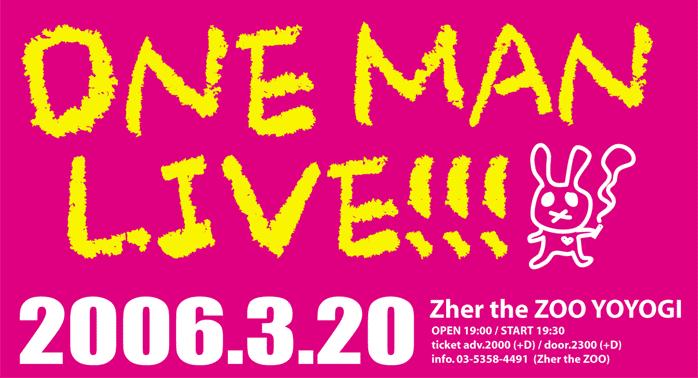
In Japan, the first show a band does alone (without other bands playing on the same set) is a major event, a rite of passage and a milestone showing that a group has gotten big enough that it can fill a rock club with its own fans. Bands put in a giant effort to make sure the gig goes well, and no true fan would think of missing it. And indeed, it was crowded at the Yoyogi Zher The Zoo, the site of Kitchen Gorilla's first "one-man show" (as it's called here).

Some of those in the audience were moms and other family of band members, and the event itself reminded me a bit of a graduation ceremony: when the band talked between songs, there were the thanks and future promises of a valedictorian speech (though, maybe one for Rock 'n' Roll High School...). Outside of the club was a bouquet of flowers from Kitchen Gorilla's management agency. And the band itself was visibly nervous because of their desire to pull the show off perfectly.

I don't have enough experience hanging out with bands back home in the U.S. or elsewhere to know for sure, but it doesn't seem to me that the first solo show of, say, an American band is quite as momentous an occasion as it is for a Japanese group. Sure, it's a big deal and a nice thing, but it's not something for which you do visualization exercises the days before the actual event, is it (Kitchen Gorilla singer Kayo said she did)?

Maybe it's the Japanese love for rituals and formalities that results in the first one-man show being so important here. What was strange to me, though, was that Kitchen Gorilla was super-nervous during the gig, even though, for once, they must have known that everyone in the audience was fans or friends or family, who love them. Part of it was probably that they had to play an hour and a half or two hours, when they are more used to six-song, half-an-hour sets, and they were worried whether they might mess up. But even so, this is a great live band that has really knocked me out with their performances in the past, and I don't think just fear of failure explains it. Rather, I think it's that the band built a giant mental edifice out of the fact that This Is Our First One Man, and that weighed on them.

All of which isn't to say that they weren't good. It was, actually, a nice show, and an emotional one. But it seemed like somewhere, they were holding back a bit, until about the various last songs they did for encore, when they went all out.

As part of the One Man festivities, vocalist Kayo passed out a booklet detailing her thoughts on all the songs they did that night, and the band also handed out a CD-R containing a new song. Called "Fallin', Fallin'", it was a typical Kitchen Gorilla tune, simple but catchy, Kayo's squeaky, syrupy voice bringing to life the emotions of the love song. I've listened to it over and over since receiving it.

By the way, it really is frustrating that I've been writing a lot about this pop punk trio recently, but there aren't many ways for readers outside of Japan to actually listen to their music, because the band doesn't have sample MP3's on their website or have a MySpace page. If reading my descriptions makes you so interested in Kitchen Gorilla that it keeps you up at night (...yeah, right), send me an e-mail...I'll try to arrange something.

Sunday, March 19, 2006

Help! Planning Band Tour

Dear Readers: I'm planning to help a number of friends' Japanese bands tour the U.S. and Europe, and was wondering if anyone reading this could offer any help or advice. Specifically, I'm thinking about the West Coast of the U.S. (San Diego, LA, San Francisco, Portland and Seattle) and London, though other big cities anywhere are also possible. The bands would be ones that already have some fans in the U.S. and Europe, so if he managed right they could attract a good crowd. Are you, or do you have a friend who is, a club manager, booking agent, band that can do a joint show, journalist or writer, etc. etc.? If yes, and you are interested, or if you have any suggestions, please e-mail me at gonglinjian@yahoo.com. I'd appreciate anything you can tell me! Ken

Saturday, March 18, 2006

Little Lounge Little Twinkle; Three Berry Icecream

I went to a club called 440 in Shimokitazawa on Thursday night to see Three Berry Icecream, and there fell in love with a group I saw for the first time, named Little Lounge Little Twinkle (LLLT).

When LLLT came on, the third and final act of the night, I was at the back of the club with a drink in hand, focused more on chatting with friends than listening to the band. But then LLLT began playing, and my conversation, my drinking, my everything came to a halt. From their opening notes they grabbed my attention.

Little Lounge Little Twinkle, which is the musical unit of a guy named Shunsuke Kida, played what sounded like hip cinematic music, and, indeed, on the band’s website Kida lists Ennio Morricone and Michel Legrand as composers he respects (along with Burt Bacharach and the Japanese pop music composer Kyohei Tsutsumi). A friend compared LLLT to Architecture in Helsinki and Fugu.

One thing that thrilled me about this band was their instrumental lineup. In addition to Kida’s keyboards, a drummer and a guy on standup bass, they had a flute, viola and an oboe. An oboe! I’ve been to hundreds of rock shows in Tokyo, and this was the first time I saw anyone playing that oxygen-depriving double-reed instrument. And the ensemble sounded wonderful, combining the charms of movie music with the intensity of live playing.

When I think of bands in Japan trying new things, I think on the one hand of neo-Techno future pop groups like YMCK and Aprils, and on the other Out There eccentric ensembles like Limited Express (has gone?), the Boredoms and Melt-Banana. Little Lounge Little Twinkle doesn’t belong in either of these schools, but what they are creating is also new and lovely. A band to watch.

I think I have pretty varied taste in music: on any given night, you might find me at a punk rock show, listening to guitar pop bands or bopping to straightforward rock (not to mention classical, jazz, etc. etc.—music is music). But while, say, the explosive Japanese emo of a band like Eastern Youth always grips my heart, somewhere in the back of my mind I’m yearning to listen to a group like Three Berry Icecream, if I’ve been away from it for a long time. Three Berry is the musical unit of singer and accordionist Mayumi Ikemizu, who was once in the band Bridge with Hideki Kaji, and its music is quiet, bright and mellow.

Many of Ikemizu’s fans are those who grew up listening to 90’s Japanese pop bands like Bridge and Flipper’s Guitar. Her husband told me those mostly female fans, in their 30’s, don’t go to CD stores that much anymore, so Three Berry is selling its new mini-album, Rain Drops, in zakka-ya, shops that sell assorted little objects like candles, fancy boxes, photo stands, and so on. And I could see how Ikemizu’s songs would sound especially great in that sort of atmosphere. Ikemizu, by the way, is a true Tokyo indie music scene heroine, a mother of an adorable five-year-old girl, and a woman whose music has influenced many bands and who has continued with music and just released an album for the first time in six years.