Thursday, March 30, 2006

INTERVIEW: advantage Lucy


Advantage Lucy, one of Japan’s greatest rock bands, released an album called Echo Park in September 2005, their first full album in four years.

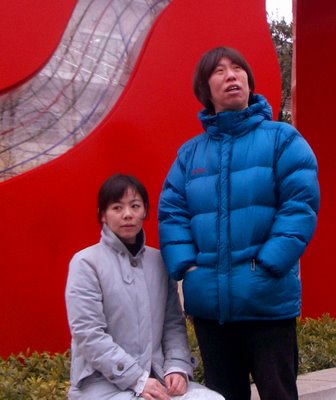
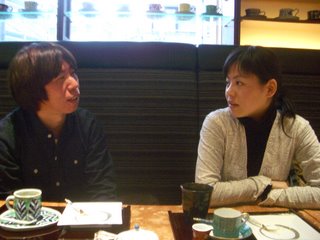
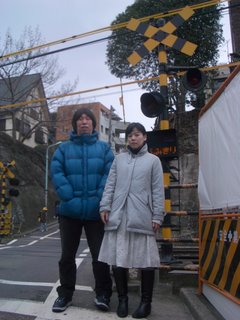
I talked to the band’s two members, vocalist Aiko and guitarist Yoshiharu Ishizaka, about Echo Park, the four years that it took them to finish the album, and their plans for the future, including new albums and possible overseas tours.

***

Japan Live: It’s been six months since you released Echo Park, and in that time you’ve gone on a national tour. What have those six months been like?

Ishizaka: Has that much time passed? I guess you are right. The tour was loads of fun. But I guess we better start by talking about what happened before that, from the night before the album was released.

Aiko: What happened the night before the release?

Ishizaka: I’m trying to remember…

Aiko: I think, rather than thinking, wow, the album is about to come out, we had a mountain of shipment orders for the album and we had to ship them on the day of the release, so things were crazy.

Ishizaka: We were busy in our capacity as Solaris Records [the independent label run by the two].

Aiko: Yes. But then, the album came out, and there was great positive feedback in our BBS and other places, and that made us happy.

Japan Live: So then you went on tour…

Ishizaka: Yes, we went on tour, and it was a really great tour.

Aiko: We had fun, it might have been the most fun we’ve had during a tour.

Ishizaka: The solo show in Nagoya especially stands out in my memory. The first song of that show, Aiko—

Aiko: Yeah, I suddenly choked up.

Ishizaka: She started crying during the first song.

Aiko: Yes. I cried. There was just something very different in the air there. I could really feel that the audience had been waiting for us, and so, I felt happiness.

Ishizaka: But the other members, we were like musicians at music award ceremonies who continue playing even if the singer starts crying, we were like, we’re not going to stop no matter what.

Aiko: But you didn’t look me in the eyes, because you thought you might start crying too! And Tai-chan [Taisuke Takata, who plays guitar for advantage Lucy], I looked over at him, and he was already crying [laughs]!

Japan Live: [To Ishizaka] Did you feel that nice atmosphere in Nagoya too?

Ishizaka: Yes, it was great. While I was playing I thought to myself, the way the stage was small there, and the way the club looked old, in a good way, those things reminded me of a live house in Shinjuku called the Jam, where we used to play in the early days.

Aiko: It had a similar feel.

Ishizaka: The stage is so small, the neck of my guitar hits the wall. That was like [the club Jam] too.

Aiko: Wait, I remember! I choked up during the first song, and then started crying during the second song, “Glider”.

Ishizaka: It was during the second song?

Aiko: Yes, yes. The second song, during that part [sings the instrumental intro to “Glider”, the first song in the album Echo Park].

Ishizaka: You’re right, it was the second song. That reminds me, during the first night of the tour, at the Shimokitazawa Que, when I did the intro to the first song of the night, “Hair Cut”, my guitar was out of tune…

Aiko: From the start?

Ishizaka: Yeah. I didn’t realize it was out of tune until I started playing. That was quite a disaster. It was like, on the first night of our solo tour, the first person to play was me, out of tune…

Aiko: That’s terrible…

Ishizaka: Yeah, it was, and it was an intro that couldn’t be started over. It made me a little depressed, but the other band members looked at me, like, ‘don’t worry about it’, and they made me want to have fun.

Aiko: Osaka was great too. All in all, we had a lot of special energy, because we’d just released an album for the first time in a while, and we were taking that album along with us on a tour where we were the only band playing.

Japan Live: So the Nagoya show was the best in the tour?

Ishizaka: Nagoya was especially good, though the other places were of course fun too. The thing is, Nagoya used to be thought of as a city where the audience never got that excited. That’s what other musicians say too.

Aiko: They say that Nagoya is a hard city to play.

Ishizaka: So it betrayed our expectations, in a good way.

Japan Live: I wonder what the difference was.

Ishizaka: Maybe it’s just that times have changed. Anyway, the tour ended [in early November] and then I had, what would you call it, burnout syndrome until about the end of the year [laughs].

Aiko: But we were busy at the year-end [because they did many shows].

Ishizaka: Yeah, the year-end was pretty hectic.

Aiko: I thought I would die…

Ishizaka: But once the New Year began, I started thinking, ‘I better start writing some songs again’. And little by little, we’ve been recording demos. And, that brings us to now.

Japan Live: How many demos are you working on?

Ishizaka: We have plans to record about ten songs.

Japan Live: And you are working on those little by little?

Ishizaka: Little by little, yes. We’re still at an early stage, and only have fragments of songs, and we need to flesh those out. What we’re doing now is making demo tapes at the same time we’re writing music.


Aiko: I think that the part that is the main pillar for our songs is the melody. I really like songs where you can hum the whole thing, and I think that [making a melody] with one guitar and voice at this stage is extremely important. It’s like, if our songs have a strong foundation [in the form of a good melody], you can pile anything else on top and it would still be okay.

Japan Live: It’s Ishizaka-san who writes the music for advantage Lucy, right? How do you come up with the music? Does it come to you when you are walking around, for example?

Ishizaka: That happens too, and also when I’m casually playing the guitar. Recently, Aiko has been writing a fair amount of music too. And, when I have an image but the melody doesn’t come to me, when I tell Aiko about it, she’s often able to come up with specific melodies.

Aiko: But I don’t like my melodies that much, including their rhythm, and I like it better for some reason when I give the melody to Ishizaka-san and have him sing it in his own way.

Japan Live: So it’s a joint effort.

Aiko: Yes, a joint effort.

Ishizaka: Yes. It’s like Paul and John. And Mick and Keith.

Aiko: We need to make sure we don’t fight [laughs].

Ishizaka: Or maybe we’re more like Morrissey and Marr.

Aiko: That’s not good! We would fight once and then never get back together again.

Japan Live: When the melodies are done to a certain extent, Aiko then writes the lyrics?

Aiko: Yes. Although, recently, I try to write the big theme of the lyrics the moment the melody is created. And then, when the music is all done, I try to put together [the lyrics].

Japan Live: Why do you do it like that?

Aiko: It’s because if I wait too long, the music develops a personality of its own, and I have trouble infusing it with my own emotion. I really consider the first moment when I hear a song important. When I didn’t [come up with a theme for the song right away], I had some songs in Echo Park where I couldn’t write any lyrics for around two years, or others where I re-wrote the lyrics many times because they just didn’t feel right.

Ishizaka: There were some songs where the working title changed many times.

Aiko: Or others that started out as a song in English, but ended up being one in Japanese. When I listen to songs [that Ishizaka writes] for the first time, it’s always a pleasant shock. But when too much time passes after that initial shock, I start thinking, ‘what was that thing I felt?’

Japan Live: So the initial shock is an important thing for you.

Aiko: Yes. I think the initial feeling is a true thing. So, rather than trying to write lyrics about things I usually think about, what ends up becoming my lyrics are things that were sleeping inside me until I listened to Ishizaka-san’s music.

Japan Live: So you don’t really have specific topics that you want to make into lyrics?

Aiko: Not really. Though I’m not sure it’s a good thing that I don’t.


Dream Diary


Ishizaka: Couldn’t you at least keep a notebook of ideas [for lyrics]?

Aiko: Well, I do have some ideas, but I don’t always write them down.

Ishizaka: You don’t have a notebook of ideas, but you do keep a dream diary.

Aiko: Oh, yes, this year I started keeping a dream diary. It’s interesting.

Ishizaka: And didn’t you used to keep a diary that you wouldn’t show anyone?

Aiko: Yeah, I did. That was around 2000, when I was really down, and troubled about things. Rather than a diary where I talk about what happens from day to day, it’s one where I pour out my troubled emotions. So, I myself don’t want to read it again now.

Ishizaka: I see. By writing it down you were sorting things out inside.

Aiko: Right, that’s how it worked. But I was only writing in it at one point in time. It was sometime during the four years before Echo Park came out.

Japan Live: Does your dream diary help you come up with song lyrics?

Aiko: I want it to. But I keep on having weird dreams…

Ishizaka: She has a lot of strange dreams that would never work as lyrics. We were talking today about her latest dream, and it had to do with her being asked to act in a battle scene in a Hollywood movie. And she was given about three lines to memorize, and her partner was the chimpanzee Pan-kun [a chimp that often appears on Japanese television].

Aiko: Yes, it was a movie, but one in which the filming was done non-stop. I was asked to act in it, and I was given two or three lines, and they said here’s your partner, which was a chimpanzee. I was a doctor, and lots of patients were being carried in and I had to examine them. So, I would examine one patient and say something like, ‘this person’s left arm is broken’, and then Pan-kun would write down in his notepad, ‘the patient’s left arm is broken’ [laughs].

Ishizaka: There’s no way that could be turned into lyrics!

Japan Live: It’s very surreal.

Aiko: Yes, lots of weird dreams.

Ishizaka: I mean, a chimpanzee as a doctor’s assistant?!


Lyrics


Japan Live: When and where do you write lyrics? Do you write them at night?

Aiko: When I’m putting the final touches on lyrics I usually go to a family restaurant near my place late at night and work on them until morning. Also, in the bath. I love to take baths, and I’m in the bath for about two hours, and I go in with a pencil and a piece of paper and write lyrics in a relaxed mood. And there’s also a traffic intersection where lyrics often come to me.

Ishizaka: Really?

Aiko: Yes, I told you that before. The intersection of Kan-7 and Koshu Kaido. When I cross the sidewalk there, something comes down to me. It’s on my way home from Ishizaka-san’s house. I got into an accident there too.

Ishizaka: That’s right. You’ve been in a car accident there, and you’ve also witnessed an accident there.

Aiko: It’s a place where things happen for me.

Japan Live: So I guess it’s a dangerous intersection?

Aiko: Very dangerous. There are lots of trucks, and everyone is speeding.

Japan Live: And you get ideas for lyrics there.

Aiko: Yes, I do.

Japan Live: Has it always been the case that you think up lyrics while you are doing something, for example, back in the days when you worked on the albums Fanfare and Station?

Aiko: Yes, oftentimes I’m doing something, like riding my bicycle or taking a bath, rather than sitting at a desk trying specifically to think up lyrics.

Ishizaka: She’s basically not the type of person who can just sit down somewhere and be told to write lyrics and be able to write them.

Japan Live: How about yourself, when you write music? Are you usually doing something else when ideas come to you?

Ishizaka: I used to find it easier to come up with ideas for music when I was doing something else, but I’m the opposite of Aiko, in that I don’t do things unless there’s a deadline. I write music more easily when I have to just sit down and do it.


Echo Park


Japan Live: “Echo Park” is a name of a guitar effect pedal, right? Why did you choose that as an album title?

Aiko: We were looking for a title for the album, which is something that we have trouble with every time, and in particular, this time, it had been four years, so we weren’t looking for a specific noun [for the album title] but some expression that would have broad meaning. The songs too, there were older songs and also songs we’d finished recently, the album covered many years’ worth of work. And the lyrics were about both the future and the past, and covered a lot of territory. So I was thinking, ‘is there anything that would work’, and I went to practice and looked down and next to Ishizaka-san I saw an effect pedal called Echo Park. I thought, ‘that’s great!’ That fits the image I have exactly, and the image of a park goes well with our music too.

Ishizaka: Personally, the image I have is of eleven songs sitting together at a park. They are sitting in a circle, facing each other, and each is expressing its feelings. And those are echoing in this park.

Aiko: Hey, that’s nice!

Ishizaka: That’s the image I’ve had all along. Lots of different feelings, four years’ worth of them, are echoing together. What a profound title, isn’t it?! But you know, in the future I think we should come up with an album title first, and work on the album based on that.

Aiko: I think that would be good too.

Ishizaka: But [the album] we are working on now isn’t like that. As usual, we’re giving it our all on each of the songs, one at a time.

Japan Live: How do you think Echo Park is different from advantage Lucy albums that came out before it, for example in terms of the music, the lyrics, the image and so on?

Aiko: Music-wise I think it’s close to what we did in the early period.

Ishizaka: The album wasn’t produced [by a major record label] so it has a similar feel to when we started as an indie band. We’re recording and releasing music exactly the way we like. When we were at Toshiba [EMI], things weren’t like that, whereas in the beginning we released our own music. I think that’s the difference.

Japan Live: Because four years had passed since the last album, I assume there was a lot of stuff that you wanted to put into Echo Park.

Ishizaka: Yes, and there were lots of songs that didn’t make the final cut. Although maybe we should have put those into the album. You know, the albums I’ve listened to since I was a child can all fit into 40-minute tapes, and so that’s the image I have of an album. When I listen to others’ work, if it’s close to 70 minutes, I feel myself losing my concentration. I feel that 45 minutes are about the limit for keeping the same sort of atmosphere in one album. Though, having said that, Echo Park is a little longer than that. Anyway, I personally want to change things from the next album. Maybe, for example, I can make the album 70 minutes rather than 45 minutes, and make it my challenge to not bore the listeners. Though, actually, that might be a pointless challenge…

Japan Live: Maybe you can make a double album?

Ishizaka: Yes, that might work. I want to do something unusual.


“Mune-Kyun”

During the interview the two used a Japanese expression, ‘mune-kyun’, which I had trouble translating because I couldn’t think of an equivalent English expression. But it was an important concept so I decided to keep it in Japanese. It means something like the way it feels when you see someone you have a crush on, across the street.


Aiko: Our standard for whether to put a song in the album is whether it’s mune-kyun or not mune-kyun. We have many songs that aren’t mune-kyun, but are extremely good.

Ishizaka: OK, so let’s put in songs that aren’t mune-kyun. Like, really cool songs.

Aiko: Or very dark songs. There are many songs where I think, ‘if a super-cool jazz vocalist sang this, it would be an incredibly good song.’

Japan Live: How would you define ‘mune-kyun’?

Ishizaka: ‘Mune-kyun’ is, probably, like a teenage movie. An American one.

Aiko: When the members of the band got together for the very first time, what brought us together was an ad in a magazine seeking a guitarist and a vocalist who like the Cardigans, and what else was it?

Ishizaka: U.K. and U.S. indies.

Aiko: Yes, and at the end, the ad said ‘I love mune-kyun’. And that part puzzled me, because not many people say ‘mune-kyun’ anymore, but when I met everyone and listened to their music, I knew where they were coming from.

Japan Live: It was Fukumura-kun who placed the notice in the magazine, right?

Aiko: Yes. Fukumura-kun. [Takayuki Fukumara, the guitarist who founded advantage Lucy.]

Japan Live: And ‘mune-kyun’ has remained a condition for whether to include a song in albums?

Aiko: Yes, it’s a condition.

Japan Live: How about a song like “Shiosai” [in Echo Park]? Is that ‘mune-kyun’?

Aiko: Yes, that’s ‘mune-kyun’.

Ishizaka: Is it ‘mune-kyun’?

Aiko: Don’t you think? Though it’s a more painful one. There’s a variety of ‘mune-kyun’, and that song might belong more in a category of sadness and pain.

Japan Live: Echo Park starts out in an upbeat way, while the middle part is mellower, and it closes with songs that work well as a finale. Did you intentionally structure the album in that way?

Aiko: I definitely wanted to have “Glider” as the first song and “Spur Line” as the second song, and then Ishizaka-san said why don’t we make “Anderson” the third song and keep it super-lively.

Ishizaka: Right, and that made it three lively songs in a row. And when “Anderson” ended, we thought, ‘ok, that’s enough’, and put in “Akai Natsu” [a quiet ballad]. I wonder what we’re trying to express with the order of the songs. Maybe an atmosphere.

Aiko: But, you know, we have trouble every time with the order of songs in albums, because we have many different kinds of songs. If it were two years ago, we might have made “Shiosai” the first song.

Ishizaka: Yeah, you were saying you wanted to make that the first song.

Japan Live: That would have given the album a very different feel.

Aiko: Yes, very different!


Four Years

The four years that led up to the release of Echo Park were a turbulent period for advantage Lucy. They had left the major label Toshiba EMI to form their own independent label, Solaris Records. But during that period drummer Kaname Banba went on a long break from the band for medical reasons, and in the end, quit. Then in November 2003, Takayuki Fukumura, the band’s founding member and former guitarist, passed away of heart disease, only 28 years old.


Japan Live: What were those four years that it took you to finish the album like?

Aiko: I was constantly troubled about things.

Ishizaka: About what?

Aiko: What was I troubled about…? The biggest thing was, the question of what I would be able to express [through music]. People around me all said you need to just continue producing things, and I agreed with what they said, but I wasn’t deciding myself which direction I wanted to go, and I couldn’t come up with answers. And in that kind of environment, I was able to make music, but I felt a lot of resistance toward releasing it. And I had trouble coming up with lyrics. What were you doing during that time?

Ishizaka: Uh, I’ve forgotten. What was I doing? But in any case, it was good that Echo Park came out.

Aiko: Yes. But if there wasn’t that four-year blank period, we probably wouldn’t have been able to make that album. During that period, there were the matters of Banba-san and Fukumura-kun, and in the end those two things pushed us to walk down our own path.

Ishizaka: You’re right. It was hard to sort things out emotionally after those two incidents.

Aiko: Yes.

Ishizaka: We needed time.

Japan Live: During those four years, did you ever think about taking some time off from advantage Lucy?

Ishizaka: I never did, no.

Aiko: No, I didn’t want to take a break. I wanted to continue with it. But I was very stressed out, so, for example, I kept a secret diary [laughs].

Japan Live: But you continued to do shows during those four years.

Aiko: Yes. And we met Sotomura-san. [Kimitoshi Sotomura, drummer of the band Sherbets, who also now plays drums for advantage Lucy.]

Japan Live: Echo Park contains many songs about the passage of time, and about loss and discoveries.

Ishizaka: You are right.

Aiko: That’s something that couldn’t be avoided. We needed to have those things in our lyrics. But because we were able to make those lyrics and songs, the next road opened up for us.


Next Album


Japan Live: Will your next album go in a different direction than previous albums?

Ishizaka: Yes, we’ve been thinking about that. We talk about this as we make songs. If a song flows in a certain way, we can continue with that flow until the end, or we can suddenly change directions. Until now we’ve been making relatively straightforward songs, but we sometimes think maybe we can make songs in a slightly different way, or we can try things that advantage Lucy would have never done before.

Japan Live: So, for example, you might make a song whose mood changes in the middle?

Ishizaka: Yes. We haven’t really done songs like that before.

Aiko: Even though we like songs like that.

Ishizaka: But we’re not trying to be too brainy either.

Aiko: I think it’s just that we’re able to cover more ground. We’re doing things on our own and we feel freedom.

Japan Live: I assume you’ve just started on your new album, but in what ways do you think it will be different from Echo Park? Do you have any goals?

Ishizaka: I think it will be an album that is very free, emotionally.

Aiko: Yes, because now there isn’t anything that is getting in our way.

Ishizaka: With Echo Park, we looked back, at a time when we needed to look back. We really needed to review things. But because we’ve finished that, we’re free emotionally. And that makes us want to try things that we haven’t done before.

Japan Live: Have you found new musical influences recently?

Ishizaka: One thing that opened up my mind is Cat Powers’ new album. What was it called? Oh yes, The Greatest. That’s a free-sounding album.

Aiko: It’s good.

Ishizaka: But Cat Powers still hasn’t strayed from her roots. The way she is relaxed, the way she expresses her emotions so freely. She’s influenced me, though our music is different from hers. But it’s good stuff.

Japan Live: Advantage Lucy started out as a band of people who liked New Wave and Swedish pop. Have your influences changed since then? Were there any particular artists you listened to a lot when making Echo Park?

Ishizaka: Well, this is something I heard from someone, but when you start out, you study under a teacher, as an apprentice. And, eventually, you gain independence, but at that point you are still influenced by your teacher’s skills, and you haven’t established your own. But when you break through that, you finally become someone. In the case of advantage Lucy, bands like the Cardigans and the Smiths were our teachers, but now we want to take the next step. Advantage Lucy started out influenced by them, but now we are trying to break through that shell. And, then, I think there will really be a genuine band called advantage Lucy. So, in that sense, while of course listening to others’ music influences us, an even bigger thing for us now are things like musicians’ attitude. That influences us more. Cat Powers is like that, and so is a percussionist named Tomo Yamaguchi. He’s someone with real personality, he makes his own percussion instruments. He’s a session musician, and appeared on TV with UA, on a kid’s program. And because he’s so straight and modest when it comes to music, he’s able to express what he feels very powerfully. People like him have been influencing me. I mean, there’s a Lucy in the minds of others, and there’s our own Lucy, right?

Aiko: Yes.

Ishizaka: Well, I want Lucy to satisfy people’s expectations. But as artists, we might be trying to take our own Lucy in a direction that is contrary to people’s expectations. But, I really like our fans, and so I wonder if we’re doing the right thing, but then when I meet artists who are exceptional, they give me power. In Aiko’s case, she likes art, and goes to museums a lot.

Aiko: Yes, we went together to this exhibition of art by Olafur Elisson that looked at light as a theme, and it was great. When I see things like that, I get the desire to create music that would go well with such art.

Ishizaka: At the exhibition of light there was this interesting room that was all orange light, and when you go inside the room everyone appears black and white.

Aiko: It’s just an orange-colored, square room, but when you go in, you turn black and white.

Ishizaka: Right, it’s very interesting. And, the Aiko I’m looking at now turns black and white, and looks like someone from the past. This is art about how I respond when I see Aiko like that: it makes me think things like, here is this person that I’m in a band with, and I’m always making her worry, but I better treat her with more care…

Aiko: [Laughs] What?

Ishizaka: I’m saying that’s an example of how that sort of art makes you feel. It’s a simple thing, but by making you look at things in a different way, it creates something interesting. It gives me hints on how, when making our own music, maybe if we try this or that it might be interesting.

Japan Live: Do you think people won’t accept it if you started making music that is contrary to their expectations of what Lucy’s music should be like?

Ishizaka: I actually think, no, people won’t be turned off. I mean, we’ve always given it our all and have always been completely satisfied about our work, and have lots of confidence, but if we become less focused on entertainment and really showed who we are, I think people who truly like our stuff would be impressed. We’ll be able to betray people’s expectations in a good way.

Aiko: But you know, we’re making some good songs.

Ishizaka: Yeah, they’re pretty good. I’ve been saying a lot of stuff, and earlier I was saying that we would be moving away from our teachers. One thing I’ve wanted to do is to focus on making three-minute pop songs. But…that’s what the Smiths were about [laughs]! So, I guess in some ways we are moving away from them, and in other ways we aren’t, but in any case our songs were getting a little long recently.

Aiko: So we’re aiming for three minutes. Though one song is already longer than that…

Ishizaka: Well, I think that song is fine like that. But if we think, ‘this song should be three minutes’, we’ll cut as many of the parts as needed, and will really tighten it.

Japan Live: You said before that this year you are aiming to release two albums.

Ishizaka: Yes, two.

Aiko: We will work on two. But can we release two?

Ishizaka: Of course we can! If we don’t work with that mindset, we can’t release two. There’s no more ‘four year blank period’ for me.

Aiko: No, of course not. Of course we will release one album this year, but there’s one other theme we are thinking about for an album, and do you think we will be able to release it this year too? Will we make it?

Ishizaka: Well, probably not.

Aiko: But we will start making it this year, probably.

Japan Live: Why are you thinking about making two albums? Will the two be very different?

Ishizaka: Well, I like light bulbs, and I told Aiko I want to make a mini-album with light as a theme.

Aiko: And I really like things like that, so I thought we should make that one theme in our shows, and choose the right venues, and make it into something where art and music unite. But if we do that as part of our usual solo show, we will want to do our usual upbeat songs too, and the audience will also be expecting those songs, and then the atmosphere wouldn’t be right. So we thought it would be best to divide the shows into two types, and if we were going to do that, we felt it would be clearer if we made two albums too.

Japan Live: So one of the albums will have that as a theme?

Aiko: Yes, it might become a little experimental.

Japan: You’ve been doing shows at a lot of different, interesting places recently.

Aiko: Yes. We haven’t done many shows at normal live houses recently, proportionately speaking.

Ishizaka: Yes, but we’ve been doing mostly acoustic sets these past two or three months.

Aiko: Acoustic sets are good because they require a lot of focus. You know, there are old buildings across the country, I’d like to visit them and do (acoustic) shows in them.

Japan Live: A national old building tour?

Aiko: That’s right. I’d like to. (The show we did) at a temple was good too. It was in a big space with a floor of tatami mats, and behind us was a shiny altar, and everyone was sitting on the floor watching the show.

Japan Live: Where was that show?

Ishizaka: In Hiroshima. The sake was delicious there. The sweet sake too, it was very delicious.

Aiko: It’s because they make it there.

Japan Live: By doing shows in new types of locations where you’ve never played before, are you trying to show the audience new things too?

Ishizaka: That’s what we want to do with the other album, while with the album that will be the sequel to Echo Park—well, not really a sequel—its extension—well, not an extension either...

Aiko: Standard Lucy?

Ishizaka: Standard? I don’t know if that’s the right word either. Maybe, the main one.

Japan Live: Will that main album come out first?

Ishizaka: Yeah, we will need to release that one first. We’re going to be busy from now on.


Playing Abroad


Japan Live: You’ve already been to Seoul twice, will you be playing abroad more?

Ishizaka: Yes, we will continue to go abroad. We want to do a lot abroad.

Japan Live: You might be going to Taiwan around May?

Aiko: Maybe. But it’s still undecided. We will be going to Korea in April though.

Ishizaka: We will go to Niigata then too. And we want to go to the U.S. and Europe.

Japan Live: I get e-mails from Lucy fans reading my website who are from China, Hong Kong, Taiwan, Korea, Indonesia…

Ishizaka: Indonesia! Wow.

Japan: And the U.S., Canada, Brazil, Spain.

Aiko: That makes us happy.

Ishizaka: The Internet has made me think, since I was born on earth I want to go to all sorts of places while I’m alive. I don’t want to die without having seen the Pyramids. You know?

Aiko: That’s right.

Ishizaka: Or, is it really okay to die without having seen the Himalayas? Though, I can go on endlessly like that.

Japan Live: Do you have any specific plans yet to play abroad?

Aiko: No, nothing yet.

Japan Live: Where do you want to go most?

Aiko: On tour, right?

Ishizaka: The Maldives [laughs]? That wouldn’t be a tour, it would be just travel.

Aiko: If on tour, England, for one.

Ishizaka: Yeah, Europe. And the U.S. too. Because we’ve been influenced by music from the U.S., England, and Spain and France too. I want to go to Manchester and Glasgow. And San Francisco and LA. I’ve only been to the East Coast of the U.S., Washington and New York.

Japan Live: The West Coast is nice and warm.

Ishizaka: Yes, and Aiko looks every day at the Panda Cam of the San Diego Zoo.

Aiko: Every day.

Ishizaka: It broadcasts Internet images of pandas, pandas sleeping, pandas eating bamboo…

Aiko: And being fed milk. It’s incredible.

Japan Live: Well, you should definitely go to the West Coast.

Ishizaka: If any promoters are reading this, please invite us [laughs]! We won’t ask for much.

Japan Live: Do you have anything you want to say to your overseas fans?

Ishizaka: Thanks so much for supporting a band like us, from an island nation like ours. We want go to your town some day. Please call for us with a big voice.

Aiko: It makes me so happy that people like you from a distant land say you like us. I want to meet you and shake your hand.
Tuesday, March 28, 2006

Mothercoat Video

Take a look at this video of a show by funky Japanese punk band Mothercoat, whose singer I described in an earlier post as "somewhere between an electric-shocked Butoh dancer and a swinging Iggy Pop mannequin". The video is on JapanFiles.com, the super-cool online Japanese music MP3 shop.

Friday, March 24, 2006

Two New Bands At The Grapefruit Moon


You’ve never heard about these bands I’m about to describe.

They are groups that are just getting started, and few know about them even in Tokyo. But they are neat bands that are worth checking out if you run across MP3’s of theirs or see them listed in a gig schedule somewhere.

One of these is the Yellow House Document, a successor band to Lost In Found, which disbanded earlier this year. Lost In Found’s vocalist Mike Matuszak, drummer Tetsu Saito and their lead guitar Dai stayed together and added a bassist to form Yellow House Document. They played their first show on Friday night at the bar Grapefruit Moon in Sangenjaya. Unlike Lost In Found, the new band doesn’t have keyboards or a horn person, and instead are in a conventional guitar-bass-drums rock band arrangement, and that made them sound more rock than Lost In Found’s indie pop sound. But it was clear Mike Matuszak’s ability to create catch pop melodies was intact, and I knew this group is one I’d be seeing more of in the future. They also guest-featured a guy playing the theremin, the instrument that uses two antennas and sound waves to produce whirring musical notes, and that added a 50’s sci-fi movie feel to the set.


The Yellow House Document

The other group is 4 Bonjour’s Parties, a group of multiple instrumentalists (the female vocalist played the flute, piano and a mini-accordion) who perform vivid but laid-back chamber music-like pop songs. Some of their tunes reminded me of Arcade Fire, while others were a bit like Galaxy 500. It’s gorgeous stuff (tunes can be sampled here and here), like streams of different colored instrumental sounds flowing together into a slow-moving river of music. And it was fun watching the seven musicians scramble around stage between, and sometimes during, songs to find the next instrument they needed to play (their guy vocalist gets extra points in my book for playing a clarinet). Recently, I also saw a band called Little Lounge Little Twinkle that, like 4 Bonjour’s Parties, uses imaginative orchestration, using instruments like the oboe and viola, to come up with a new pop sound. If this is an emerging Tokyo music trend, it’s a welcome one.


4 Bonjour's Parties

***

I had never been to the club Grapefruit Moon before, and as I walked over to it I almost wondered whether I took a wrong turn somewhere. You wouldn’t expect to listen to cutting-edge pop music on the street where the Grapefruit Moon is located: it’s an alley that has kept the look of Tokyo of several decades ago, with little stores selling fish and fruit and vegetables, while a public bath house is right across the street from the club. I like the idea of a rock club being in a neighborhood like this though. A live house in the middle of bustling districts like Shibuya, Shinjuku and Ikebukuro might attract more customers, but the Grapefruit Moon’s location clearly has more character and charm.

Wednesday, March 22, 2006

Kitchen Gorilla's First "One Man"


It's amazing how sometimes a thing that isn't a huge deal for one person is earth-shatteringly important for another. That thought was on my mind Monday night as I watched The Kitchen Gorilla perform their first-ever one-band-only gig.

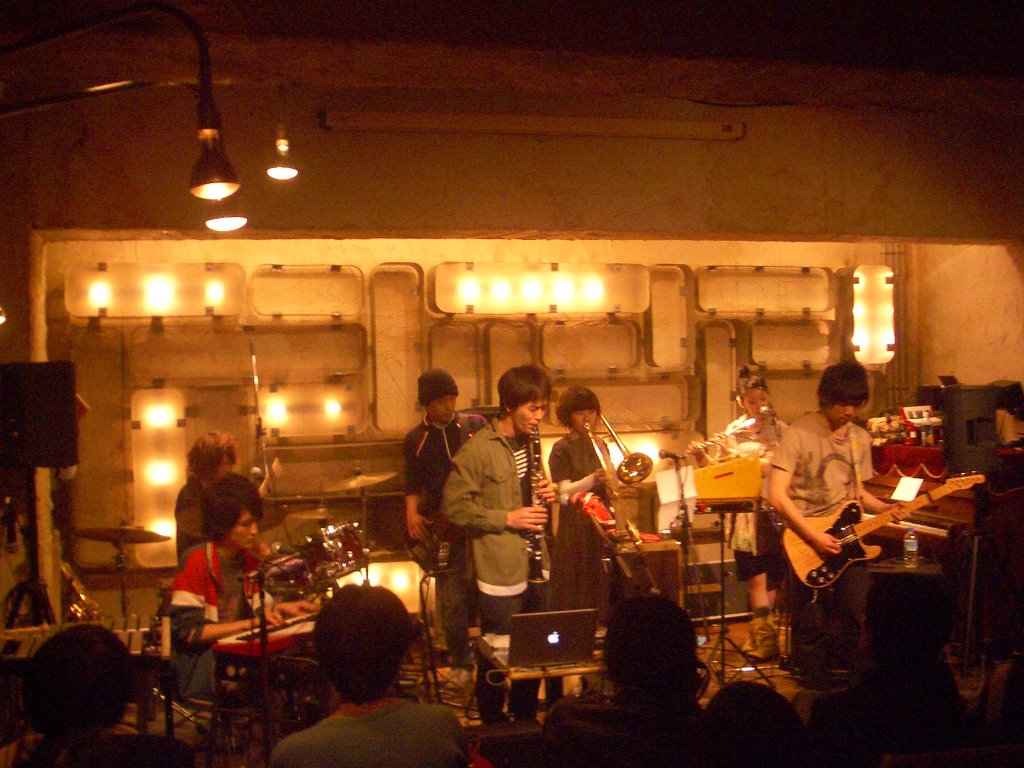
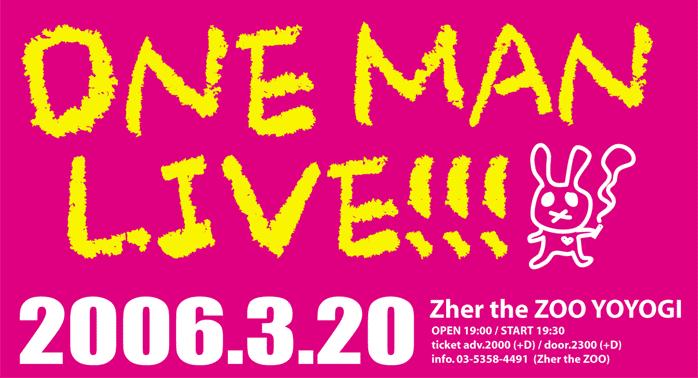
In Japan, the first show a band does alone (without other bands playing on the same set) is a major event, a rite of passage and a milestone showing that a group has gotten big enough that it can fill a rock club with its own fans. Bands put in a giant effort to make sure the gig goes well, and no true fan would think of missing it. And indeed, it was crowded at the Yoyogi Zher The Zoo, the site of Kitchen Gorilla's first "one-man show" (as it's called here).

Some of those in the audience were moms and other family of band members, and the event itself reminded me a bit of a graduation ceremony: when the band talked between songs, there were the thanks and future promises of a valedictorian speech (though, maybe one for Rock 'n' Roll High School...). Outside of the club was a bouquet of flowers from Kitchen Gorilla's management agency. And the band itself was visibly nervous because of their desire to pull the show off perfectly.

I don't have enough experience hanging out with bands back home in the U.S. or elsewhere to know for sure, but it doesn't seem to me that the first solo show of, say, an American band is quite as momentous an occasion as it is for a Japanese group. Sure, it's a big deal and a nice thing, but it's not something for which you do visualization exercises the days before the actual event, is it (Kitchen Gorilla singer Kayo said she did)?

Maybe it's the Japanese love for rituals and formalities that results in the first one-man show being so important here. What was strange to me, though, was that Kitchen Gorilla was super-nervous during the gig, even though, for once, they must have known that everyone in the audience was fans or friends or family, who love them. Part of it was probably that they had to play an hour and a half or two hours, when they are more used to six-song, half-an-hour sets, and they were worried whether they might mess up. But even so, this is a great live band that has really knocked me out with their performances in the past, and I don't think just fear of failure explains it. Rather, I think it's that the band built a giant mental edifice out of the fact that This Is Our First One Man, and that weighed on them.

All of which isn't to say that they weren't good. It was, actually, a nice show, and an emotional one. But it seemed like somewhere, they were holding back a bit, until about the various last songs they did for encore, when they went all out.

As part of the One Man festivities, vocalist Kayo passed out a booklet detailing her thoughts on all the songs they did that night, and the band also handed out a CD-R containing a new song. Called "Fallin', Fallin'", it was a typical Kitchen Gorilla tune, simple but catchy, Kayo's squeaky, syrupy voice bringing to life the emotions of the love song. I've listened to it over and over since receiving it.

By the way, it really is frustrating that I've been writing a lot about this pop punk trio recently, but there aren't many ways for readers outside of Japan to actually listen to their music, because the band doesn't have sample MP3's on their website or have a MySpace page. If reading my descriptions makes you so interested in Kitchen Gorilla that it keeps you up at night (...yeah, right), send me an e-mail...I'll try to arrange something.

Sunday, March 19, 2006

Help! Planning Band Tour

Dear Readers: I'm planning to help a number of friends' Japanese bands tour the U.S. and Europe, and was wondering if anyone reading this could offer any help or advice. Specifically, I'm thinking about the West Coast of the U.S. (San Diego, LA, San Francisco, Portland and Seattle) and London, though other big cities anywhere are also possible. The bands would be ones that already have some fans in the U.S. and Europe, so if he managed right they could attract a good crowd. Are you, or do you have a friend who is, a club manager, booking agent, band that can do a joint show, journalist or writer, etc. etc.? If yes, and you are interested, or if you have any suggestions, please e-mail me at gonglinjian@yahoo.com. I'd appreciate anything you can tell me! Ken

Saturday, March 18, 2006

Little Lounge Little Twinkle; Three Berry Icecream

I went to a club called 440 in Shimokitazawa on Thursday night to see Three Berry Icecream, and there fell in love with a group I saw for the first time, named Little Lounge Little Twinkle (LLLT).

When LLLT came on, the third and final act of the night, I was at the back of the club with a drink in hand, focused more on chatting with friends than listening to the band. But then LLLT began playing, and my conversation, my drinking, my everything came to a halt. From their opening notes they grabbed my attention.
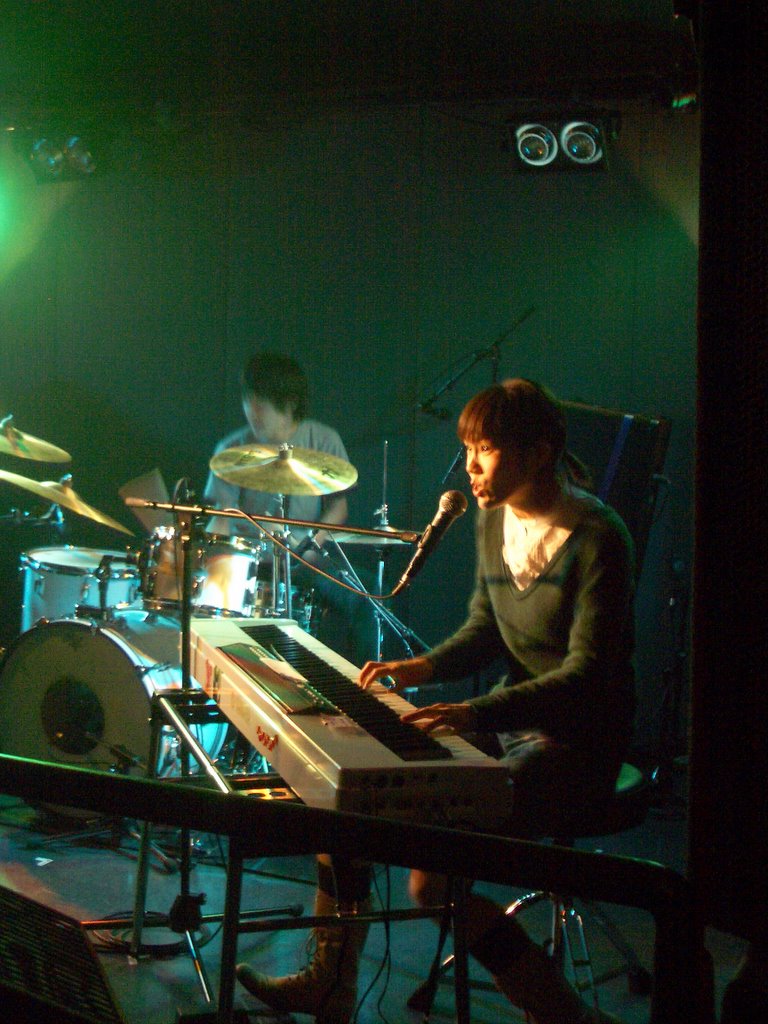
Little Lounge Little Twinkle, which is the musical unit of a guy named Shunsuke Kida, played what sounded like hip cinematic music, and, indeed, on the band’s website Kida lists Ennio Morricone and Michel Legrand as composers he respects (along with Burt Bacharach and the Japanese pop music composer Kyohei Tsutsumi). A friend compared LLLT to Architecture in Helsinki and Fugu.

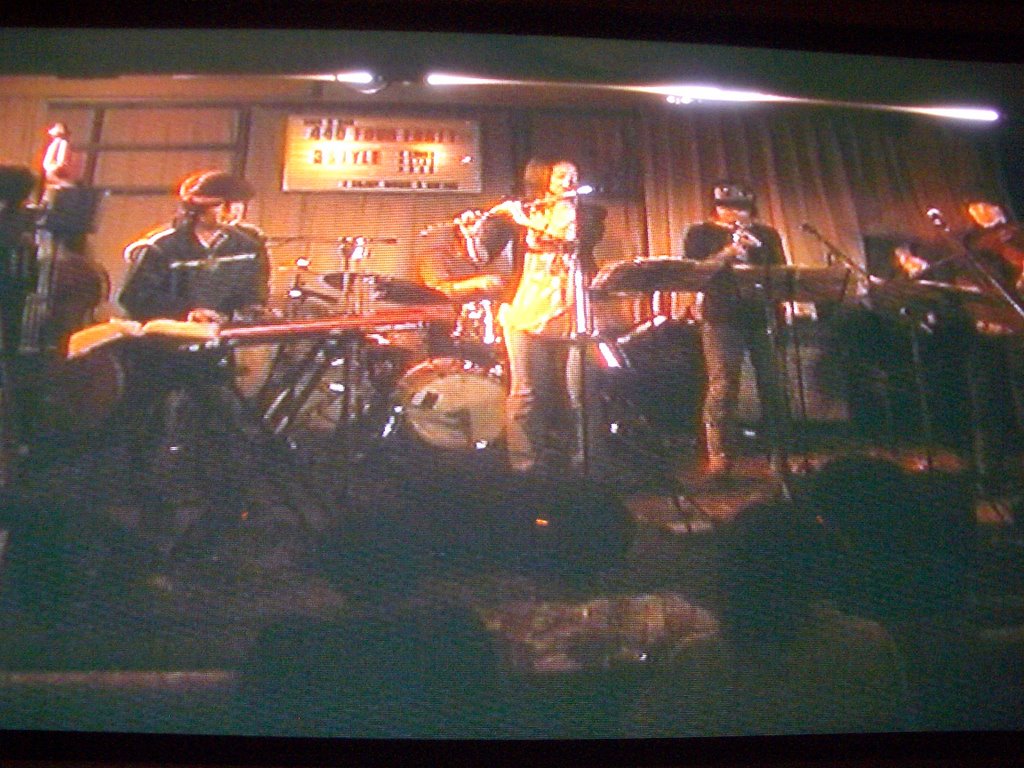
One thing that thrilled me about this band was their instrumental lineup. In addition to Kida’s keyboards, a drummer and a guy on standup bass, they had a flute, viola and an oboe. An oboe! I’ve been to hundreds of rock shows in Tokyo, and this was the first time I saw anyone playing that oxygen-depriving double-reed instrument. And the ensemble sounded wonderful, combining the charms of movie music with the intensity of live playing.

When I think of bands in Japan trying new things, I think on the one hand of neo-Techno future pop groups like YMCK and Aprils, and on the other Out There eccentric ensembles like Limited Express (has gone?), the Boredoms and Melt-Banana. Little Lounge Little Twinkle doesn’t belong in either of these schools, but what they are creating is also new and lovely. A band to watch.

I think I have pretty varied taste in music: on any given night, you might find me at a punk rock show, listening to guitar pop bands or bopping to straightforward rock (not to mention classical, jazz, etc. etc.—music is music). But while, say, the explosive Japanese emo of a band like Eastern Youth always grips my heart, somewhere in the back of my mind I’m yearning to listen to a group like Three Berry Icecream, if I’ve been away from it for a long time. Three Berry is the musical unit of singer and accordionist Mayumi Ikemizu, who was once in the band Bridge with Hideki Kaji, and its music is quiet, bright and mellow.

Many of Ikemizu’s fans are those who grew up listening to 90’s Japanese pop bands like Bridge and Flipper’s Guitar. Her husband told me those mostly female fans, in their 30’s, don’t go to CD stores that much anymore, so Three Berry is selling its new mini-album, Rain Drops, in zakka-ya, shops that sell assorted little objects like candles, fancy boxes, photo stands, and so on. And I could see how Ikemizu’s songs would sound especially great in that sort of atmosphere. Ikemizu, by the way, is a true Tokyo indie music scene heroine, a mother of an adorable five-year-old girl, and a woman whose music has influenced many bands and who has continued with music and just released an album for the first time in six years.

Tuesday, March 07, 2006

Advantage Lucy & The Arrival Of Spring

The winter cold started to slip away this weekend, and plum trees blossomed in pink and white. In the air was the sharp sweet smell of tiny daphne flowers. Spring was arriving. It was one of the most pleasant couple of days in many weeks, and in the final evening of this glorious weekend another pleasant thing was waiting: a show by advantage Lucy, at the Yoyogi Zher The Zoo.

The show was their first this year in Tokyo, their first since playing a community event in the northern part of town late last year. They were on a double bill with a rock group called Huckleberry Finn, who were also popular, and there was a long line to get into the club.

Before the advantage Lucy set, a Japanese woman struck up a conversation with me.

Which country are you from, she asked.

From the U.S., I’m an American, I said.

How did you discover advantage Lucy, she asked.

I heard their song Chikyu (‘Earth’) in a compilation album called Killermont Street 2001.

As we talked, it emerged that this woman has been a Lucy fan for a decade, a true Old Fan who had followed them from the very beginning. She is an owner of the rare Red Bicycle cassette tape, a treasure for any advantage Lucy maniac, a three-song, 11-minute cassette that is said to have once fetched over $200 on an Internet auction site. (For the record, I don’t own the tape itself, but do have a recording of it.)

She said she was in love with singer Aiko’s voice. When she moved to London for a couple of years, the only CDs she brought were those of advantage Lucy, and she played them to friends there, to try to covert some Brits into Lucy fans. Now she was back in Japan, and it was her first show of theirs in three years. She wanted more people to know about this great band outside of Japan, and for advantage Lucy to play in England, and that is why she talked to me, to ask why a foreigner like me was interested in them.

Advantage Lucy fans are like that. Well, not many are as outgoing as her: they are usually a bit shy and well behaved. But they are devoted, and I’ve heard people confess they were moved to tears the first time they saw the band.

Which is strange to think if you’ve met advantage Lucy in person and seen what down-to-earth, friendly people they are, but I know how the fans feel because I too was electrified the first time I saw them. Tonight, again, on stage there was that bright Lucy essence. I felt there was something spring-like in their performance, a celebration of life and creation. Don’t think they’re just a sweet pop band—playing live, they can rock with deep intensity. But then they can turn around and play ballads of fragile beauty, as they did with a couple of tunes from the album Echo Park at Sunday’s show.

The band doesn’t play with perfect precision: on two different songs they had to start over, once because guitarist Ishizaka’s shoe came off, and the second time because he thought (wrongly) that someone was out of tune. Aiko said at the end of the show, we’re a mess of band, but please continue supporting us. But those kinds of things are neither here nor there. When advantage Lucy are good, on stage a beautiful life is created.

I’ve received e-mails and comments from Lucy fans all over the world. From mainland China, Hong Kong and Taiwan. Indonesia and other parts of Asia. The U.S. and Canada. Brazil. Spain. And other places. I can tell they really love this band. To those, and Lucy fans I’ve never heard from: please try to see this band live. Take a holiday. Skip work. Save some money. Get a visa if needed. Plan a trip to Japan around a Lucy show. You won’t be disappointed. Come join the party.

Friday, March 03, 2006

3 * 3 * 3 Girl Singers (Tornado Tatsumaki)

March Third is Girl’s Day in Japan, and in living rooms across the country red-clothed steps are set up and lined with dolls representing a royal family and its retinue. On this third day of the third month of the year, three musical units featuring female singers played at the Club Que in Shimokitazawa.

The event was one of a long-running series organized by pop band Tornado Tatsumaki, called “One Night Robot Kicks The Rock”. The concept of the event is to showcase new, innovative groups that Tornado Tatsumaki likes. Its first installment, which I saw and wrote about here, featured On Button Down and a great band that I saw for the first time, Travelling Panda, and was a big success.

Friday night’s event looked worth checking out because in addition to Tornado Tatsumaki itself, a three-girl band I gushed about in a previous post, called Pop Chocolat, was playing.

I must be honest, though, Pop Chocolat didn’t strike me with lightning like they did at the last show of theirs I saw. They were still good, their music’s combination of hard rock instrumentals and classical music-like vocal arrangements interesting to listen to, but they didn’t knock me out. Maybe it’s the curse of being the first band on the bill: it takes an exceptional group to get an unfamiliar crowd going before the crowd is warmed up.

One thing that can be said about Pop Chocolat—they look like average pretty Japanese girls in person, but on stage they are radiant. I noticed that last time too. Maybe it helps that the bassist and guitarist have matching aqua-colored guitars. After the show they were at the stairwell outside of the Que selling their CDs, and the enchantment of the stage had worn off and they were back to being ordinary girls. They were like members of any band just starting out, doing everything they can to get people to listen to their music.

The second artist on the bill was a female singer/pianist called Akiko Higashikawa, a decent performer who did pop songs about life in Tokyo.

The third and last band of the night, Tornado Tatsumaki, is a group I wonder why isn’t better known outside of Japan (they are fairly popular here). They are one of those bands that throw into their cauldron of sound a diverse range of styles such as soul, funk, jazz and progressive rock, to come up with their own thing. Female vocalist Makiko Naka has a sweet, high voice, as if she were a Japanese idol singer who could actually sing (the Amazon Japan review described her style as somewhere between 80’s singers Taeko Onuki and Hiroko Yakushimaru, if that means anything to you). When I listen to my iPod on shuffle mode and a song I’m not that familiar with that has a gorgeous intro comes on, it’s often Tornado Tatsumaki. If you like bands like advantage Lucy and Spangle call Lilli line, you might want to give Tornado Tatsumaki a try.

Their live show was satisfying—the musicians were skilled and confident. Naka, the singer, is good-looking, with fine facial features and an ever-present slight grin, but she has bad posture: she’s always slouched forward a bit. The Japanese call this neko-ze, literally “cat’s back”, and come to think of it there is indeed a feline quality to her, the way she moves lazily but also with precision on stage.

Tuesday, February 28, 2006

Limited Express Says Bye To Drummer


“The best thing about Limited Express is you know at least one of the members will be hurt by the end of the show,” said a friend of mine right before rock band Limited Express (has gone?) hit the stage at the Shimokitazawa Shelter Tuesday night.

I’m pretty sure he was joking, and fortunately none of the three Limited Express members came away from their gig with injuries, but you could see there was an element of truth to his remark.

At different points in their hyperactive, musical potluck party of a punk rock show, each one of the trio climbed on to various unstable objects on stage such as the bass drum and a steel bar separating the band from the audience, before hopping back down to safety. The risk of a fall was probably highest for the guitarist, whose glasses fogged up seconds after the show began, giving him nearly zero visibility behind the frosted plastic of his spectacles.

But they made it through the show okay, and in truth there might have been a bigger risk of bodily injury in the audience section, where Limited Express-heads pogo-ed ever more energetically as the show progressed: all through the gig, the bouncing ponytail of a female fan in front of me threatened to pogo into my eye sockets.


When Limited Express returned to the stage for an encore, female singer/bassist Yukari, dazzling in an orange gown, said with emotion that this will be the last time the band will sound like this (because it was the drummer’s final show as a Limited Express), before the band exploded into a song with the possibly blasphemous title of “the Sacrificial Jesus Christ”. At the very end, as the group left the stage, she gave the drummer the slightest, shyest, quickest, most Japanese hug imaginable.

Thursday, February 23, 2006

Eastern Youth At Shibuya Quattro


When I first got into Japanese rock, one of the groups that pulled me in deep was a trio that played passionate, uniquely Japanese punk rock, and their name was Eastern Youth.

But like I often end up doing, in my excitement at finding a new great thing I overfed myself with their music, until I was too full, and after a while I listened to Eastern Youth less and less, and eventually their CDs began gathering dust in my disk rack.

Somewhere in my mind, though, these guys’ music lived on, and there was a desire to see them in person, on stage. I finally got that opportunity Wednesday night at the Shibuya Quattro.

I went to the Quattro with some dread as well as anticipation, to tell the truth. Dread, because it appeared the show was sold out, and a packed Quattro event is one of the least comfortable leisure activities I can imagine in Tokyo—it’s like listening to live music on a morning rush-hour train. Once there, it was as bad as I expected, and on top of that the air was a toxic fog of cigarette smoke, the waste product of an assembly of chain smokers. Maybe it’s something in the punk ethos, the inclination to self-destruction and the decadence, that makes all these guys nicotine freaks.

When the three young middle-aged guys that make up Eastern Youth hit the stage and started playing, I was amazed at how their music transformed these fans. There was some mosh-pit action near the stage as would be expected, but what struck me was the way the fans sang along, en masse, to the Eastern Youth songs, loudly enough it sounded like an echo to the singer’s amplified voice. And Eastern Youth songs don’t have bonehead lyrics. The songs, all in Japanese, are poetic, often using a Japanese that is old-fashioned like something out of literature or the spoken arts. It was wonderful to hear a bunch of punk kids singing along to their musical poems.

The singer and guitarist of Eastern Youth, Hisashi Yoshino, has a shaved head and wears black glasses with a strap. He doesn’t look like a rock star. He sang with a look of suffering, his gaping mouth curving downward at the edges, and veins on his neck bulging. Their songs sometimes started out mellow, Yoshino playing the guitar alone and like a blues-man singing words that came into his head, before they exploded in volume and emotion.

At one point, as Yoshino plucked the guitar before the start of a song, he improvised a tune about awamori, the Okinawan liquor. He sang, take away the awamori, I don’t want to see another drop of it, if I drink it, by midnight I won’t even know what I’m saying, I’ll find myself cheering loudly the Japanese female curling team on TV (out of nowhere, they went to the Turin Olympics and beat the Italians, Brits and Canadians).

Later on, he sang about a weightier theme, the weightiest theme of them all—death. When you die, you won’t go to heaven, you won’t go to hell, you won’t become a ghost, you will just become nothing, can you dig this at all, he sang. The audience stood still, as if they didn’t know how to react.

This wasn’t typical entertainment. It wasn’t at all a normal Tokyo rock show. In some ways it was discomfiting, like running into a naked stranger. But it was clear many in the crowd were responding. Eastern Youth’s songs, after all, are about heavy themes: knowing life is of limited duration, but not being able to squeeze the most out of it, seeing beauty, but knowing it’s fleeting, and so on. Here was Eastern Youth’s lyricist talk-singing possible raw drafts of future songs, before diving into songs that the fans all knew.

Toward the end, he talk-sang about how when he plays the guitar, he doesn’t even need a drop of alcohol, the guitar makes him drunk, and he can continue like that for hours. For the couple of hours at the Quattro while Eastern Youth played, despite having only consumed a tiny cup of beer that was the Quattro’s pathetic excuse for “one drink”, I felt drunk too.

***

You can sample some of Eastern Youth's songs here.

Saturday, February 18, 2006

Jimmy Pops Video On The Web


Check out this cute/surreal animated music video by K.O.G.A. label pop band Jimmy Pops (click on the green box on the page to watch it). You can see a couple of images of the band toward the end of the video, somewhere between the bicycling comb-over guy and the chameleons... There are also some sample songs and a few videos of their live performances. K.O.G.A. is good about providing free sample content like those on the Web, which is a welcome thing.

Friday, February 17, 2006

Ken M, Band Flier Analyst


Anytime you go to a rock show in Tokyo, you get a stack of fliers at the door advertising upcoming shows, events and new albums.

Some people consider these fliers a nuisance, and chuck them right into the trash bin. I, however, consider them a treasure trove of information.

Like the way a Kremlinologist would have studied photos of a May Day parade to see in what order Soviet leaders are seated, I go over these fliers with care.

They not only tell you what shows are around the corner, and who has released new albums, but they also reveal stuff like which band is friendly with which other band, and what kind of venues a band is playing at and how often, providing a sense of that group's career choices and degree of success (are those things interesting? Well, they are to me...).

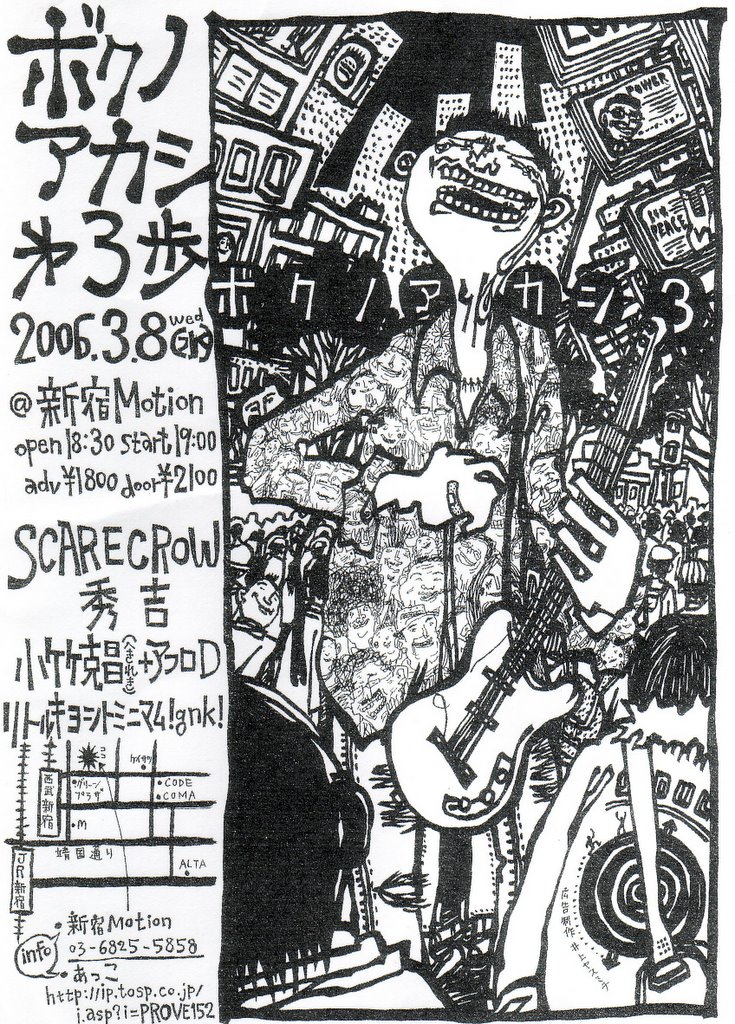
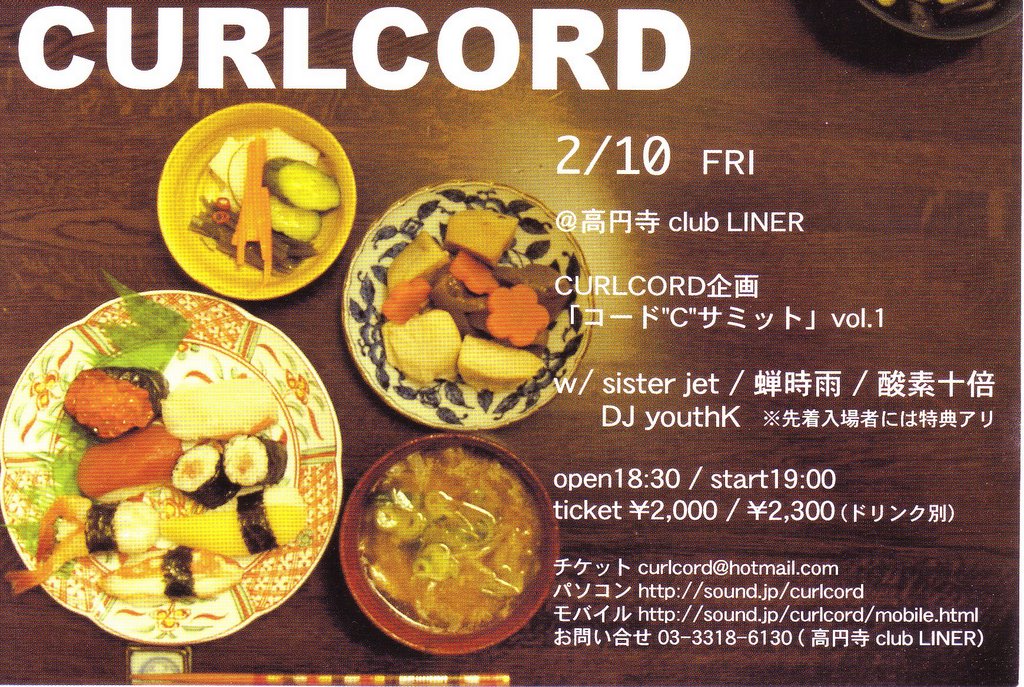
The fliers are also often wild, colorful art objects--you can tack them up on walls for interior decoration purposes, if you are so inclined. Here are a few fliers I was given at a couple of shows I went to recently:

First, the flier above, "Attack From the Back Position"--I love this one! It totally grabs you. The green armed, purple haired slacker monster is wearing a NOFX T-shirt, suggesting that the bands playing at the show are into that kind of punk rock. Even if that's not your thing, you still have to love punker fools who decide to name their band Brassier Hook (as in 'bra strap'...Romeo Rocks and Spitball Spiky are also good names for rock bands).


I don't know any of the bands in this flier above, but I like this cartoon/expressionistic picture of the guitarist.


This guy scares me a bit... I hope this is meant to be humorous.


I found myself strangely drawn to this show, my appetite whetted, I'm not sure why...


A cool illustration of a spaceman on a kid bicycle.


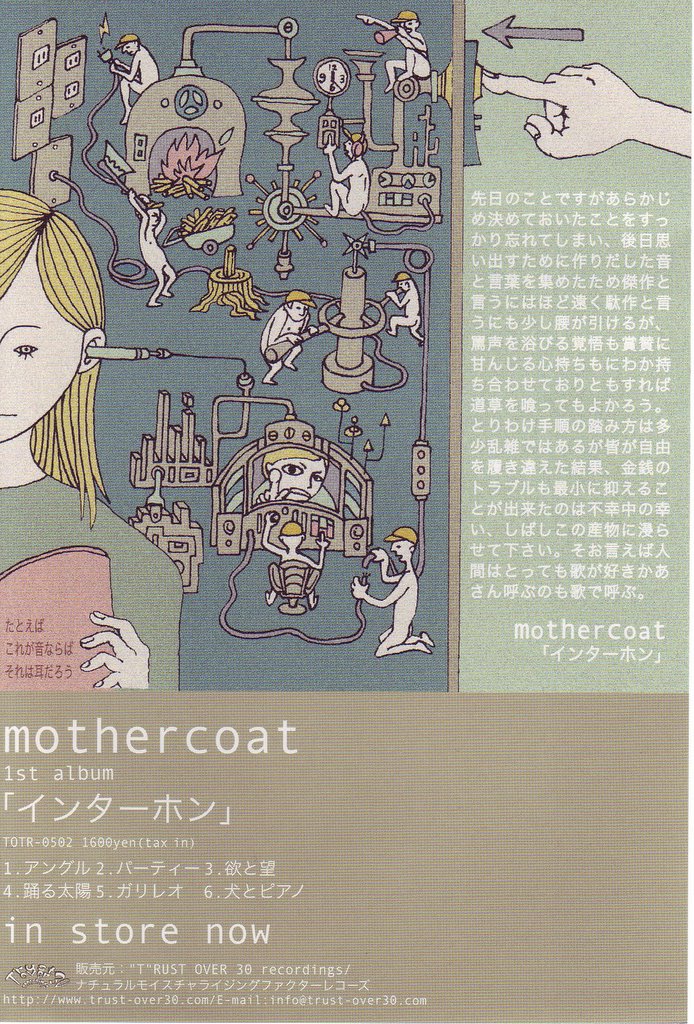
A flier for mothercoat's first album Interphone, which I'm planning to buy, and their Japan tour (I hope I can make it to at least one night of those shows). If you look carefully, one of the little guys has a cable coming out of a mighty strange place...


These guys had a good show the other night at the Shinjuku motion.


A nice illustration of a Tokyo (?) street at sunset. This flier is for a band named Doburoku, Japanese for 'moonshine sake'.


A couple of classy fliers. The second one advertises a show by Northern Bright, a band I've been wanting to see for a while.


This one looks futuristic in an Asian way.


Barbie Attack Doll(s)
! A great name. And I like the photo of the kid holding up a Gibson Les Paul in a park somewhere.


Nice pink art.


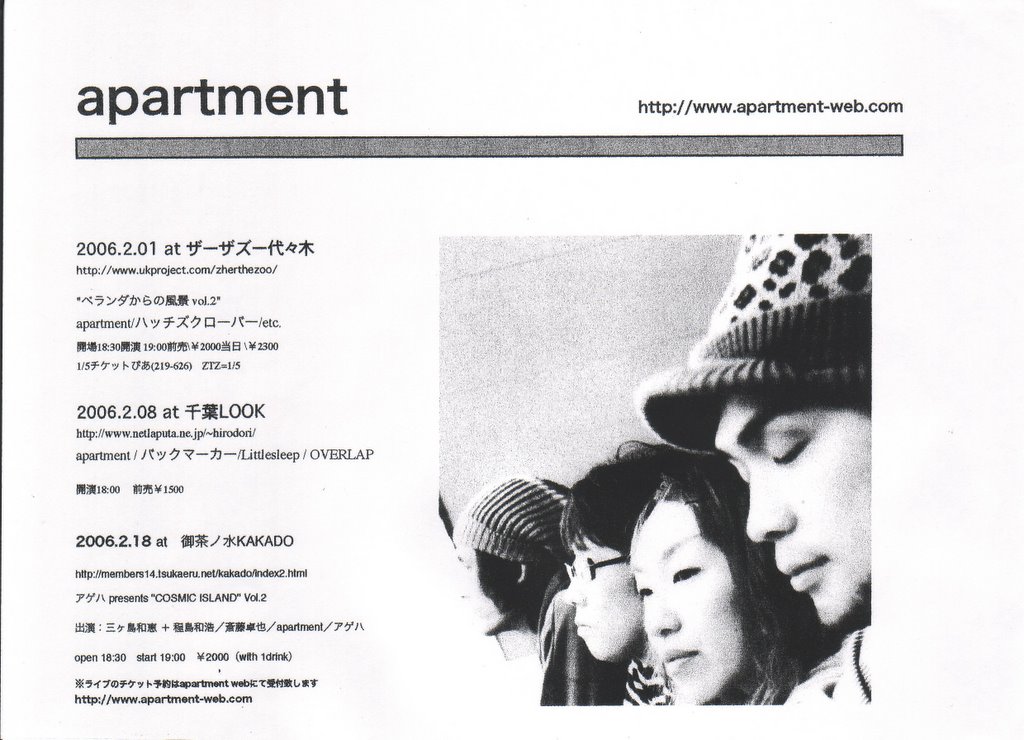
Apartment is a band I've heard good things about, and have wanted to check out.


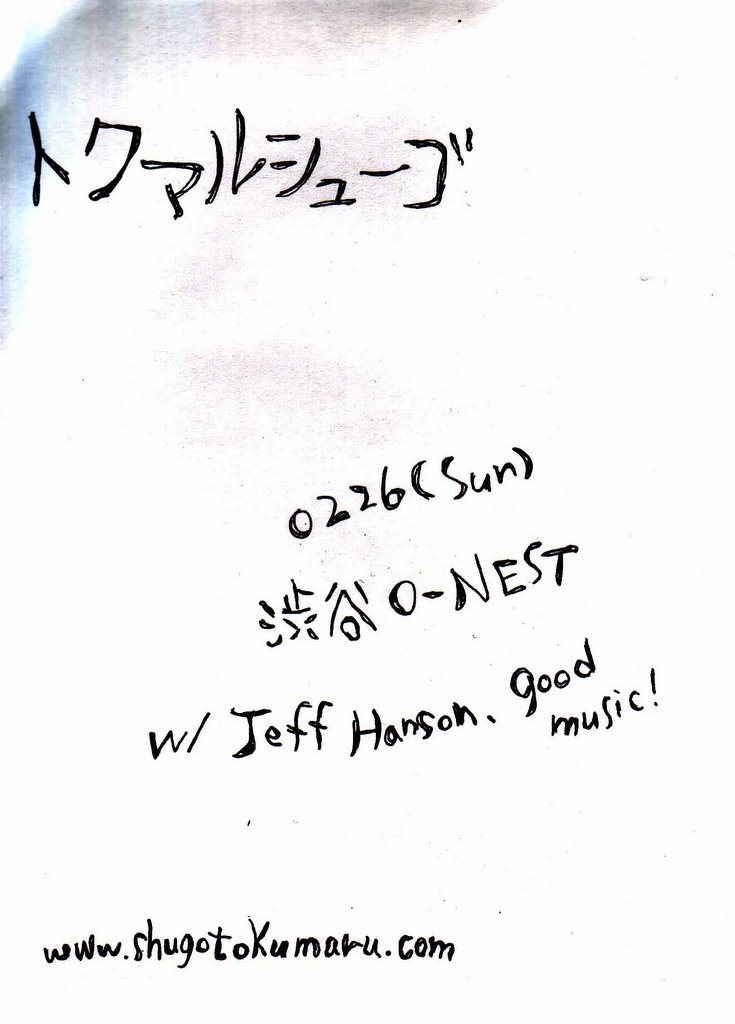
A minimalist flier by Shugo Tokumaru.


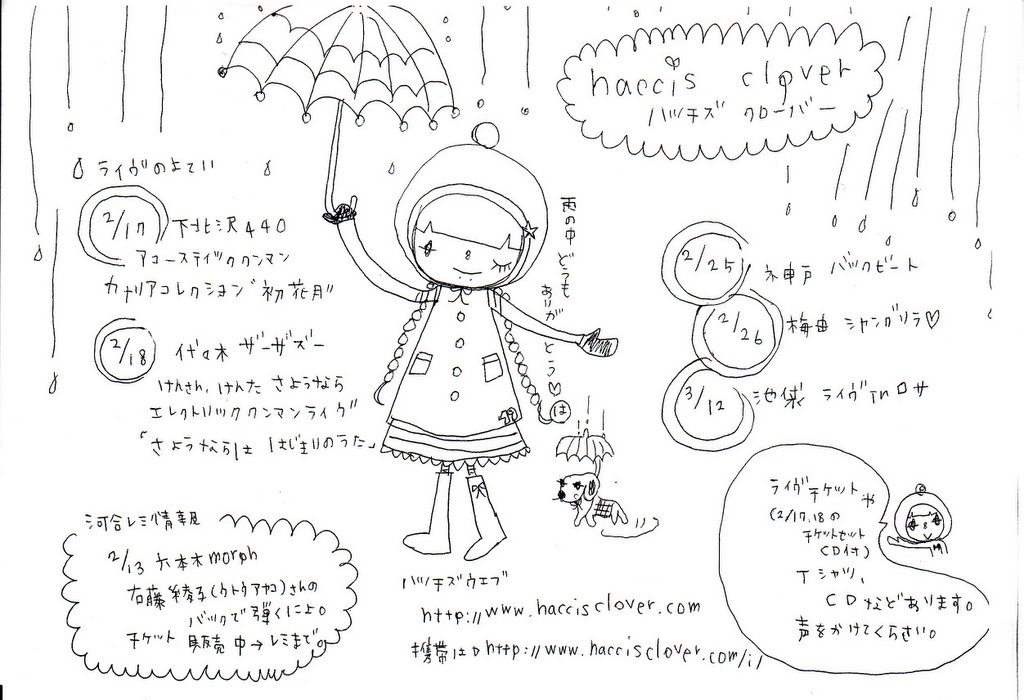
A hand-written, hand-drawn flier aimed presumably at conveying a homey mood.


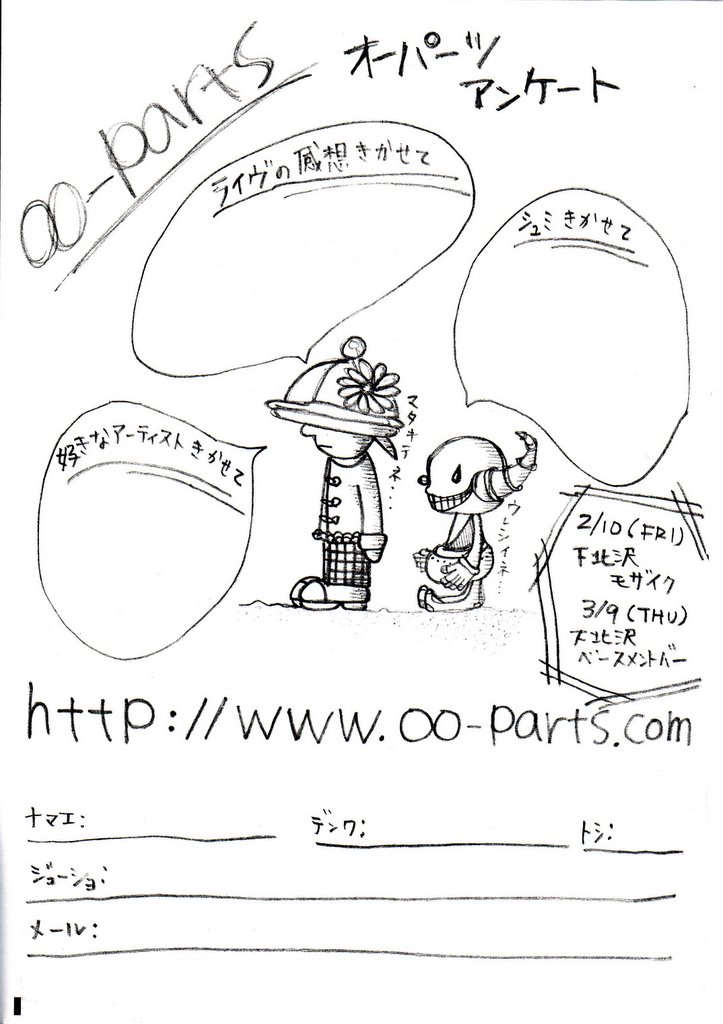
Again, a very home-made flier. Interesting figures in the middle, especially the one with the big horn...


The Kitchen Gorilla's announcement of their first solo show is completely hand-written.


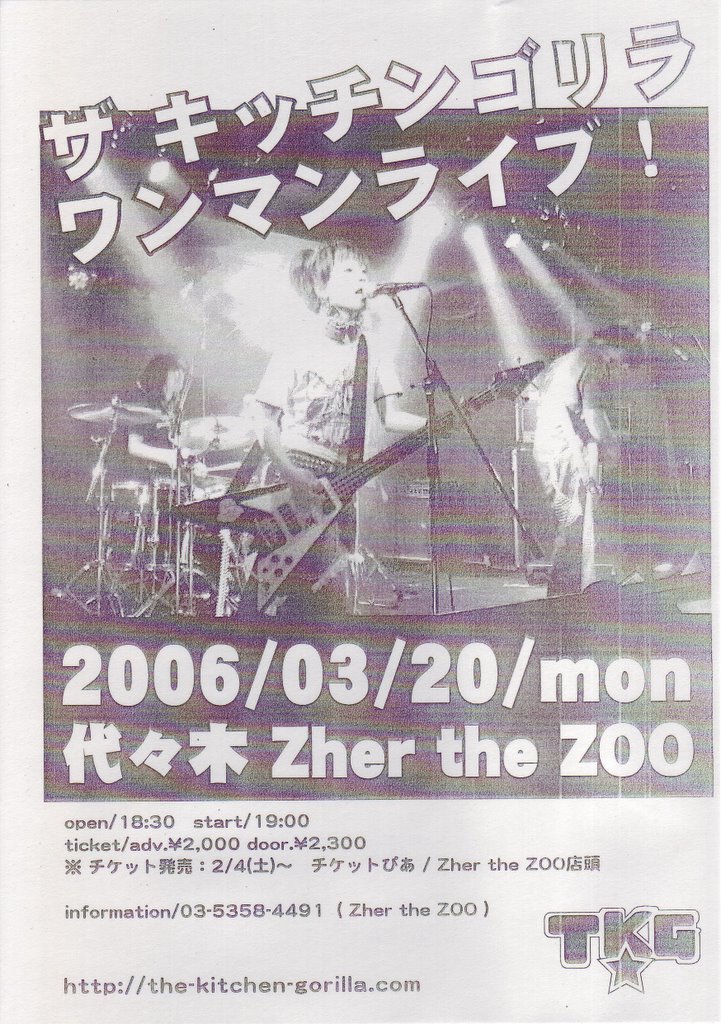
And here's another flier for Kitchen Gorilla's solo show on March 20 at the Yoyogi Zher The Zoo. They REALLY want you to go, and you should, if you are free and you like good rock.

Monday, February 06, 2006

Kuki Kodan At Shibuya Quattro

Kuki Kodan is an unusual band. A Japanese indie pop group that’s been around since 1997, they have a decent following even though they’ve never released a single big hit album. In fact, they seem opposed to the very concept of hit records: many of their past works are limited issue tapes, LPs and CDs, putting a ceiling on the amount of their recordings they can sell, and making it hard for new fans (like me) to find their old stuff. They of course also don’t have any singles that climbed the charts. And they hardly ever play live.

Even so, or maybe partly because they perform live so infrequently, and no fan therefore wants to miss a rare gig, several hundred people showed up at the Shibuya Quattro to see Kuki Kodan (it’s pronounced something like ‘Kooky Koh Dunn’ and means ‘public corporation of air’). It’s easy to tell who the Kuki Kodan fans are in the crowds of Shibuya. Like the music they enjoy, these people are mild-mannered and unpretentious. They look like they just came from a knitwear exhibition. Or had some tea at a patisserie/café. They might have studied foreign literature in school; they certainly read lots of European authors in translation. Kuki Kodan is what they listen to late at night in their apartments, quietly, surrounded by their photography books, small art objects and European posters, thinking about the day that passed and the future they wish for.

Mellow-out music that appeals to people like these is what Kuki Kodan plays, and they lived up to their relaxed reputation at the Quattro. Yukari Yamazaki, the singer, sat in a chair throughout the show, facing the audience diagonally. As she sang she occasionally lifted her arm slowly, or turned to face the crowd; dancing or making the beat wasn’t for her.

They did about five songs, and then took a 15-minute break. Yamazaki told the audience she ate an egg sandwich during the recess, but missed out on the tuna sandwich. One of her band-mates said he’d buy her a tuna sandwich later; so let’s focus on the show for now. And so it went for a couple of hours. Was this show worth a fairly expensive 3,500 yen? It was. In some of their songs, Yamazaki was able to evoke the joy, sadness and colors of everyday life with her unforced but emotional singing, and I got a better feeling for what all the hardcore Kuki-heads saw in this band.

Saturday, February 04, 2006

MISSWONDA At Shinjuku Motion


I’ve wanted to see songstress MISSWONDA ever since I read about her in chipple.net and bought her album Wonderful Tangent, and so I was happy to see she would be playing with Ricarope and Macdonald Duck Éclair tonight at a new club called the Shinjuku Motion. MISSWONDA brings together an 80’s New Wave synthesizer sound with the singer’s whispering vocals like those of old French pop stars—it’s a combination I’d never heard before, and works well.

But before MISSWONDA’s set, I got to see pianist/singer Ricarope for the first time in more than a year. One of my very first entries in this journal was about Ricarope, and I’m a big fan of hers, but because she doesn’t do many shows (she’s an English teacher by day, a job that keeps her busy) and because of schedule conflicts on my part, I’ve been unable to see her live for a long time. Her show was as upbeat and energetic as I remembered. Before doing a song called “Radio”, she explained that the song was about the fact that she listened to Ben Folds Five on the radio and that made her want to do music.


MISSWONDA was next, and as she came on stage I was struck by her appearance: she’s a tall, long-haired beauty, and there was something Greek goddess-like about her. When she sings she hardly moves, making her seem statuesque. There was an echo effect on her vocals, causing her whispery voice to sound like it’s descending from way above, from somewhere maybe in the heavens high above the office buildings of Shinjuku.

Between songs she said a few words, and her spoken voice was fragile-sounding as her singing as she said: “Isn’t it cold? Lots of people have caught colds, and I did too, even though I don’t usually catch colds. I drink a lot, like one bottle of wine a day, but then I stopped drinking and I caught a cold, so I thought maybe I should drink again…” A whispery-voiced singer who stays healthy by imbibing wine…there was definitely something other-worldly and regal about MISSWONDA.

***

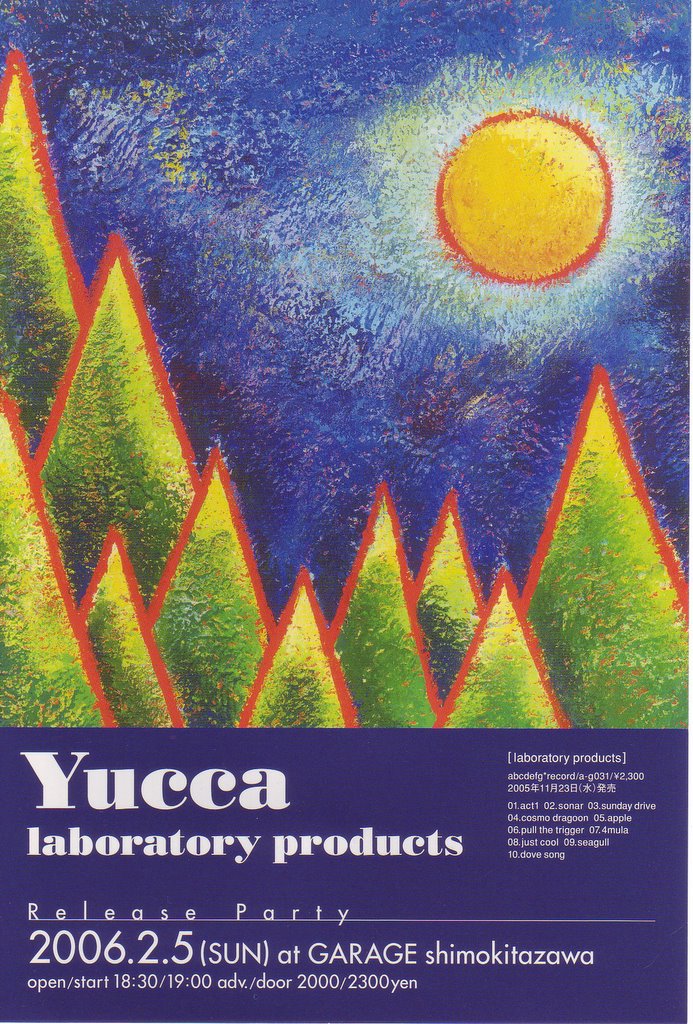
Tonight’s show was held to celebrate the release of an album by the band Macdonald Duck Éclair, who played last. I stuck around to listen to a few of their tunes, but their brand of beepy techno just isn’t my thing. Before them, however, a band I didn’t know anything about called Yucca performed, and they were a happy discovery for me.

The quartet’s flier says they were influenced by U.S. indie rock and post-rock but that their chief passion is pop music, and indeed they sound a bit like a pop version of Sonic Youth. These guys were astonishingly amateurish in their stage direction, the members getting mixed up about who will say what between songs, and at one point they had to start a song over again because the guitarist forgot to turn his guitar on, but their high-energy, hypnotic pop jam music more than made up for that.


Yucca

Sunday, January 29, 2006

An Orange Plankton Reincarnation


A few weeks after it happened, we fans of Tokyo pop band Orange Plankton are finding out that we weren’t alone in being shocked by the suddenness of the group’s decision to split up in early January.

It seems that the band themselves were fully expecting to continue in 2006, and it was only the night before they made their announcement that they had a talk that led to their putting an end to the group that was Orange Plankton.

At that meeting, Yuki on keyboards told the others out of the blue that she wanted to quit the band (I’m not sure what her reason was). They then decided that since Orange Plankton was always the four of them, they might as well end the band too with Yuki’s departure.

I recently had dinner with the other three—singer Yumi, bassist Tsuji and drummer Tamarou—and they appeared somewhat shell-shocked.

For fans of their music, too, Orange Plankton’s end was shockingly abrupt. Just a few days before the announcement, they were saying they wanted to make 2006 a big year for the band. They ended up not doing any sort of farewell show (luckily, I got to see their actual final show, the one at the Roppongi Morph that I raved about in a previous post, though I had no idea that it would be their last…and neither did the band members, apparently). Their official homepage closed down except for a page with their announcement. Their fan page shut down immediately too.

In those first few days, for fans of theirs there was a feeling of walking around in the fairgrounds after the carnival had left.

All over, there were reminders of the band (piles of their CDs in my room…and exactly how many posts did I wrote on their shows and CDs in Japan Live?), but even so, they were truly gone.

Still, if the group called Orange Plankton is no more, its musicians are still around, and I’m glad to report that they will go on making music and performing.

Singer Yumi will become a solo artist called Yunn (her nickname), Tsuji and Tamarou will form a unit called Yuyake Lamp (“Sunset Lamp”), and those two will perform with Yunn at shows, meaning they will in essence be Orange Plankton minus Yuki on piano, and they say they are also looking for other support musicians. Pianist Yuki, for her part, will be helping out other groups, and it seems that she and the rest of the former Orange Plankton remain friendly.

Yunn and Co. plan to record some songs, and have scheduled some shows too, including one on Feb. 8 at the Kichijoji Star Pine’s Café, which I can’t make. It looks like they will be doing many other shows, including one, possibly, in Seoul late next month, and I’d really love to make it to Korea again to see that performance.

Thursday, January 26, 2006

Neomarxisme On Rehearsal Studio Culture

Interesting thoughts by writer-musician Marxy on lack of garage space in Japan where novice bands can practice, the existence instead of a slew of inexpensive and well-equipped rehearsal studios, and what this means for Japanese bands' musical development.

I'm not sure I agree with his thesis that these studios, with all their fancy gadgets and high comfort level, make it almost too easy for bands starting out, leading to musicians that care more about having fun for themselves than putting on a good show for an audience of strangers (maybe I've been lucky but I haven't seen many groups like this myself), but it's food for thought. And a nice report on how indie Japanese bands practice.

Sunday, January 22, 2006

Take Care, Naoki Kishihara, Bassist, Plectrum


Naoki Kishihara

Saturday was a rare snowy day in Tokyo, the streets slippery with ice, but even so fans of Tokyo pop band Plectrum showed up en masse at the Shimokitazawa Club Que to see the band—the place was packed. And seemingly everyone who is anyone in the Tokyo indie pop scene was there. The bassist of Swinging Popsicle. The singer of advantage Lucy. Members of Cellophane, the Castanets and Gomes the Hitman. Everyone was there because this was a special event: it was Plectrum’s last show with Naoki Kishihara on bass, and we all wanted to see his final show as a Plectrum.

The departure of Kishihara, or ‘Kitchon’ as he’s affectionately called by everyone, came after ten years in the band. He was moving to another city to start a new job. It was the end of a career that began when he became a college roommate of Taisuke Takata, Plectrum’s leader. Kitchon, three years Takata’s junior, moved into the college dorm carrying a guitar. When Takata heard Kitchon play some blues licks, he invited Kitchon to join his band, but as a bassist rather than a guitarist because that was what they were looking for. So guitarist Kitchon joined Plectrum as a bassist.

Kitchon was the Mellow One in Plectrum. While singer Takata and lead guitarist Akira Fujita set the stage on fire, Kitchon usually stood to the side, enjoying the show, but staying cool. I found him to be the most approachable Plectrum at the beginning, and we became friends. Like many people that went to the Que on Saturday night, I just had to see this show.


It was a great performance, lasting two and a half hours, including two encores. Plectrum played all their classics from their decade of existence. Until about the end the band didn’t talk about the fact that this was Kitchon’s last show, but most of the audience knew, and many gathered in front of him below the stage and took pictures. When Kitchon walked on stage at the first encore, someone gave him a bouquet of flowers.

Then, in the dressing room between the first and second encores, something snapped for Kitchon, and when he came back on stage his eyes were bloodshot and watery. The band played one last song, a new tune that they recorded in a mini-album, Sweet Memories, that they made for this show, and in the middle Kitchon could no longer hold back his tears, and turned his back to the audience and faced the amp.


At the end of that second encore, almost the entire crowd stood in place, silent, not clapping for more songs, but not wanting to leave either. I’ve never seen anything like it. This was an audience that knew that two encores were about the limit and that the club usually wants everyone out by 10PM, and so at first they didn’t ask for a third encore, but neither were they ready to leave. So, we all stood, quiet, emotional. After a few minutes, some people in the front started to clap. Soon, the rest of the audience joined in the applause, very quietly.

Plectrum came on stage one last time to thank the crowd, and Kitchon also said thanks, we should all be able to meet again. Which must be true, as long we’re all here in this world.