Friday, January 13, 2006

10 Favorite Japanese CDs of 2005

Here are my ten favorite Japanese albums and mini-albums of 2005.


1. Advantage Lucy’s Echo Park


A thrilling musical pageant of guitar pop, rock, and neo-acoustic songs, Echo Park, advantage Lucy’s first album in four years, would probably have topped my list of favorite albums in any year. “Shiosai”is among the best songs recorded anywhere in 2005, and every other tune on the album is gorgeous. A reviewer described in simple but illuminating terms the appeal of this album: “the singing is gentle but strong, the sound is elegant but heavy”. A longer review I wrote of the album is here.


2. Spangle call Lilli line’s Trace and For Installation


Spangle call Lilli line’s music took an abrupt turn into new territory in 2005 in the album Trace, making them sound sometimes like dance pop you’d hear on Top 40 radio. This left some fans of their slowly-developing, epic old songs unsatisfied, but give it a chance and you will see its lovely artfulness that connects it to previous albums like Or and Nanae. I think the two mini-albums Trace and For Installation should be listened to as a double album, going from Trace’s new pop experiments to For Installation’s more familiar Spangle sound.


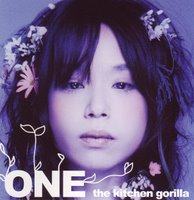
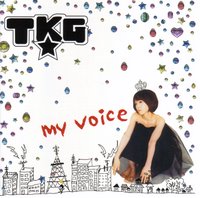
3. The Kitchen Gorilla’s One and My Voice


I found out about the rock trio the Kitchen Gorilla sometime in 2005, and I’ve gotten hooked. They released two mini-albums during the year that, again, should be listened to as one whole. Both deal with vocalist Kayo’s literally almost losing her voice (due to a throat problem). One, the first of the two, is more mellow, containing gems like “Beautiful Sunday”. My Voice is intense from the start, a rocking body-slam of emotions. Kayo’s singing is phenomenal throughout, a high voice that never stays still, and often soars.


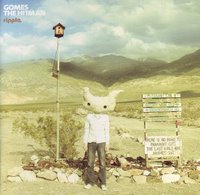
4. Gomes The Hitman’s Ripple


Veteran Japanese pop band Gomes The Hitman is led by Toshiaki Yamada, a lover of American alternative acts like Death Cab for Cutie, Sufjan Stevens and Wilco. He’s called Ripple a watershed album for Gomes, and on that I agree with him: every song is deeply satisfying, passionate pop for grown-ups. Ripple is the equal of albums of the American bands Yamada loves.


5. Vasallo Crab 75’s Today Is Tomorrow


I haven’t had a chance to write in detail about this album by Vasallo Crab 75, but Today Is Tomorrow was, along with advantage Lucy’s Echo Park and The Kitchen Gorilla’s My Voice, one of the Japanese albums that excited me most in the second half of 2005. It’s like a DJ party of an album, the party guests taking turns putting on guitar pop, funk, disco, and even classical music, and getting a kick out of the resulting mix.


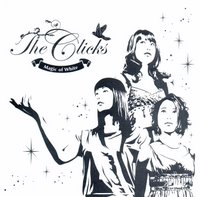
6. The Clicks’ Magic of White


A collection of simple, straightforward, energy-filled pop-punk songs that could have been put together in a garage anywhere in the world, there’s nevertheless something different about the Clicks’ Magic of White. For one thing, the three Clicks girls rock as hard as the best of them, but with cuter voices. For another, they created some of the catchiest rock songs in 2005, like the title track and “Love Bomb”. It’s a shame that they called it quits.


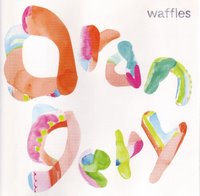
7. Waffles’ Orangery


Bright piano pop from Waffles, a group that follows in the musical footsteps of bands like advantage Lucy. Kyoko Ono, the band’s vocalist and keyboardist, who writes the songs, infuses her sung words with emotion; she has a girl-next-door voice, but few Japanese vocalists sing with her passion.


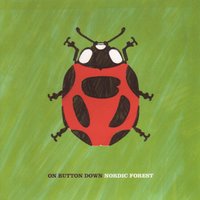
8. On Button Down’s Nordic Forest


This fun album opens with two catchy alternative pop songs, but then descends into extended, post-rock-like ambient pop music compositions that please the ears and stimulate the brain. The guy and gal that make up On Button Down are a duo to watch.


9. Limited Express (has gone)’s Makes You Dance!


The brilliant second album by Limited Express (has gone?), a Japanese trio who plays eccentric rock like the Ruins and Boredoms, this album contains the weirdo rock classic “Tiger Rock” and other adventurous pop tunes. More here.


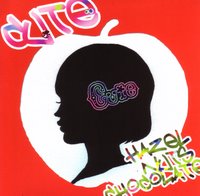
10. Hazel Nuts Chocolate’s Cute


As the album title suggests, “cute” is the concept here, and that vocalist Yuppa’s soft-voiced singing is. But Hazel Nuts Chocolate isn’t music for air-heads: it borrows from diverse musical styles including dance music, pop, hip-hop and jazz, and the compositions are uniformly solid. “Swing Life”, in which Yuppa sing-raps in the sweetest way imaginable, is one of the best songs of the year.

***

I also liked Tokyo Pinsalocks’ Rhythm Channel, Murmur’s Good Grief!, and Plectrum’s live album, Live 4 Live.

My list is pretty pop-heavy, a reflection of my recent preferences. For a different take on Japan’s best music in 2005, take a look at Keikaku.net’s great top albums list, featuring the top-five picks by all of its staffers. They’re more into rock acts like the Band Apart and Ging Nang Boyz (though we agree on advantage Lucy).

Thursday, January 12, 2006

Sakerock, Tucker, Kiseru

I went to see the Sakerock/Tucker/Kiseru show Thursday night because I was in the mood to see a few bands I knew nothing about, and also because I liked these groups’ names. Kiseru is the thin pipe that old folks smoke with in Japanese historical dramas on TV—a curious name for a folk duo. And the sake in Sakerock is the name of Japanese rice wine. I could see where they were coming from—knocking back a few pints of sake has made me felt like a rock star on several occasions. The show seemed to have promise, so I headed to the Shibuya Quattro, which was packed.

Kiseru was up first. The duo played vaguely psychedelic folk, and it was good, pleasant music, but sweet-singing two guy folk units like Kiseru (duos like them seem to be a popular sub-genre in Japan now) always remind me of that singer in Animal House whose guitar is destroyed by John Belushi at the stairwell…

Next up was Tucker, who was a crowd pleaser. He started out DJ-ing, but also played a mean electone organ, and also nibbled at the electric bass and guitar and drums. At one point he played a bass part and put that on a loop, moved to the electric guitar and did the same, then ran back to pound the drums, becoming a one man punk band. Tucker seemed to like a retro sound, the sort of music you’d hear in silent movies, and he covered music like the Pink Panther theme and the song “Tequila”. It was like a 21st Century Neo-Tokyo vaudeville show. At the end, for the climax, Tucker set his synthesizer on fire.

The headliner was Sakerock. They seemed to combine jazz with kayoukyoku, popular Japanese music, and I kept on thinking they were retro in a Taisho Era (1912-1926) sort of way. Maybe it had to do with the way the vocalist played a trombone wearing a hakama. The singer was better when he sang and scatted than when he blew the trombone, and what’s the point anyway of listening to a passable trombonist at a crowded Tokyo live house if you can see amazing jazz players at much more comfortable jazz clubs? I didn’t stick around until the end of the Sakerock show, but while I was there I had a good time. And I liked it that nearly a thousand young Tokyoites showed up at the Quattro to see a band that seemed to have time-warped into Shibuya from an earlier era.

Saturday, January 07, 2006

Goodbye, Orange Plankton


I received word yesterday that Orange Plankton, one of my favorite Japanese pop groups, has disbanded. Although I know in the abstract that no band can last forever, still, the news of this band's end came out of the blue and came as a shock. It made an already bitterly cold Japanese winter seem, somehow, even colder.

For some time I’ve felt that a rock band can be one of the most glorious ways for people to associate with each other. At best, a band is a group of strangers that gather together and make music that moves the heart and defines an era. But a band too has a lifespan, and it’s much shorter than that of a human being. Its span is more like that of a small mammal’s. Even the Beatles, after all, lasted only about nine years.

So maybe it shouldn’t come as too large a surprise that Orange Plankton, which formed in 1999, are leaving the scene. I had noticed that the band had changed, which I noted in a previous post, though I didn’t think it was the sort of change that would lead to dissolution. The main thing that struck me was I learned that the band members now only got together about once a week: when I first met them two years ago, they left every evening free for practice or meetings. Still, the band had been talking about big things for this year, including signing a major label contract, and I had hoped that 2006 would be the year that they’d be able to achieve some of their goals. Instead, on the sixth day of the year they announced they were quitting.

I haven’t heard the exact reason for the band’s decision, but I suspect that lack of commercial success was one. I always thought that Orange Plankton, with their catchy, somewhat jazzy piano pop, was one of Japan’s best bands, and a small group of true believers agreed with this, but most Japanese music buyers didn’t, or simply didn’t know about them. With all the members either approaching or at the age of 30, maybe they felt it was time to move on.

It’s sad to think that, barring some drastic change of heart or a reunion, I’ll never again see Orange Plankton play live. Their shows were some of the highlights of my years in Japan. At the least I know that the members will still be making music as individuals.

What I’m left with is the band’s four albums, several singles, a lot of band goods that they made themselves (including an Orange Plankton fan they sold during a Japan tour in the summer of 2004, when the steamy hot weather made it come in handy), and a lot of memories.

I remember: seeing the band for the first time in 2003 at the Shibuya Quattro, and being struck by the way singer Yumi started gently but in only about 10 seconds shot up in intensity to do one of the most rocking pop shows I’d ever seen.

I remember: coaching Yumi on a song in English (“Weather and Music” from Wakusei Note) at the band’s apartment/office, color pencils that Yumi used to draw visual images of songs spilling from the living room table.

I remember: in the southern city of Nagasaki, seeing them playing their hearts out to a gaggle of apathetic-looking teenagers at a hole-in-the-wall club.

I remember: also seeing them in Okinawa, and between shows going to the beach and staring down at the bright tropical fish and sea slugs in a coral reef with them, wondering if experiences like these help Yumi come up with her beautiful songs.

And of course there were the many shows of theirs I went to in Tokyo—so many memories!

It’s sad that they are gone, but I’m glad I met them.

Goodbye, Orange Plankton.

Wednesday, January 04, 2006

Goodbye, Lost In Found


If you've never heard of a Japanese band named Lost in Found, that wouldn't surprise me. They were only around for a few years, and never released a proper album, though they did come up with a full-album-length CD-R that was quite good (you can listen to song samples from it here). But for quite a while, I was as excited about Lost in Found as I was with actually well-known bands, felt they were something new and would go places, and so now it makes me sad to hear that they’ve decided to call it quits.

They didn’t give a reason for splitting up. Some of the members will play together in new bands, and the name “Lost in Found” will live on as the name of a new independent record label.

Lost in Found was a group of guys and girls in their twenties who already had day jobs but loved indie pop bands like Belle & Sebastian and the Lucksmiths and decided to form a band of their own. The members changed, but the way I remember them most is as a six-piece band that included Mike, a tall Canadian, as the singer and rhythm guitarist, a girl named Mineko as the second vocalist and keyboardist, and another girl named Yukiko on flute, trumpet and synthesizers. On stage, they always seemed like happy beginners, but that was part of their charm.

I first found out about Lost in Found when I took a trip to Seoul to see advantage Lucy and others on an overseas tour; Lost in Found was one of the groups traveling with Lucy. Takayuki Fukumura, the late guitarist of advantage Lucy and Vasallo Crab 75, brought the two bands together, in one of his tireless efforts to befriend musicians and get them connected (how I wish I could have met him at least once!). In Seoul, some of Lost in Found were in awe of advantage Lucy, a popular band with a long career (guitarist Taisuke said he was nervous at first talking to Lucy singer Aiko because he’d only seen her before on TV); Lucy, for their part, saw a reflection of themselves as a young band in Lost in Found, and also liked the relaxed and pure quality of their music, and became big supporters.

From Seoul they went on to play at relatively prestigious Tokyo live houses like the Que and Shelter in Shimokitazawa, in addition to gigs at tiny cafés, and there was talk about their working on an album this year, but I guess that was never to be. Still, I think their album that never officially came out is well worth listening to—I especially like an upbeat song from the album called “Radio 24” that deals with breaking up and contains raw lines like: “One of my friends told me, she started taking Ecstasy, when her boyfriend left her”. Who knows, if you like their sample MP3s, and if you ask them nicely enough, maybe their indies spirit will prompt them to send you a copy.

Monday, January 02, 2006

The Real Thing

I go to a lot of rock shows.

Usually, I go to at least one a week, and sometimes four or five. The number of new bands I see at these shows—maybe a hundred a year?

I go to so many for a simple reason—there are few things that grab the heart as a great live rock show, and every time I witness one, I want to go back for more.

But in this deluge of live shows, I sometimes wonder whether a group I gushed about in a past post was really as good as I remember them, or, whether, it’s a case of rose hues having started to seep into my memories, making everything in the past look brilliant and special.

The past couple of weeks I went to several shows where I realized I hadn’t been wrong: the bands I’ve praised were, in fact, great. They were for real.

One such show was Orange Plankton’s at the Roppongi Morph on December 26. I’ve probably written about this quartet more than any other group, and have long felt that their gentle, beautiful, emotion-packed pop music deserves wider recognition. But it had been a few weeks since I last saw them live, and I again started to wonder: were they as good as I described them in past posts, and as I remembered?

Their live show dynamited my doubts. It started with a music video played on a screen on the stage that, puzzlingly, had a quiet Orange Plankton song as background music to a film about a bloody pro wrestling bout. It was somewhere between provocative and in poor taste, but it gripped the audience’s attention. The band then appeared and did a set comprising their slowest, most intense songs including “Mebuki” from the album Wakusei Note, a tune about death and regeneration.

As sometimes happens at great shows, I found my eyes becoming watery during parts of the exhilarating half an hour that Orange Plankton played. My friend Phil, who joined me at the show, accurately described part of their appeal: while singer Yumi, keyboardist Yuki, bassist Tsuji and drummer Tamarou are all outstanding musicians, none of them try to stand out or show off, and instead they all work to create a harmonious musical whole. I’ve seen many bands in Japan but there are few that make me think, like I do when I see Orange Plankton on a good night, that these guys are the real thing.

***

Another evening that helped me remember why I spend so many nights in cramped, loud, smoke-filled basements was the Mona Records café live on the 28th, featuring Plectrum; Takashi Nishiike, guitarist of Cellophane; and Toshiaki Yamada of Gomes the Hitman. These three groups and advantage Lucy used to go on four-band tours as GAPC (taking the first letter of each band’s name), and their members are all good friends.

All the GAPC bands have been around since at least the mid-90s, have been on major labels, and know how to make the audience rock, even if they are doing an acoustic set like they did at Mona. I wonder whether GAPC will ever do a reunion tour? I’ll be the first in line.

Tuesday, December 27, 2005

Advantage Lucy at the Festival of Light


advantage Lucy

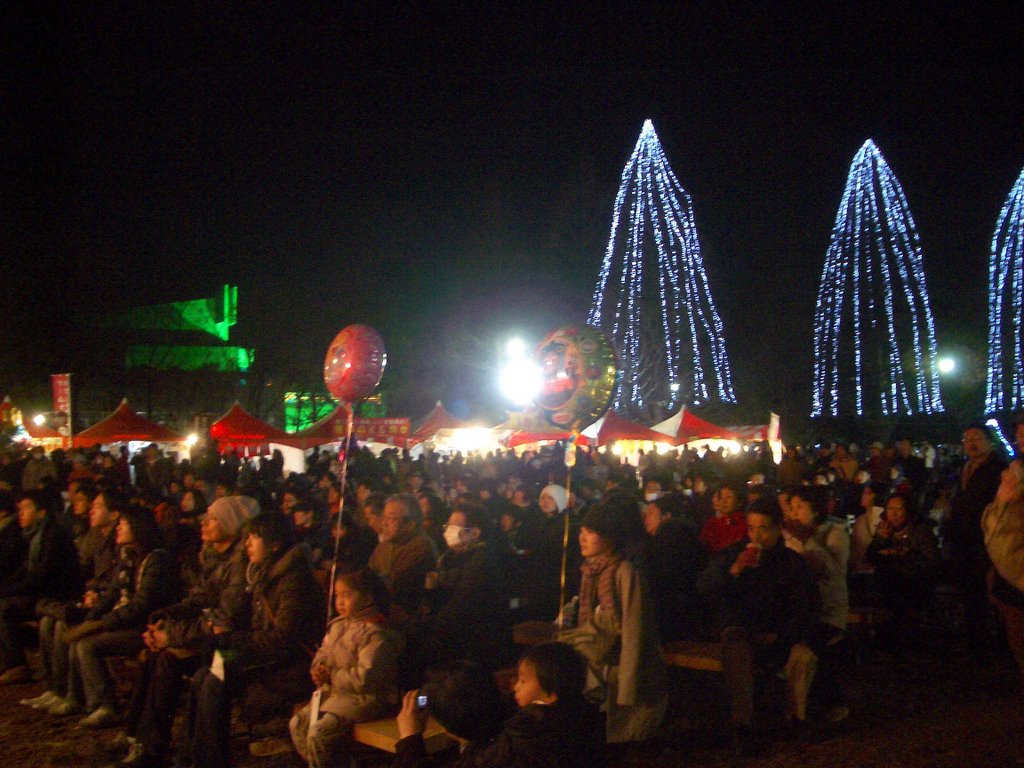
On December 23, which is the Emperor’s Birthday holiday in Japan, advantage Lucy played two sets at the ‘Festival of Light’ in Adachi Ward (a ward is like a city district). This was the third year that the Tokyo pop group appeared at this free event, and though I missed last year’s show I did make it to the one two years ago, and had fond memories of it.

Going again to this event I remembered what I liked about it—the atmosphere is familial and relaxed, taking place in a public park whose trees have been lit up for the holidays. People of all ages sit outside in the chilly evening to watch the shows, while kids run around the stage and hide behind the illuminated trees. Encircling the stage are food stalls, whose shopkeepers call out, between breaks, what they are selling.

There’s also the wonderful feeling of anomaly of seeing advantage Lucy, one of Japan’s great bands, playing on the same stage as children’s electric piano groups, senior citizen choruses, and so on. On Friday night, they played first at a park near Ayase station, and the performers that went before them were called the Beautifuls, who described themselves as “Japan’s #1 Hustle Salaryman band” (unfortunately, I missed them). And after advantage Lucy's second set, which was at a park in Takenotsuka, a troupe of high school hip-hop dancers took the stage (for the finale these hipsters danced in Santa outfits).

One other nice thing about this event is that advantage Lucy’s music matches perfectly the feel of the wintry Tokyo evening. Maybe it’s singer Aiko’s voice, which is pure and crystalline, like the icy nighttime air. It also helps that they play their most festive, holiday-like songs such as “Hello Mate” and “Weekend Wonder”. During their second set they did a very slow, gorgeous rendition of their ballad “Today”.

At one point there was a little girl in front of me wearing a sky-blue down jacket standing transfixed by advantage Lucy’s show. Her expression, as she looked at the musicians and the happy audience, was somewhere between curiosity and puzzlement. I wondered whether one day, just maybe, she too might be playing music on that stage.

Friday, December 23, 2005

Vasallo Crab 75; Cerebral Vs. Physical Shows


Vasallo Crab 75

Thursday night’s show at the Shibuya Eggman looked promising on paper, and I was looking forward to it: it featured Vasallo Crab 75, an indie pop/funk band I’ve written about many times before, as well as Shugo Tokumaru, the internationally respected alternative music guitarist, and the Tenniscoats, a guy-girl duo that came highly recommended by Tokyo Gig Guide.

It turned out to be an interesting event, but also one that made me think about the True Essence of a good live show. Vasallo Crab 75 played last, and there was a big divide between their energetic, physical set, and the much more cerebral performances of the two acts that preceded them, the Tenniscoats and Shugo Tokumaru. Those latter two’s attitude toward a live show seemed to be, ‘we will now create beautiful, innovative sounds for you, and we won’t move around that much on stage or do much else besides play our instruments, but we hope you will enjoy the music for its own sake’. Tokumaru, in fact, asked for the stage lights to be darkened so that he could barely be seen, and didn’t say much other than some nearly inaudible mumbled words at the start.

And indeed, the Tenniscoats and Tokumaru both played compositions that were admirable for their adventurousness and beauty (in particular, I found it remarkable the way that Tokumaru would seamlessly switch from jazz styles to classical to Latin to trash culture pop to create his own sound). These guys seemed like musicians’ musicians. The problem is, I’m not a musician, and as a regular live-house-going music fan, I found that the earnestly played, innovative music made me sleepy after a while. Maybe the venue was part of the problem. I felt this type of music might work better where you could relax and listen, like a café, or maybe played somewhere that is beautiful such as a cathedral or an outdoor natural site, rather than a basement live house.

In the end, though, live music is entertainment, and I need an ingredient in addition to the music itself to be entertained. I want to see that the musicians are into their songs, like it when they hop around and dance on stage, and I appreciate it when they make an effort to draw the audience into their music. If not for those things, is it even worth paying money and sacrificing an evening to see a band play live? Every band I go to see often is full of life on stage, though each in its different way. Vasallo Crab 75 certainly is, and was at the Eggman show, six guys that are totally into their music, but at the same time want the audience to get into the songs and dance along to them.

Monday, December 19, 2005

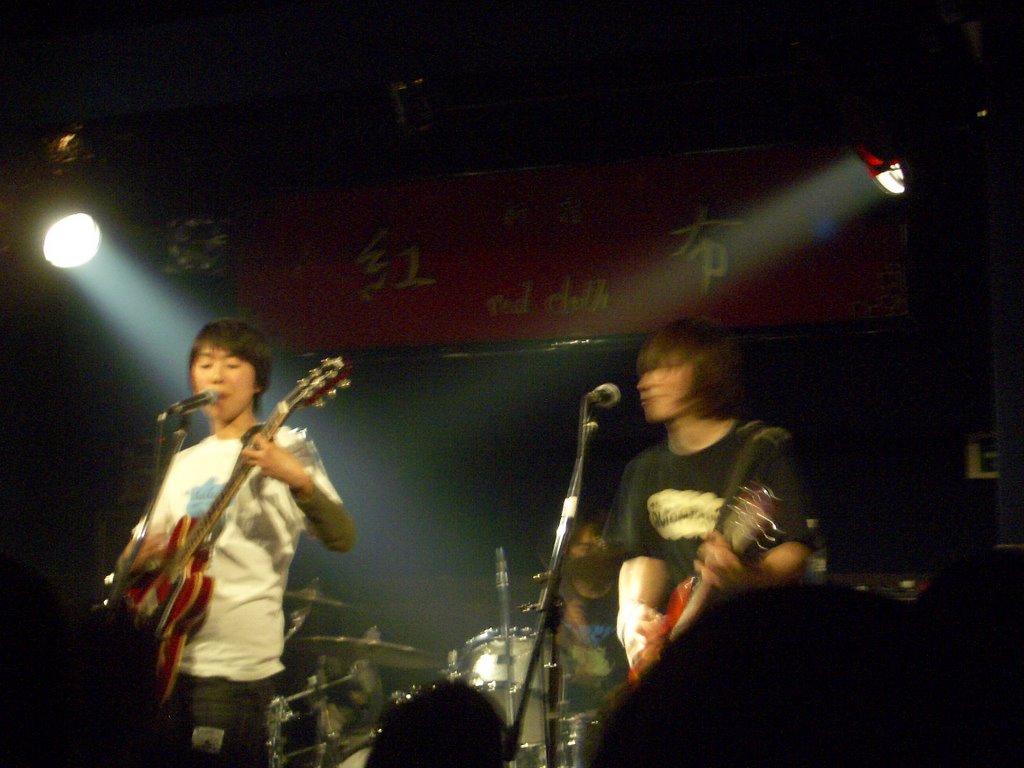
The Automatics & Ron Ron Clou At Red Cloth


I’m pretty sure I was the only foreigner at the Shinjuku Red Cloth on Saturday night, and I think I was the oldest guy in the club as well. I stood out in a big crowd of late teen to early twenty-something Japanese music fans, many of whom seemed to be too young to have realized that chain-smoking has its consequences down the line—the hall was like a smoke pit. I wasn’t feeling too well, maybe I had come down with something due to the sudden winter chill in Tokyo, and about five minutes into the show I had grim visions of becoming a weird foreigner who fainted in a packed rock club.

In other words, conditions weren't perfect at the Red Cloth, but I’d seen worse, and in any case I had a mission that made me stick it out: to see the band Automatics for the first time.


Ron Ron Clou

The Automatics are one of the oldest and best bands on the great indie label K.O.G.A. Records. Another K.O.G.A. band, Ron Ron Clou, is a trio that plays retro sounding rock. Add the female vocalist Momoko Yoshino to Ron Ron Clou, have Yoshino write all the songs, and you get the Automatics.

At the Red Cloth show, Ron Ron Clou played a long set first, and when they were done Yoshino joined them to do a 15-minute show as the Automatics. Although neither Ron Ron Clou nor the Automatics is that well known even in Japan, the two have a small but devoted following, as you could see when they played. About a half-a-dozen girls hopped happily to the songs during Ron Ron Clou’s set, and when the Automatics started the rank of hoppers spread sideways so that most of the audience members in the front were bouncing up and down while the Automatics did their five songs.

Ron Ron Clou does gigs every once in a while in Tokyo, but the Automatics hardly ever play—as far as I know this was there first show in more than a year—and that boosted the club's excitement level. I liked both bands. Ron Ron Clou is a good combination of people: a thin sex symbol singer/guitarist (one girl in front of me videotaped him during the whole show, probably in an unofficial capacity), a bespectacled, big curly haired comedian on bass, and a super-calm but skilled drummer (he also helps out Swinging Popsicle).


The Automatics

Momoko Yoshino of the Automatics, meanwhile, is a remarkable singer because her voice is the most nasal, whiney-sounding I’ve ever heard, yet it sounds great. In person, she was a charming woman with short hair and a constant, big dimpled smile, and that unusual voice of hers was big, both when she sang and when she talked. The songs she writes have a 60’s rock feel, with a pinch of rockabilly tossed in (indeed, the guitarist and bassist of Ron Ron Clou both played Rickenbackers and Yoshino played some sort of Gibson ES guitar).

The Automatics played all my upbeat pop favorites—“Automatic Eraser”, “Goodnight My Sweetheart”, “Sweets Can Save Us” and “Yesterday’s Children” (most of these songs are in the Automatics’ classic album Quietude)—and every time Yoshino announced the next song, the crowd ooh-ed in appreciation. The show was much too short, but as it often happens by the end all my feeling of malaise had melted away and I headed out to the wintry streets of Shinjuku feeling rejuvenated.

Thursday, December 15, 2005

A Band To Watch--Contrary Parade

If the independent (indie) music scene can be defined as something that is completely contrary in spirit to the 3,000-yen-a-CD-charging, copy-control-CD-inventing Major Record Labels, then maybe its truest expression can be found in demo-CDs. Outside of Tokyo music clubs you sometimes see musicians passing out these disks, which they burned themselves at home and whose covers they also designed and printed themselves, in hopes that giving them to show-goers would leave a bigger impression than merely handing out flyers. Or, often bands that are just starting out bring their demo-CDs with them to shows and sell them for about the price of the blank disk. It’s a way for bands to get their songs listened to by strangers in the big wide world, one disk at a time.

Unfortunately, to be honest, many of these demo-CDs aren’t that good. You don’t generally get great music for free. But at times, miracles happen. Which brings me to a band with the unusual name of Contrary Parade.

I’d heard a song by Contrary Parade called “Happy End” in the great Bluebadge Label compilation CD guitar pop crazy!, enjoyed it, and wondered who these guys were. Several months later, in a conversation with a fellow music fan this band’s name came up, and this fan said he had bought a demo-CD of theirs. I told him I liked “Happy End” and would be interested in buying their CD too. He said the band is based in Osaka but he would e-mail them to see if they would send me a copy of the CD.

A little later he e-mailed me to say that when he told Contrary Parade that I wanted a copy of the demo-CD, they replied, “It makes us very, very happy to hear that he wants it, so, of course, we will send it to him”. In a couple of weeks I found in my mailbox the envelope containing the CD, with a note from the band saying: “We pray that this CD-R arrives at your place alright, and gets put into your audio player alright, and the speakers produce its sound alright, and that you like it alright.” And—I did!

The sound that came out of the speakers hooked me immediately—bright and ascending guitar chords, a piano, and a female voice that was passionate in a warbling way. The first song on the disk lasted six minutes and a half, audaciously long for a demo-CD, but I liked them even more for that. There’s a joyful and relaxed quality to this band’s pop music, similar to that of other great Japanese bands like the Waffles and Ku-ki Ko-dan.

I’m not sure what good it does for me to tell you about this band, whose CD I found almost by chance even living in Tokyo. It probably wouldn't be easy to track down their songs outside of Japan. But, one justification for my writing this is that, if Contrary Parade ever makes it big, I can say later that you heard about them here first. So, remember that name. Maybe one of these days they might put up a song sample or two on their website so you can judge for yourself. In the meantime, I urge you to get a copy of guitar pop crazy!, a compilation of many neat bands by a neat label that truly embodies the indie spirit.

Monday, December 12, 2005

Swinging Popsicle & "Hirata Family Festival"


Swinging Popsicle

The first snow of the winter fell in Tokyo on Sunday night, tiny and lonely specks through an icy sky, but inside the Club 251 in Shimokitazawa the temperature and atmosphere were warm. It was the night of the "Hirata Family Festival", named for Hironobu Hirata, bassist for Swinging Popsicle and Auroranote. Featured were those two groups, plus the band of the comedy duo Up Down, for whom Hirata is a producer. Hirata, skinny and handsome, polite, a guy who speaks impeccably proper Japanese, played bass for all three bands, and seemed to love every minute of the event.

Swinging Popsicle, the first up, was sensational as always in their strangely understated way. The pop band isn’t flashy, but their shows stay in the mind. One secret is the singing by Mineko Fujishima, a vocalist I think of as a Soul Diva in the body of a petite Japanese woman. Her mature, low voice seems to stretch out and fill up the live house. Fittingly, colorful little stars adorn the guitar strap of this star songstress. On stage, she stands, tiny, between Hirata and the guitarist Osamu Shimada, both of whom play with the controlled fire of real professionals. At the end of their set, Fujishima and Shimada said ‘gambatte’, meaning something like ‘give it your all’, to Hirata, who had two more sets to perform.

***

The volume went up a few notches as the second band, Auroranote, started with their lively blues rock. These guys are attracting a small following of girls who, during certain songs, dance and shoot up their arms altogether at key song moments. I’ve seen this before with other bands too, and have always wondered how the girls manage to coordinate their moves, and whether someone came up with the choreography or it just evolved on its own.

I was standing toward the back of the hall and there was one girl in front of me who was like a lone chick separated from the brood, dancing alone away from the rest of her group, who were closer to the stage. But she still thrust her arm up at all the right times along with the rest of the team.

***

The final act, Up Down, was the part-time musical unit of a comedy duo, with members of Swinging Popsicle and Auroranote helping out. Their banter and jokes between songs were as entertaining as the songs themselves, if not more so, they being comedians after all.

Friday, December 09, 2005

Upcoming Tokyo Shows - December 2005

December promises to be a great month for rock shows in Tokyo, as bands squeeze into their schedules their final gigs before 2005 comes to a close. In the past a couple of people have asked me to tell them about good shows that are coming up, so here's a list of events I will either definitely go to or will try my hardest to see:

DECEMBER 11 - Swinging Popsicle, Auroranote, Up-Down at Shimokitazawa Club 251

This event is called "Hirata Family Festival", a reference to Hironobu Hirata, who plays bass for both pop band Swinging Popsicle and rockers Auroranote, and is a producer for Yoshimoto Kogyo comedy duo/musical unit Up-Down. In other words, he's the star of this event, which should have something for everyone.

DECEMBER 13 - Advantage Lucy with Milco and No Stars Innovation at Shimokitazawa Club Que

Lucy's last show of the year as a full five-piece band.

DECEMBER 15 - Mono, Kinski, midoriyama at Shibuya Club Quattro

I've never had a chance to see "melodic instrumental noise unit" Mono, but have wanted to for a while.

DECEMBER 16 - Ricarope at Udagawa Cafe Sweets

I've written about a past show by this soulful pop singer/pianist here.

DECEMBER 17 - Automatics and Ron Ron Clou at Shinjuku Red Cloth

Two great K.O.G.A. Records pop-rock bands. The Automatics is the members of Ron Ron Clou plus female singer Momoko Yoshino.

DECEMBER 18 - SGT, Afterpilot and others at Shibuya O-Nest

Two nice alternative rock bands.

DECEMBER 19 - Travelling Panda, others at Shimokitazawa Mona Records

Afrirampo and Watusi Zombie are also playing at the Daikanyama Unit this night, but I think I will go to see jazzy, funky pop band Travelling Panda, because they play live only rarely but are great when they do.

DECEMBER 22 - Vasallo Crab 75, Shugo Tokumaru, Tenniscoats at Shibuya Eggman

More on Prince-influenced guitar pop band Vasallo Crab 75 here. More on guitar noise wizard Tokumaru here. More on delicate piano pop duo Tennicoats here. This should be a musically satisfying show.

DECEMBER 23 - Advantage Lucy at Motofuchie Park "Festival Of Light"

Every winter, the trees in Motofuchie Park in Takenotsuka are strung up with festive holiday lights, and a small musical event is held to celebrate the light-up. Maybe because Lucy guitarist Yoshiharu Ishizaka is from Adachi Ward, where the park is, advantage Lucy has been invited to play at this event every year since 2003.

I missed last year's festival but went to the one in 2003, and it reminded me of amusement park show scene in Spinal Tap. Just as in the movie Spinal Tap shared the stage with puppets, playing right before Lucy at the festival was a group of child keyboard students. Being a park, the ground was muddy; behind the stage was a big poster for the event in bright red, like a Chinese Communist assembly. And being an outdoor event in winter, it was freezing.

Still, the band playing was advantage Lucy, meaning the music was lovely, and making the trip all the way up to Takenotsuka completely worthwhile. As it will be this year! Lucy will be playing as a three-person acoustic group, and the show is free.

DECEMBER 27 - Orange Plankton at Roppongi Morph

The last show of the year for piano pop quartet Orange Plankton, one of my favorite Tokyo groups.

Also playing this night is a group called Klik, with advantage Lucy's Aiko featured as a guest vocalist, at the O-Nest. That one sounds interesting too.

DECEMBER 28 - Plectrum and Toshiaki Yamada (of Gomes The Hitman) at Shimokitazawa Mona Records

Power pop quartet Plectrum is one of my favorite live bands in Tokyo, and they are great both when they rock hard at a live house and when they go acoustic at a place like Mona Records.

Beautiful voiced Yamada (I once described his voice as being like smooth calvados) plays emotional pop music for grown-ups.

DECEMBER 29 - K.O.G.A. Cover Night 2005 at Shimokitazawa Club Que

An interesting looking event featuring several cover bands consisting of professional musicians. I'm going to see Tennoji Fanclub, a Teenage Fanclub cover band consisting of "Norman" Takata (of Plectrum), "Raymond" Ishizaka (of advantage Lucy), "Raymond" Fujita (of Plectrum), "Gerard" Chigasaki and "Brendan" Kadota (of Ron Ron Clou).

DECEMBER 30 - The Kitchen Gorilla, Tokyo Pinsalocks, others at Shibuya O-Nest/O-Crest

Two excellent girl vocalist groups I've discovered recently, playing at the same event. Exciting!

Wednesday, December 07, 2005

The Kitchen Gorilla's My Voice

I don’t know how many times I’ve listened to The Kitchen Gorilla’s new mini-album since buying it a week ago at the Tokyo rock trio’s show. But the number is very high. A clear indication of my rapturous love for this new CD, my voice, can be found in my iPod, which shows that I listened to one song in the album SEVENTEEN times in a single day. These part few days I might have looked like I was toiling down here on earth, but in reality I’ve been way up high in Kitchen Gorilla heaven, and I haven’t come down yet.

My voice opens with a chord that feels as dramatic as the ones that begin “Purple Rain” or “A Hard Day’s Night”. Drums pound like a quick heartbeat. The guitar rock is simple—the band once said their songs use only the most basic chords, and they make up for the simplicity with abundant spirit—but stays in the mind. And then there’s singer Kayo’s high voice, which I described in an earlier post as seeming to have a life of its own, a flirtatious Voice Being that might walk away from its owner.

In fact, my voice and another mini-album released earlier this year, One, are actually a two-part work that talks about Kayo’s voice, and how she nearly lost it when she developed a polyp in her throat that she underwent surgery last autumn to remove. The lyrics aren’t obvious; if you weren’t told so, you wouldn’t know that’s what inspired them. But sometimes, the words hit you, astonishing in their painful directness. She sings, for example, in “My Little World”: “If I could blame this suffering, that tangles and flows, on someone else/ would this red pain that flows down fade at least a little?” In the title track, Kayo sings: “I’ll sing as many times as I can/ so don’t disappear/ this, my voice”. Words like those reveal the human being behind the high-pitched voice.

For all that, my voice isn’t at all a dark-sounding album. The third song, “Sensation”, for instance, is a great spirited rocker in which Kayo sometimes nearly barks the lyrics. “TKG”, the fifth tune, is the song I listened to seventeen times in a day, and is a minute and a half of super-concentrated rock ‘n’ roll energy. It is about the band (the title is an abbreviation of the band’s name) and how they want to “sing songs that are overflowing with love”.

Listening to songs like “TKG”, “my voice” and “Sensation”, I recall shows of their I’ve been to, like last Friday’s, where as she sang Kayo’s eyes turned watery and glimmered (she said later that singing that night made her so happy she wanted to cry); the female drummer, U-co, pounded the drums with an expression of utter concentration, as if in a trance; Coufull, the guitarist, spun around playing his riffs, like he was in his own world, though of course he was intensely connected with the rest of the band.

It’s only by coincidence that I learned about The Kitchen Gorilla: they had a song in a compilation album I bought, and I liked that song enough that I decided to check them out live. Now I’m hooked, and honestly, it makes me UNHAPPY that it is hard to find this group’s music even in Japan and nearly impossible to buy their stuff abroad. I intend to work to fix this, so that those interested can at least hear samples of this fabulous band’s music.

Monday, December 05, 2005

Shugo Tokumaru Interviewed

Shugo Tokumaru, Japan's super-shy musical Renaissance man, has been interviewed by David Hickey for Japan Times. It's a great story, take a look. David also writes for badbee.net, a site I admire. Shugo is playing at the Shibuya Eggman with Vasallo Crab 75 and Tennicoats on December 22--that's one of the not-to-be-missed shows this month!

Friday, December 02, 2005

Kitchen Gorilla Nearly Loses Voice

My first show back in Tokyo was The Kitchen Gorilla at the Shibuya Lush on Friday night to celebrate the release of their new mini-album. Such shows are called reco-hatsu, short for record hatsubai kinen, and they are festive events that fans flock to see. And I’m definitely a fan of this rock trio with a funny name—I’m becoming a bigger fan by the day.

Their new mini-album is called my voice. The voice it refers to is Kitchen Gorilla singer Kayo’s—info I read about the album says that she underwent surgery last year to remove a polyp in her throat that threatened to take away her voice. Heavy stuff for anyone, but especially for the vocalist of an up-and-coming rock band. The songs in this new CD touch on this experience.

The surgery was a success, thankfully, and I’m very glad for that, because I love Kayo’s singing. She’s one of the Japanese female singers whose voices I adore. Others are…advantage Lucy’s Aiko’s, for sure. Spangle call Lilli line’s Kana Otsubo’s, and Orange Plankton’s Yumi’s too. (In one of those mind-blowing developments that sometimes unfolds in life, advantage Lucy’s Aiko told me recently that she read about Orange Plankton here in Japan Live and looked up the band’s sample MP3s on their website. She liked it—the singer has a pretty voice, Aiko said. One of my grand dreams now is to organize an event featuring both of these two great bands.) Asako Toki, formerly of the Cymbals, has a beautiful voice, and so does a solo artist I like called Ricarope.

In short, there are many girls whose singing I dig, but Kayo’s is high up there. Hers is high-pitched, coquettish, and animated, like the voice will separate from her body and run away on its own.

How wonderfully she used that voice again in the Lush show! The band played mostly songs from the new album, ones I’d heard for the first time, but despite my unfamiliarity with the tunes I loved every minute of the show. As I’ve written before, there’s something different and outstanding about The Kitchen Gorilla. Listening to a good song of theirs for the first time after putting up with the bland fare of other bands’ music at shows is like finding a piece of pearl on a Tokyo street.

After the encore, Kayo said ‘love you’ in English to the audience. She also said the band’s going on a national tour with about a dozen stops, and jokingly asked everyone in the audience to go to at least five of those shows. That, unfortunately, probably won’t be possible for me, however much I like the band, but I’ll certainly try to make it to their gig next Friday at the Shinjuku Red Cloth.

***

By the way, the Lush, the new club where the band played, is THE hardest live house to find that I've ever been to in Tokyo, tucked away in the basement of a nondescript building in an obscure alley in Shibuya.

Monday, November 21, 2005

Missing Shows


I’m going back to LA for Thanksgiving, and that’s going to cause me to miss a few great shows while I’m away from Tokyo.

The event that’s going to make me most sorrowful about not attending is the second memorial show for the late Takayuki Fukumura on November 26, featuring advantage Lucy, Vasallo Crab 75, and Three Berry Icecream. All three are wonderful bands. I’ve written many times about guitar pop bands Lucy and Vasallo; Three Berry is the unit of female accordionist and singer Mayumi Ikemizu, formerly of Bridge. About ten bands that had worked with Fukumura played at last year’s show, which went all night. This year’s show at the Club Que in Shimokitazawa will feature only the above three bands, but word has it that one band will morph into another, the musicians from one joining another and then leaving.

Oh how I wish I could be there… Really, if you are in Tokyo, have the time, can afford it, and like this sort of music, you owe it to yourself to catch this show!

Another show that will pass me by is that of SGT, Hullabaloos and a couple of other groups at the Que on November 28. SGT is a friend’s band (he told me what the name stands for, but it escapes me now…), and is spirited, hard rock. Hullabaloos is the solo unit of the beautiful-voiced male singer of Sakanobolt, a band I saw a while ago and have been wanting to see again but is now 'taking a break'.

And then there is Caraway and more guitar pop goodness at the Ikebukuro Live Inn Rosa the next day, on November 29. Caraway is led by Osamu Shimada, the guitarist for Swinging Popsicle, one of my favorite Japanese pop bands.

There are probably other knock-out events scheduled while I’m away, but I’m going to avoid looking at Tokyo Gig Guide and Pia magazine show listings for that period so I don’t get depressed. But if you are in town, the three shows above should all be fun.

Friday, November 18, 2005

Orange Plankton At Roots; Changes


Orange Plankton’s show at Koenji Club Roots on Friday night, their first Tokyo performance in several months, made me think about how everything changes, how nothing stays the same. For the last few months the pop quartet was, musically, recharging their batteries: writing songs, practicing, trying out new things, without having to worry about gigs. At the Friday show, I could see that the rest period benefited them. They played a few new good songs (though I missed one because I arrived late), and bassist Tsuji was experimenting with playing a fretless bass and an acoustic guitar, giving more variety to the band’s sound.

What was more striking to me, and what caused me to think about how things change, is what I heard from the band members over drinks after the show. They said that each member now spends most of his or her time working on music alone, and they only meet to rehearse about once a week. Each is also doing more music away from the band: pianist Yuki playing as a guest performer for another band, for example, and singer Yumi writing and recording a song on her own for a TV program. Which isn’t anything unusual for an average band, but with Orange Plankton, it’s a change. I remembered when I first became friendly with the band members about two years ago, about the time I interviewed them, I was impressed to learn that they left free the hours between five in the evening to midnight every night for band related activities like practice and meetings. They were always together at night. Now they were more independent.

Another change, or more exactly, a possibility of change, is that it sounds like the band is on the verge of achieving bigger success. They have already done some songs for TV commercials, which help expose their music to a larger audience. Now there appears to be a possibility that they would release something on a major label. And what struck me most of all is that Yumi said there’s a chance the band might open a show at the Budokan! To put that in perspective, while the Budokan isn’t the biggest concert hall in Tokyo, it’s certainly the most prestigious. All big name musicians play there. I mean, the Beatles played the Budokan! For an indie band to tell you they will be performing at the Budokan is like having a friend who drives a Honda Civic tell you he’s buying a Bentley next.

It’s not clear if that show or the major label recording will come to pass, but I’m sure the band will give it their all to make those things happen, and I don’t know what they will do if they are unsuccessful. Theoretically, musicians can stay in an indie band forever, doing marginal jobs and playing at small venues, but I’m not sure if Orange Plankton would be happy with that. And, though usually I hate going to shows at huge halls like the Budokan, if it were Orange Plankton I’d be willing to line up at Pia in the morning like everyone to buy tickets, because they are great and deserve the success and it would be wonderful to see them at a place like that. Sure, unlike now, I probably wouldn’t be able to hang out with them after gigs, but at the least I’d be able to brag that I knew them when they were recording great indie albums in a small apartment.


***

Orange Plankton, which plays gorgeous, somewhat jazzy piano pop, seems to often end up playing at extremely eclectic shows, with bands that are nothing like them. Once I saw them on the same bill as a sort of death rock/noise group. Another time they performed with an idol wannabe girl band that was an otaku magnet.

Tonight, after their show a break beat hiphop duo called Osaka Guerrilla Beatniks hit the stage. These guys have the most super-fantastic band name I’ve heard of in a long time, and they also did a memorable thing right before their last song. The rapper said before they finish, he’d like to read a poem. He then whipped out a copy of Kenji Miyazawa’s collected poems, and recited some Miyazawa verse. I was surprised because the poem was sort of Marxist in content: we will all become one and rise together, that sort of thing. Miyazawa is famous for his dream-like children’s tales, but considering the era in which he wrote (in the early 20th century), when Marxism was a major intellectual movement in Japan, and considering his poverty, I thought maybe it wasn’t surprising he wrote communist-sounding poems.

The rapper read this poem as his sidekick strummed beatnik like-notes on an electric bass. It made me wish I had on a beret and a black turtleneck, clicking my fingers to the verse.


***


Foreigners, and especially Americans, often complain about Japanese pizza. Mayonnaise, chocolate and other foodstuff just do not belong on the top of a pizza pie, they say. I don’t care either way (and think some of the mayo pizzas aren’t bad), but I thought the pizza that was served at the after-show party would have horrified these pizza purists.

It was an “Okinawa”-style pizza. The toppings: corn; goya, or bitter melon, the bumpy green fruit that, as the name suggests, is very bitter; and that Okinawan favorite, spam! Was pretty good, actually.

Tuesday, November 15, 2005

Ex-Clicks To Be In New Bands

The guitarist and drummer of the Clicks, the great Japanese girl rock trio that split up earlier this month, have decided to form a new group called--newbie! They haven't made any songs though. Meanwhile, the bassist, Chiharu, says she will also be in a new band, but she will make a formal announcement on it next year. All of this info is from the Clicks' BBS.

I don't know what kind of intra-band drama led to two girls starting one band and the third girl getting into another, and I'm not sure I want to know, but it's good to hear they will all stay active in the music scene. (By the way, you can now sample all of the Clicks' energetic, straightforward rock songs on JapanFiles.com, here, and you can buy the song downloads too. Also check out Mix Market, another good K.O.G.A. Records band, while you are there.)

Friday, November 11, 2005

Tokyo Pinsalocks At In The City


Thursday night, I went to a free show at the Shibuya Take Off 7 and there saw an amazing band called Tokyo Pinsalocks that made me both ecstatic and filled with mild despair.

Ecstatic, because I’d seen a lot of Japanese bands and was starting to feel that not much could surprise me, but then this all-girl quartet appeared and completely blew me away, making me realize there was a lot of great, unexplored music still out there.

Mild despair, because discovering them also made me think I’d never be able to see all the wonderful bands in Japan, that I’d always miss some group or another. The Tokyo music scene is like a huge, ever-changing organism, and no matter how many nights I go out or how many CDs I buy, I will only see bits and pieces of the whole.

I’d already known about Tokyo Pinsalocks because I saw film footage of one of their shows in a DVD called Indies Rock Vol. 4 Dramatic Girl. I wrote about this DVD before, and can’t recommend it highly enough for anyone who likes Japanese indie rock. Not only does it include bands I'm already big fans of such as advantage Lucy, Condor 44 and School Girl ’69, but it’s also turned me on to groups I didn't know about, like Limited Express (has gone?), and, now, the Pinsalocks.

The Pinsalocks' live show was one of those happy shocks I experience every once in a while in Tokyo, like the first time I saw Orange Plankton or Pop Chocolat or Limited Express. The band creates a distinct musical world on stage. Singer Naoko, with long braided hair, reminded me somehow of a Balinese dancer: maybe it was her bright, flowing hippie dress, or the intense focus of her eyes, or her jerky dance moves. But her singing was pure cute Japanese girl pop.

The band says they were influenced by a wide variety of artists including Bjork, Kraftwerk, and a Japanese band called Super Junky Monky (who I’ve never heard of), and their music was eclectic too. At times Naoko played organ sounds on her synthesizer, and the band as a whole created psychedelic music like the Doors, though played by four attractive Japanese girls rather than American men. At other times she made beep-y, piko piko sounds with her synthesizer, and the rest of the band accompanied her with hard rocking parts. It was a cool combination of musical styles, and inspired me to rush over to their merchandise table immediately after the show to buy their first full-length album, rhythm channel (pictured above). At the table, Naoko autographed the CDs and shook hands with fans. I’ve listened to the album a few times, and it’s outstanding.

Smashing Mag has a lot of nice live photos of Tokyo Pinsalocks here.

***

The show was free because it was part of a multi-night event called In The City, which has been going on for a few years, and is meant to showcase up-and-coming Japanese bands. The shows, taking place at several clubs in Shibuya, are produced by influential people in the indie scene, like the owners of K.O.G.A. Records and Club Que in Shimokitazawa. One of my recent Japanese band favorites, The Kitchen Gorilla, played one night, but, sadly, I missed that event. All you have to do to get in is to pick up the tickets at Tower Records, and contrary to my expectations, you don’t even have to pay for one drink as you usually have to do when you enter a club (though I ended up buying something to drink anyway, two drinks, to be exact).

However, reading over the In The City pamphlet, I found out that these shows weren’t, strictly speaking, free. Whenever you buy recording media like disks in Japan, part of the amount of money you pay is supposed to go to musicians whose music you record, but since it’s impossible to keep track of whose music is being recorded, some of that money is put into a fund. That money is then used for things that supposedly benefit the music community as a whole, such as music events that introduce new artists like In The City, the pamphlet said.

So, in fact, I paid at least some money already for this event by buying things like mini-disks and CDs.

There’s no such thing as a free show, I guess.

Wednesday, November 09, 2005

Chipple.net On Nomiya Maki Show

A nice review of ex-Pizzicato Five singer Nomiya Maki's record release party show is up on chipple.net. Many of Patrick's references to post-Shibuya-kei (?) artists went over my head, but I found I enjoyed just imagining what these guys with wacky names are like. For example:

Then p&art sasanoooha came on stage, dancing around wearing their superb "panda blousons" and playing with three large panda heads, for their song odoru "oshare techō". After a quick costume change, Oui Oui appeared, and sang their great cover of tATu's Not Gonna Get Us, which fit perfectly with the Oui Oui concept. Next, Akagi Tadaharu (ex-Films) joined Maki to sing the Yamo (Kraftwerk)-produced Yamate Line. Then appeared a few surprising dancers in white KKK-ish outfits, later to reveal themselves as girls of Romantica (and their undies as well), while Maki sang Kiss' I Was Made For Lovin' You.

Monday, November 07, 2005

advantage Lucy In Osaka


I’ve been wanting to visit Osaka for a while, so when Tokyo pop band advantage Lucy said they will go there on a one-band tour I decided to tag along.

Osaka, in my mind, is Japan’s number-two city. Yokohama is Japan’s second biggest city population-wise, but it’s right next to Tokyo and is basically just an extension of the giant metropolis. Osaka, on the other hand, has its own character and a long history as a merchant’s town.

Of course, Osaka locals might counter that it is their city and not Tokyo that is Japan’s top city, Tokyo being nothing but a heartless, upstart urban desert. And in truth, there are people out there that truly love Osaka and would never think of moving to Tokyo. I myself only had a few hours to spend in the city in between advantage Lucy’s show, and got just the smallest feel for what the appeal of this place is. I had time to make only the most feeble observations, such as: people stand on the right on escalators rather than on the left as Tokyoites do; many shops have huge, brightly-colored displays of sea creatures like octopus, squid, crab and poisonous blow fish on their facades; people walk fast and talk loudly; a female fashion fad is to wear boots with tiny, almost illegal-looking mini-skirts (this could be fashionable in Tokyo too, but I’m pretty sure I would have noticed if it is); and so on.


One other thing I noticed was that Osaka has great music audiences. The Lucy show was at a club called Live Square 2nd Line, which is located literally right below a railroad bridge, and I had about as much fun there as I’ve ever had at a Lucy show.

The thing that got me was the totally positive vibe of the audience, starting with the huge cheer that erupted when the show began, the non-stop dancing, and the general fun that everyone seemed to have. Tokyo crowds enjoy themselves too at Lucy shows, but they are more subdued in the way that they express their joy, possibly because they have more chances to see Lucy shows, and maybe also because Tokyoites are more self-conscious and shy because many of them are originally from regional prefectures. Whereas, people in Osaka grew up there and feel more sure of themselves, and feel fine with cheering if that’s what they feel like doing.

Whatever the reason was for the crowd’s abundant show of enthusiasm, it was a pleasure to be part of it. As in the Tokyo show I wrote about earlier, advantage Lucy played for more than two hours, doing both songs from their new album Echo Park and their older songs. One guy at the very front hopped in place energetically during all the faster songs. He’s apparently a legend among Osaka Lucy fans because he’s always at their shows, is always at the very front, and always does his hopping. (It reminded me of a video of an early advantage Lucy show I saw where about a dozen people in the front center sort of pogo-ed to the songs, like people used to do at the very beginning of punk rock. It was like some happy, peace-loving version of a mosh pit.) After the show, he came up to each Lucy member and shook hands, and didn’t let go of their hands for an extended period, like a person in some country where the handshake is something that takes a long time.


advantage Lucy

Every few minutes a train would pass right above and a rattling sound would fill the club, sometimes during the quieter songs. I didn’t mind it, but the band thought it was noisy and even lost their rhythm at one point because of it.

Harvey of OtsumamiMusic was also at the show, his first time seeing Lucy live, and has written a very nice report on it. Check it out!

Both the Tokyo and Osaka shows had lively, happy crowds, but several sources, including my friend Dr. I, have told me that the most impassioned advantage Lucy fans during this three-city tour were at the show in Nagoya. The crowd asked for and got three encores from the band, and at the end the band and audience kept on saying ‘thank you’ to each other over and over again. I wish I could have seen it.

After the Osaka show I went out with the band to a place that served delicious raw chicken (you can only eat it raw if it’s as fresh as can be), and there the musicians said again that they wished the tour wasn’t over and that they could do more shows. Earlier, singer Aiko had repeatedly said that on stage too. As a fan I shared their wish.

Saturday, November 05, 2005

INTERVIEW: Spangle call Lilli line


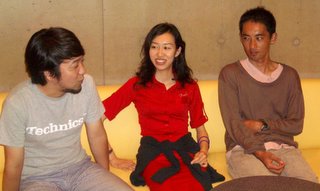
From left, Ken Fujieda, Kana Otsubo and Kiyoaki Sasahara of Spangle call Lilli line


I recently had a chance to interview Spangle call Lilli line, the brilliant Japanese rock trio that this year released two new albums, Trace and For Installation. There was much to talk about with these three musicians. For one thing, the band made a major change in its musical style with Trace, going from long and luxuriant post-rock-like songs to almost danceable pop numbers in the new album, and I was curious to know what was behind this move.

Spangle is also an interesting band because its three members all have separate full time creative careers: singer Kana Otsubo is an illustrator, guitarist Ken Fujieda is a graphic designer, and the other guitarist, Kiyoaki Sasahara, is a photographer. Why do they continue with this artistic double-life? I wanted to ask them about that.

The band members, in person, were friendly and talkative. In fact, many questions I asked caused them to launch into rap sessions in which they joked, poked fun at each other, came up with involved metaphors, moved far in their talk from the original question and generally had a lively conversation with lots of laughter. These are musicians who really get along with each other. At times I’d almost wonder whether they might have forgotten about my presence because they became so immersed in their talk. But, at the same time, I was happy to be able to hang out with them for more than an hour. I’m not Rockin’ On magazine, after all, and this is a popular band. That didn’t stop Spangle from telling me fascinating stuff about themselves.


JAPAN LIVE: Can you talk about the beginnings of Spangle call Lilli line? What led to the band being formed?

OTSUBO: The two of us (Otsubo and Fujieda) met each other by chance at a live house, and we said we should start a band.

FUJIEDA: Yes, we ran into each other at a live house [a rock club]. We hadn’t met in a while, and we had a lot of time on our hands [laughs], and since we met at a live house we decided we should start a band. And we thought two people wouldn’t be enough for a band, and he (Sasahara) had just quit the band that we went to see, and had time, so, in 1999, the three of us started playing in a band together.

JAPAN LIVE: Which live house was it?

FUJIEDA: It was the Shibuya O-Nest.

JAPAN LIVE: When the band got its start in 1999, what sort of music did you want to play, and who were your influences?

FUJIEDA: To tell you the truth, there was nothing at all! Truly, no concept.

SASAHARA: No plan.

FUJIEDA: No, no plan. We just wanted to go into a rehearsal studio and have guitar sounds come out of the amp, or sing songs using a mike, that was the level we were at, and we didn’t think at all about what sort of band we should be or what our sound should be like. Usually, people get together because they have some sort of music they like in common, but in our case we knew each other from college and were the same age, and because we all went to the same art school we felt we would share the same sort of sensibility.

OTSUBO: We didn’t ask each other about preferences.

FUJIEDA: Yeah, we didn’t ask about the sort of bands or music each likes—

OTSUBO: Because we were friends—

FUJIEDA: We were friends, so we thought everyone would have decent taste, and for the first year or so nothing happened. We didn’t plan to release a CD, or do a show, we just wanted to get together over weekends and it was a way to vent stress.

JAPAN LIVE: How then did you become a band that makes albums and plays shows?

OTSUBO: A year went by, and I had been playing drums the same time that I sang, but that was getting tiring, so we decided to find a drummer. We got Kabasawa (Nobuyuki), who was a friend of all three of us, to join the band, and when we jammed, suddenly our whole sound changed.

FUJIEDA: It showed how bad the drumming was until then [laughs]. All of the sudden, we saw a shape (of how the band should be).

OTSUBO: Yes. It was moving.

JAPAN LIVE: But it’s very surprising you didn’t have an idea about what you wanted the band to be like when you started.

FUJIEDA: If it had been like, let’s do jazz, or let’s do punk, it wouldn’t have been so hard for us. We’re always asked now what we want to do, what sort of music in what genre we want to do, but we still don’t really know, so we make some sounds, bit by bit—

SASAHARA: And move forward—

OTSUBO: And stumble back [laughs]—

SASAHARA: We see whether we can walk across a place or not, and if we sink we go back, and we try climbing mountains, or go to the sea…

JAPAN LIVE: So you see (making music) as a nature thing?

ALL THREE: Yes, a nature thing!

SASAHARA: Like a child of nature—

OTSUBO: We might pick up a mushroom—

SASAHARA&OTSUBO: And get sick eating it—

FUJIEDA: Or get high [laughs]. But there’s really a lot of wasted work involved.


JAPAN LIVE: Your new albums Trace and For Installation are two very different works, and both are also very different from the previous albums like Or.

FUJIEDA: Basically we don’t want to do the same things, but our true essence doesn’t change, and the rest is a matter of what sort of format (the album) will be, or what style, or what texture, or sound quality.

JAPAN LIVE: What is the “true essence” of Spangle call Lilli line?

FUJIEDA: Probably, the pure thing that doesn’t change is Otsubo’s melody and singing, or, rather, voice, and whether we play acoustic music or minimalistic electronic music or more band sound type music, we are always trying to make Otsubo’s singing come alive.

SASAHARA: Since it’s the same people (making the music), what comes out, like the smell of sweat, doesn’t change, whether or not you put perfume on it. You still like hamburgers, whether you prepare it Japanese style, or put demi-grasse sauce on it.

FUJIEDA: You really like hamburgers.

JAPAN LIVE: I like your metaphors.

FUJIEDA: He explains everything by metaphors.

OTSUBO: They are easy to understand.

SASAHARA: But I’ve been trying to talk without using metaphors, recently.

FUJIEDA: Because everyone makes fun of you for that [laughs].

***

JAPAN LIVE: The song lyrics that Otsubo writes are unique, and are almost surreal. How do you get the inspiration for your lyrics?

OTSUBO: When I start out with a song, I sing words that are somewhere between English and Japanese, and ultimately I change those words into Japanese. At that point, I look through the dictionary, or when I listen to what I sang I think ‘this is what it sounds like’ and write that down, or I make up new words. There isn’t really that much meaning (to the lyrics), but sometimes I think somewhere in my memory, for example if I have some memory about this cup [pointing to a black and white cup on the table], I would include the colors black and white in the lyrics, or, if I have memories about a shoe, I think I actually include fragments of that memory, or experience, in my lyrics.

JAPAN LIVE: So in writing your lyrics, you think about both the sound of the words and mental images?

OTSUBO: Yes, I mix both of those. I also want to highlight Japanese words that aren’t used often. It’s a sort of kindness [laughs]. It’s as if, by using in my lyrics Japanese words that don’t usually see the light of day, I’m telling people, look, there are Japanese words like these.

***

JAPAN LIVE: What is the meaning of the band name “Spangle call Lilli line”? Did you come up with it based on how it sounds?

FUJIEDA: Yes, it was chosen 100% based on how it sounds.

SASAHARA: Grammatically, should it actually be “calls”?

FUJIEDA: What do you mean, “grammatically”?

SASAHARA: Spangle calls—

JAPAN LIVE: The ‘call’ in Spangle call is the verb ‘call’?

SASAHARA: Yes. Spangle is calling Lilli line [said in Japanese].

FUJIEDA: It doesn’t come out that way in English.

SASAHARA: Is ‘Spangle’ a singular noun?

JAPAN LIVE: Yes, I guess so.

SASAHARA: So I guess it should be ‘calls’.

JAPAN LIVE: I thought the name was all nouns.

FUJIEDA: Yeah, I think that’s probably what people would think. But the name is all words that Otsubo likes the sounds of, lined together.

JAPAN LIVE: What’s ‘Lilli line”?

OTSUBO: I wanted (the characters) ‘Li’ to be repeated a few times.

FUJIEDA: That’s what it’s about?

OTSUBO: I like girl’s names like Lily. And I like the word lily, as in tiger lily, so I wanted to include ‘Lily’ in the band name.

***

JAPAN LIVE: You all have full-time creative jobs separate from the band. Why did you decide to do both?

FUJIEDA: That’s a difficult issue.

SASAHARA: It wasn’t an intentional thing.

FUJIEDA: We wanted this to be an After Five thing—

SASAHARA: Like a drinking party. We started this as if we were just going to get lunch or something—

FUJIEDA: The music started out as break from work, but then little by little the importance of the music part became bigger, so that now they [the music and full-time jobs] are starting to look about equal in importance. But, after all—

OTSUBO: To us, things haven’t changed.

FUJIEDA: It’s like a hobby.

SASAHARA: It’s not different from going traveling, or going skiing.

FUJIEDA: Although I hate traveling and skiing [laughs]. Even in my hobbies outside of work, I need to be making something. I need to be productive.

OTSUBO: In that sense, I guess being in a band works, because we’re making things.

FUJIEDA: Right. It’s at the same time a great way to vent stress, but also a creative thing—

SASAHARA: We create something that remains.

FUJIEDA: Yes, we create something that remains. Nothing remains after you go traveling.

OTSUBO: Well, how about photos?

SASAHARA: Or experiences?

FUJIEDA: See, that’s what everyone says, but nothing remains.

SASAHARA: He’s never gone abroad.

FUJIEDA: No, I haven’t. In fact, I don’t want to leave Tokyo at all. I’ve only been on a plane once in my whole life.

OTSUBO: And that was for a performance—

FUJIEDA: When I look at an airplane, all I can think is that it’s something that will crash. It just doesn’t make sense that something big like that—

SASAHARA: It shakes a lot.

FUJIEDA: There’s something wrong with it.

OTSUBO: But it’s fun.

FUJIEDA&SASAHARA: It’s not fun at all!

OTSUBO: Some day, I want to fly first class.

FUJIEDA: But that would still be flying. Traveling just feels like a vain thing.

OTSUBO: You don’t even want to, say, go to the beach?

FUJIEDA: I guess it would be fun once I go.

SASAHARA: You should go to Hawaii or some place once. If you go to, say, India, it will probably get you thinking. I don’t really like traveling either, but when I was a student I thought I went just for the experience.

OTSUBO: Where did you go?

SASAHARA: When I was a student, I went to Thailand. And I also went to London and Paris. And to China for work.

FUJIEDA: But you like Tokyo the most, right?

SASAHARA: We’re the same that way.

FUJIEDA: There needs to be a Doutor [a coffee shop chain] and bookstores [laughs]. If there are no Doutor and bookstores, I feel anxious.

JAPAN LIVE: So, no overseas tours are in the works?

FUJIEDA: I don’t think so.

OTSUBO: I want to go!

SASAHARA: If (a tour) is decided, we will force ourselves to go.

FUJIEDA: But I probably wouldn’t want to ride a car for over an hour.

OTSUBO: What?? How about a train then?

FUJIEDA: I wouldn’t want to be on a train for over an hour either. It just feels like it would be time wasted.

SASAHARA: You can read a book.

FUJIEDA: But if I were in a car, I’d get sick. Maybe I just dislike moving from one place to the next.

***

JAPAN LIVE: It’s surprising that you can make great music like you do on a part-time basis, as a break from work.

FUJIEDA: Yes. But it’s because we’re really having fun. And because we’re serious about making the music. So it’s a little different from, say, traveling being your hobby.

OTSUBO: It’s like your hobby is making plastic models, but you made plastic models that are incredible.

FUJIEDA: It’s as if the plastic models you made as a hobby became so elaborate that people were willing to pay money for them. And then, without your knowing it, people started calling them art…

***

JAPAN LIVE: Do you think the next album you make will be as different to Trace as Trace was to Or?

FUJIEDA: I guess it would depend on what sort of mode we are in at that time. But if you ask will it be the same sort of album as Trace, the answer is ‘no’, it will be very different from Trace. That’s all we know.

OTSUBO: But what kind of album it becomes will depend on how we three are feeling at that time.



Trace


Or

JAPAN LIVE: Who writes the melodies of your songs?

FUJIEDA: Basically, Otsubo writes the melodies.

OTSUBO: For the song as a whole, I also make suggestion like, how about this for the guitar part? All three of us make parts of the songs.

FUJIEDA: The melodies sometimes are created right away, and at other times they gradually come into being. Sometimes when the musical arrangements change the melody also changes. Rather than making the songs in a clear order, we tend to gradually create new versions, so at least one or two songs on each album end up being completely different from the way it started. We’re not solo musicians making our own songs, so the songs often end up different from what each person intended. They don’t end up the way I would want them to be if I had 100% control over the song-writing. You know what I mean, right [to the others]?

SASAHARA: Yeah, that’s how all of us feel.

OTSUBO: It’s as if we planted sunflower seeds, but what ends up coming out of the ground are morning glory flowers.

FUJIEDA: That’s a hard to understand metaphor!

SASAHARA: We end up with something that is neither sunflower nor morning glory.

FUJIEDA: There’s a lot that is accidental.

JAPAN LIVE: My impression of Spangle call Lilli line’s music was that in your songs you gradually developed musical themes, but in Trace the themes seem to come right away.

FUJIEDA: That’s right. The peak comes right from the beginning. But that was our aim, structurally we made it in a pop music way. Put it another way, we wanted to do the opposite of the gradual approach. There were people who liked it, and those who didn’t. But Spangle-like elements are still there.

SASAHARA: People who started listening to us from Trace didn’t think there was anything unusual (about the album) and liked it, but those who knew us from before—

FUJIEDA: Thought it wasn’t quite what they expected.

SASAHARA: Lots of people say For Installation is more their thing.

FUJIEDA: But we have to be challenging. We have to challenge.

JAPAN LIVE: Will the next album be more like Trace, or For Installation, or neither?

FUJIEDA: If we could make something that is neither, that would be best.

SASAHARA: Maybe something that has a southern hemisphere feel.

FUJIEDA: Yeah! We could go to Bali.

SASAHARA: Yeah, it will be relaxing.

JAPAN LIVE: I’ll be looking forward to the new album. Do you have any messages to fans abroad?

SASAHARA: It’s a strange feeling…

FUJIEDA: Yeah, isn’t it a strange feeling?

SASAHARA: It’s a wonder enough that we can release CDs in Japan and that there are people willing to listen to them—

FUJIEDA: Yeah, it’s a wonder.

SASAHARA: So to imagine that happening abroad too—

FUJIEDA: But when it comes to this band, people abroad and Japanese people don’t listen to our music that differently. Because even Japanese people say they don’t understand the meaning of our lyrics [laughs]! No one can really imagine a message or story in the songs. They come up with an image for the songs based on fragmentary interpretations of the songs. So foreigners can be reassured that they are listening to the music in the same way as Japanese fans.

SASAHARA: But aren’t foreigners thinking as they listen to our songs that Japanese people must understand what the lyrics mean?

FUJIEDA: But the truth is that Japanese people don’t understand either.

SASAHARA: Foreigners are probably enjoying the songs purely based on the music rather than the way Japanese people do, which is by also listening to the words.

***

SASAHARA: I’d like to know what kind of music foreigners who like our music enjoy other than Spangle.

FUJIEDA: It must be no different from the way we listen to (foreign bands like) Sonic Youth or Tortoise.

SASAHARA: What I mean is, are there people who like Madonna but also Spangle, or are there people who like Tortoise and also Spangle—

FUJIEDA: I guess it depends on the person.

***

OTSUBO: Anyway, the message…

SASAHARA: All we can say is thanks. Thanks for finding us.

OTSUBO: Yes.

SASAHARA: We appreciate your reaching us.